Question
Prove that $\frac{1+\sec A}{\sec A}=\frac{\sin ^2 A}{1-\cos A}$.

Answer


$
\begin{aligned}
LHS\quad\frac{1+\sec A}{\sec A} & =\frac{1+\frac{1}{\cos A}}{\frac{1}{\cos A}} \\
& =\frac{\frac{\cos A+1}{\cos A}}{\frac{1}{\cos A}} \\
& =\frac{\cos A+1}{\cos A} \times \frac{\cos A}{1} \\
& =1+\cos A \\
& =1+\cos A \times\left(\frac{1-\cos A}{1-\cos A}\right) \\
& =\frac{(1)^2-(\cos A)^2}{1-\cos A} \\
& =\frac{1-\cos { }^2 A}{1-\cos A} \\
& =\frac{\sin ^2 A}{1-\cos A}=R H S
\end{aligned}
$

Need a full question paper?

Generate a complete, print-ready paper with questions like this in minutes — across 16+ boards, with answer keys.
Start Generating Free

Similar questions

A coin is tossed two times. Find the probability of getting at most one head.
The observations 29, 32, 48, 50, x, x + 2, 72, 78, 84, 95 are arranged in ascending order. What is the value of x if the median of the data is 63?
In the following, determine whether the given quadratic equation have real root and if so, find the root:
$3\text{x}^2+2\sqrt{5}\text{x}-5=0$
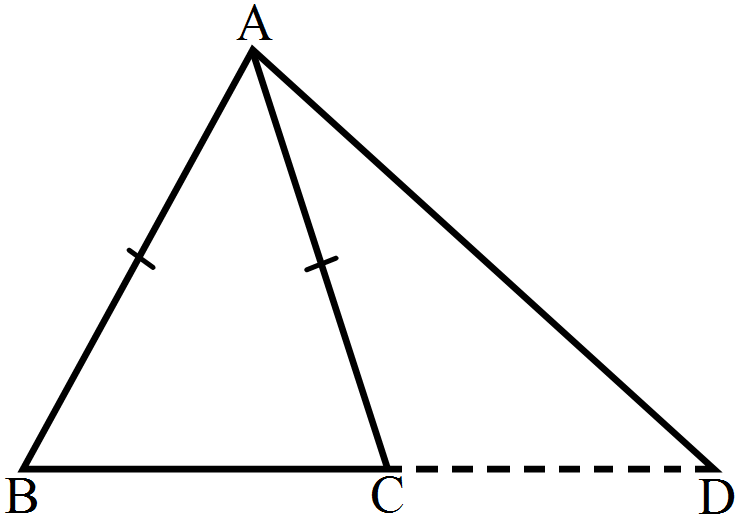
In $\triangle\text{ABC},\text{AB}=\text{AC}.$ Side BC is produced to D. prove that
$(\text{AD}^2-\text{AC}^2)=\text{BD}.\text{CD}$
If $\alpha$ and $\beta$ are the zeroes of the quadratic polynomial such that $\alpha+\beta=24$ and $\alpha-\beta=8,$ find a quadratic polynomial have $\alpha$ and $\beta$ as its zeroes.
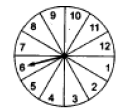
game of chance consists of spinning an arrow which is equally likely to come to rest pointing to one of the numbers $1,2,3, \ldots, 12$ as shown in the figure. What is the probability that it will point to.
Image
i. 6
ii. an even number?
iii. a prime number?
iv. a number which is a multiple of 5?
A 1.5m tall boy is standing at some distance from a 30m tall building. The angle of elevation from his eyes to the top of the building increase from 30° to 60° as he walks towards the building. Find the distance he walked towards the building.
A bag contains a red ball, a blue ball and a yellow ball, all the balls being of the same size. Kritika takes out a ball from the bag without looking into it. What is the probability that she takes out the
  1. yellow ball?
  2. red ball?
  3. blue ball?
If $\alpha, \beta$ are the zeroes of the $x ^2+7 x +7$, find the value of $\frac{1}{\alpha}+\frac{1}{\beta}-2 \alpha \beta$.
Prove that $\frac{\sin \theta-\cos \theta+1}{\sin \theta+\cos \theta-1}=\frac{1}{\sec \theta-\tan \theta}$, using identity $\sec ^2 \theta=1+\tan ^2 \theta$.