Question
Read the passage given below and answer the following questions:
Iron forms many complexes in its $+2$ and $+3$ oxidation states such as $\ce{[Fe(H_2O)_6]^{2+} (A); [Fe(CN)_6]^{4-} (B); [Fe(H_2O)_6]^{3+} (C); [Fe(CN)_6]^{3-} (D)},$ etc.,
They exhibit, different magnetic properties and undergo different hybridisation of iron.
The following questions are multiple choice questions. Choose the most appropriate answer:
Iron forms many complexes in its $+2$ and $+3$ oxidation states such as $\ce{[Fe(H_2O)_6]^{2+} (A); [Fe(CN)_6]^{4-} (B); [Fe(H_2O)_6]^{3+} (C); [Fe(CN)_6]^{3-} (D)},$ etc.,
They exhibit, different magnetic properties and undergo different hybridisation of iron.
The following questions are multiple choice questions. Choose the most appropriate answer:
- Which of the following statements is correct?
- $(B)$ is paramagnetic while $(C)$ is diamagnetic.
- Both $(B)$ and $(D)$ are outer orbital complexe.
- Both $(A)$ and $(C)$ are paramagnetic.
- $(A)$ is outer orbital complex and $(C)$ is inner orbital complex.
- The complex having maximum magnetic moment is:
- $(A)$
- $(B)$
- $(C)$
- $(D)$
- Which of the following does not represent correct configuration of the $d-$ orbitals in the given complexes?
- $\text{(A)}:\text{t}^4_{2\text{g}}\text{e}^2_\text{g}$
- $\text{(B)}:\text{t}^6_{2\text{g}}\text{e}^0_\text{g}$
- $\text{(C)}:\text{t}^4_{2\text{g}}\text{e}^1_\text{g}$
- $\text{(D)}:\text{t}^5_{2\text{g}}\text{e}^0_\text{g}$
- The spin only magnetic moment of complexes $(A), (B), (C)$ and $(D)$ are respectively $($in $BM).$
- $2\sqrt{6},0,\sqrt{35},\sqrt{3}$
- $0,2\sqrt{6},\sqrt{35},\sqrt{3}$
- $\sqrt{15,}2\sqrt{6},\sqrt{3},0$
- $\sqrt{3},\sqrt{8},0,\sqrt{15}$
- Which of the given complexes are outer orbital complexes?
- $(A)$ and $(B)$ only
- $(B)$ and $(C)$ only
- $(A)$ and $(C)$ only
- $(B)$ and $(D)$ only
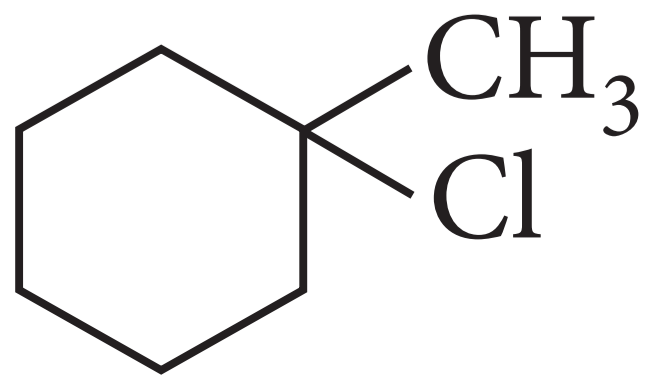 is more reactive than
 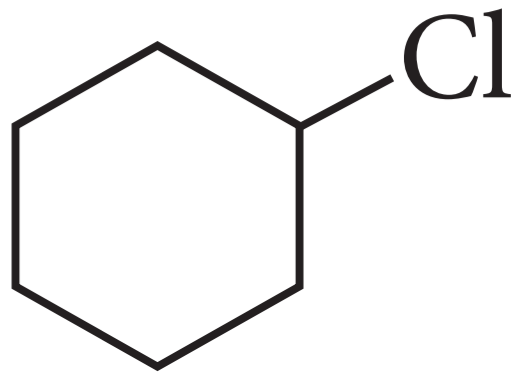 towards nucleophilic substitution reactions.