Question

Read the passage given below and answer the following questions:
The aryl halides are relatively less reactive towards nucleophilic substitution reactions as compared to alkyl halides. This low reactivity can be attributed to the following factors:
  • The $C - X$ bond in halobenzene has a partial double bond character due to involvement of halogen electrons in resonance with benzene ring.
  • The $C - X$ bond in aryl halides is less polar as compared to that in alkyl halides as $sp^2$ hyridised carbon is more electronegative than $sp^3$ hybridised carbon.
In these questions (Q. No. i-Iv), a statement of assertion followed by a statement of reason is given. Choose the correct answer out of the following choices.
  1. Assertion and reason both are correct statements and reason is correct explanation for assertion.
  2. Assertion and reason both are correct statements but reason is not correct explanation for assertion.
  3. Assertion is correct statement but reason is wrong statement.
  4. Assertion is wrong statement but reason is correct statement.
  1. Assertion: Primary benzylic halides are more reactive than primary alkyl halides towards $S_N1$ reactions.
Reason: Reactivity depends upon the nature of the nucleophile and the solvent.
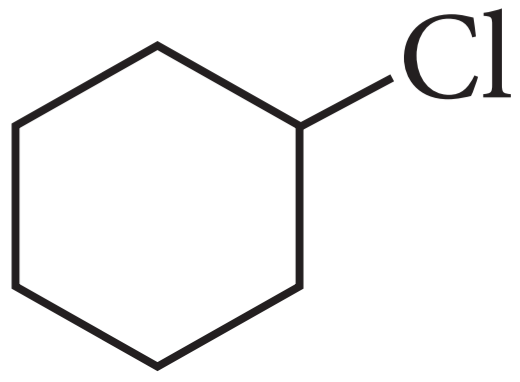
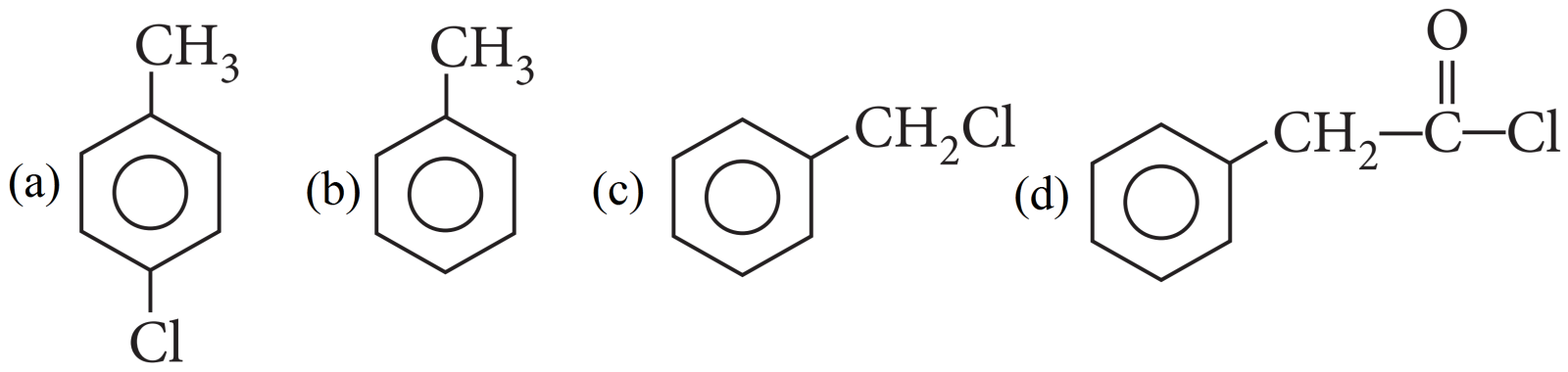
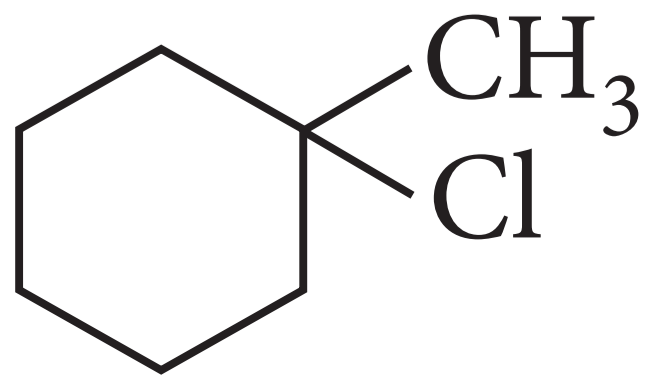
  1. Assertion: is more reactive than towards nucleophilic substitution reactions.
Reason: Tertiary alkyl halides react predominantly by $S_N1$ mechanism.
  1. Assertion: Chlorobenzene is more reactive than p-chloroanisole to nucleophilic substitution reactions.
Reason: Greater the stability of carbanion, greater is its ease of formation and hence, more reactive is the aryl halide.
  1. Assertion: $4-$Nitrochlorobenzene undergoes nucleophilic substitution more readily than chlorobenzene.
Reason: Chlorobenzene undergoes nucleophilic substitution by elimination-addition mechanism while 4-nitrochlorobenzene undergoes nucleophilic substitution by addition-elimination mechanism.
  1. Assertion: Chlorobenzene is less reactive than benzene towards the electrophilic substitution reaction.
Reason: Resonance destabilises the carbocation.

Answer

  1. (b) Assertion and reason both are correct statements but reason is not correct explanation for assertion.
​​​​​​​Explanation:
Primary benzylic halides show higher reactivity in $S_N1$ reactions than primary alkyl halides. This is due to the greater stabilisation of the benzylic carbocation intermediates by resonance.
  1. (a) Assertion and reason both are correct statements and reason is correct explanation for assertion.
  2. (a) Assertion and reason both are correct statements and reason is correct explanation for assertion.
​​​​​​​​​​​​​​​​​​​​​​​​​​​​​​​​​​​Explanation:
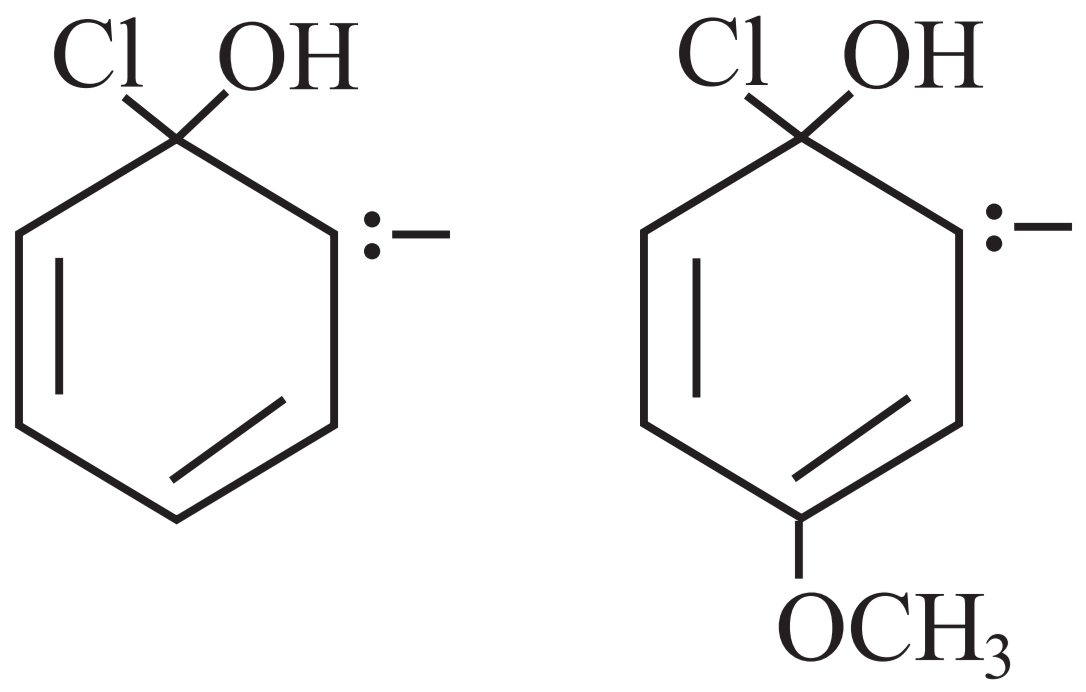
On comparing the relative stabilities of carbanion of chlorobenzene and p-chloroanisole,

The electron donating group $(OCH_3)$ in anisole tends to intensify the negative charge relative to carbanion in chlorobenzene. Thus, p-chloroanisole is less reactive than chlorobenzene.
  1. (b) Assertion and reason both are correct statements but reason is not correct explanation for assertion.
​​​​​​​​​​​​​​​​​​​​​​​​​​​​​​​​​​​Explanation:
As compared to chlorobenzene, the intermediate carbanion resulting from $4-$nitrochlorobenzene is stabilized by$-R-$effect of the N02 group.
  1. (c) Assertion is correct statement but reason is wrong statement.
​​​​​​​​​​​​​​​​​​​​​​​​​​​​​​​​​​​​​​​​​​Explanation:
Chlorobenzene is less reactive than benzene towards the electrophilic substitution reactions due to -I effect.

Need a full question paper?

Generate a complete, print-ready paper with questions like this in minutes — across 16+ boards, with answer keys.

Start Generating Free

Similar questions

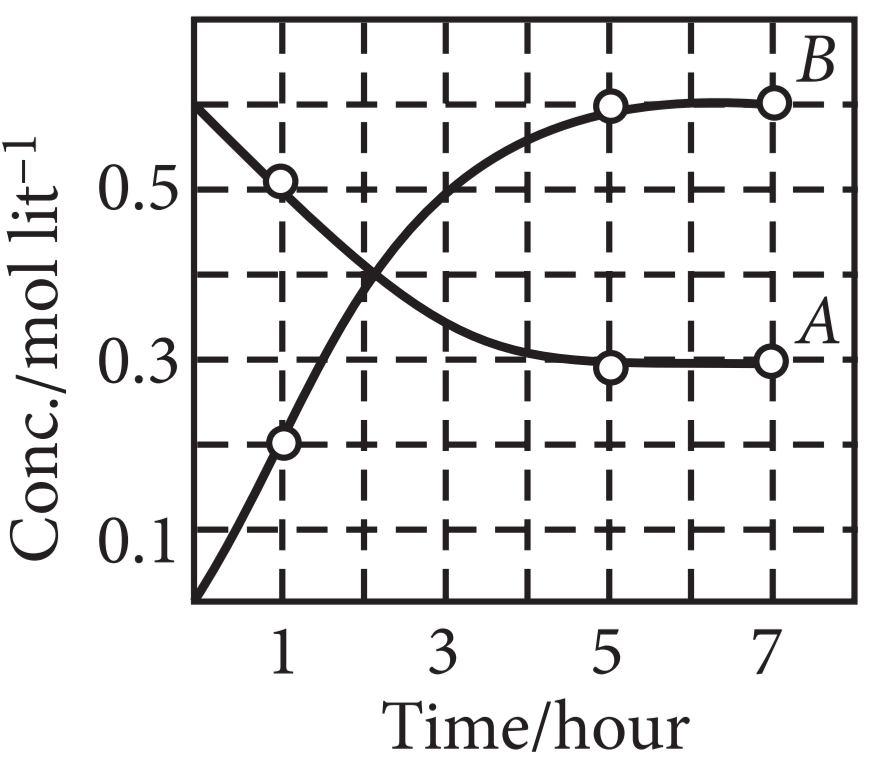
The progress of the reaction, $\text{A}\rightleftharpoons\text{nB}$ with time is represented in the following figure:

The following questions are multiple choice questions. Choose the most appropriate answer:
  1. What is the value of n?
  1. 1
  2. 2
  3. 3
  4. 4
  1. Find the value of the equilibrium constant.
  1. 0.6M
  2. 1.2M
  3. 0.3M
  4. 2.4M
  1. The initial rate of conversion of A will be:
  1. $0.1 mol ~L^{-1}hr^{-1}$
  2. $0.2 mol ~L^{-1}hr^{-1}$
  3. $0.4 mol ~L^{-1}hr^{-1}$
  4. $0.8 mol ~L^{-1}hr^{-1}$
  1. For the reaction, if $\frac{\text{d}[\text{B}]}{\text{dt}}=2\times10^{-4},$ value of $-\frac{\text{d}[\text{A}]}{\text{dt}}$ will be:
  1. $2 \times 10^{-4}$
  2. $10^{-4}$
  3. $4 \times 10^{-4}$
  4. $0.5 \times 10^{-4}$
  1. Which factor has no effect on rate of reaction?
  1. Temperature.
  2. Nature of reactant.
  3. Concentration of reactant.
  4. Molecularity.
Read the passage given below and answer the following questions:
Haloarenes are less reactive than haloalkanes. The low reactivity of haloarenes can be attributed to:
  • Resonance effect.
  • $sp^2$ hybridisation of C - X bond.
  • Polarity of C - X bond
  • Instability of phenyl cation (formed by self-ionisation of haloarene).
  • Repulsion between the electron rich attacking nucleophiles and electron rich arenes.
Reactivity of haloarenes can be increased or decreased by the presence of certain groups at certain positions for example, nitro ($-NO_{^2}$) group at o/ p positions increases the reactivity of haloarenes towards nucleophilc substitution reactions.
The following questions are multiple choice questions Choose the most appropriate answer:
  1. Aryl halides are less reactive towards nucleophilic substitution reaction as compared to alkyl halides due to
  1. The formation of less stable carbonium ion.
  2. Resonance stabilisation.
  3. Larger carbon-halogen bond.
  4. Inductive effect.
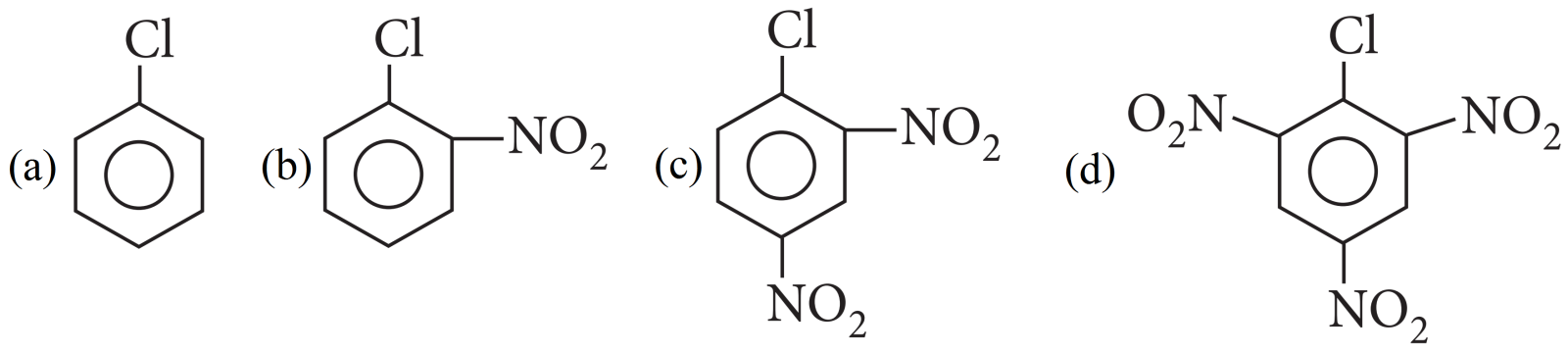
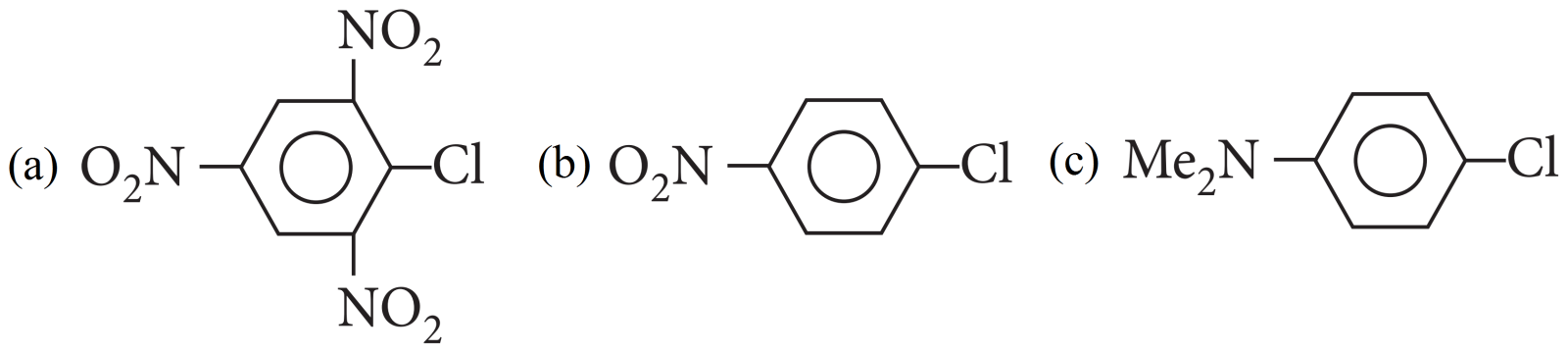
  1. Which of the following aryl halides is the most reactive towards nucleophilic substitution?
  1. Which one of the following will react fastest with aqueous $NaOH$?
  1. Which chloro derivative of benzene among the followings would undergo hydrolysis most readily with aqueous sodium hydroxide to furnish the corresponding hydroxy derivative?
  1. $C_6H_5Cl$
  1. The reactivity of the compounds (i) $MeBr$, (ii) $PhCH_2Br$, (iii) $MeCI$, (iv) $p-MeOC_6H_4Br$ decreases as:
  1. (i) > (ii) > (iii) > (iv)
  2. (iv) > (ii) > (i) > (iii)
  3. (iv) > (iii) > (i) > (ii)
  4. (ii) > (i) > (iii) > (iv)
Read the passage given below and answer the following questions:
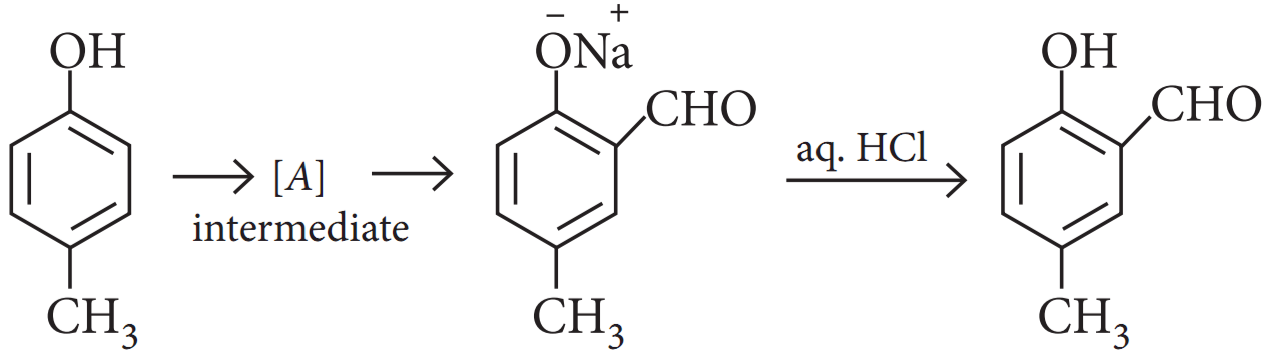
Reimer-Tiemann reaction introduces an aldehyde group, on aromatic ring of phenol, ortho to the hydroxyl group. This is a general method for the synthesis of substituted salicylaldehydes as depicted below.

The following questions are multiple choice questions. Choose the most appropriate answer:
  1. Reimer-Tiemann reaction is an example of:
  1. Nucleophilic substitution reaction.
  2. Electrophilic substitution reaction.
  3. Nucleophilic addition reaction.
  4. Electrophilic addition reaction.
  1. Which of the following reagents is used in the given reaction in steps I?
  1. aq. $NaOH + CH_3Cl$
  2. aq. $NaOH + CH_2Cl_2$
  3. aq. $NaOH + CHCl_3$
  4. aq. $NaOH + CCl_4$
  1. The electrophile in this reaction (A) is:
  1. : $CHCI$
  2. $^+CHCl_2$
  3. : $CCl_2$
  4. .$CCl_3$
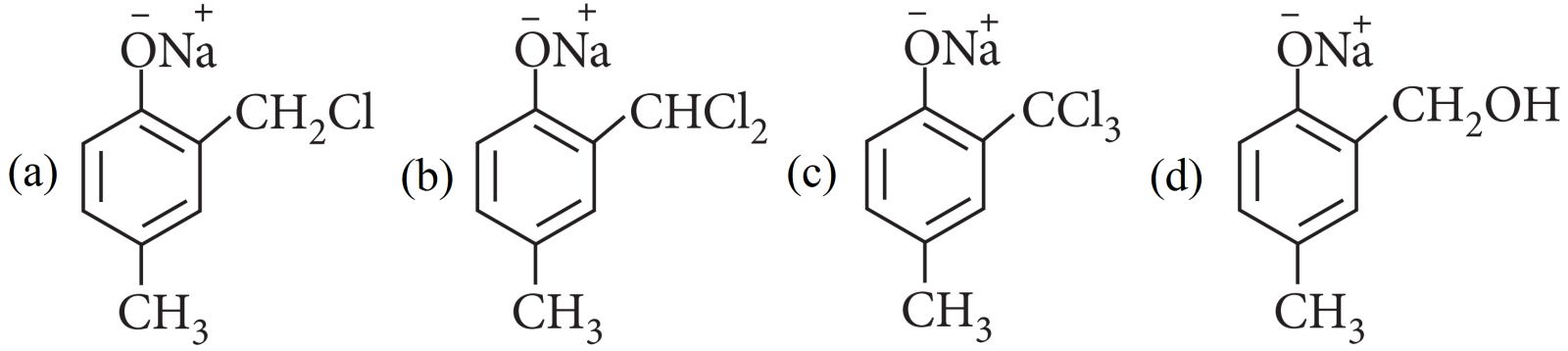
  1. The structure of the intermediate (A) is:
  1. When phenol reacts with chloroform in presence of KOH, the product formed is:
  1. Salicylic acid.
  2. Salicylaldehyde.
  3. Both (a) and (b).
  4. None of these.
Read the passage given below and answer the following questions: A compound (X) containing C, H and O is unreactive towards sodium. It also does not react with Schiff s reagent. On refluxing with an excess of hydroiodic acid, (X) yields only one organic product ( Y). On hydrolysis, (Y) yields a new compound (Z) which can be converted into (Y) by reaction with red phosphorus and iodine. The compound (Z) on oxidation with potassium permanganate gives a carboxylic acid. The equivalent weight of this acid is 60. The following questions are multiple choice questions. Choose the most appropriate answer:
  1. The compound (X) is an:
  1. Acid.
  2. Aldehyde.
  3. Alcohol.
  4. Ether.
  1. The IUPAC name of the acid formed is:
  1. Methanoic acid.
  2. Ethanoic acid.
  3. Propanoic acid.
  4. Butanoic acid.
  1. Compound (Y) is:
  1. Ethyl iodide.
  2. Methyl iodide.
  3. Propyl iodide.
  4. Mixture of (a) and (b).
  1. Compound (Z) is:
  1. Methanol.
  2. Ethanol.
  3. Propanol.
  4. Butanol.
  1. Compound (X) on treatment with excess of $Cl_2$ in presence of tight gives:
  1. $\propto-$ Chlorodiethyl ether.
  2. $\propto,\propto'-$ Dichlorodiethyl ether.
  3. Perchlorodiethyl ether.
  4. None of these.
The following reaction, $\text{A}_{(\text{g})}\xrightarrow{\ \ \triangle\ \ \ }\text{P}_{(\text{g})}+\text{Q}_{(\text{g})}+\text{R}_{(\text{g})},$ follows first order kinetics. The half-life period of this reaction is $69.3s$ at $500^\circ C$. The gas A is enclosed in a container at $500^\circ C$ and at a pressure of $0.4$ atm.
The following questions are multiple choice questions. Choose the most appropriate answer:
  1. The rate constant for the reaction is:
  1. $0.4s^{-1}$
  2. $0.02s^{-1}$
  3. $0.01s^{-1}$
  4. $0.3s^{-1}$
  1. The pressure of the gas $A$ after $230$ s will be:
  1. $0.04$ atm
  2. $0.36$ atm
  3. $0.4$ atm
  4. $0.036$ atm
  1. The total pressure of the system after $230$ swill be:
  1. $2.15$ atm
  2. $1.12$ atm
  3. $0.4$ atm
  4. $3.08$ atm
  1. The plot ofln[A] vs twill be:
  1. Linear with slope $= k$
  2. Linear with intercept $= In[A]_0$
  3. Linear with slope $= In[A]_0$
  4. Linear with intercept $= [A]_0$
  1. Which of the following is not an example of first order reaction?
  1. $\text{C}_2\text{H}_{4(\text{g})}+\text{H}_{2(\text{g})}\rightarrow\text{C}_2\text{H}_{6(\text{g})}$
  2. $2\text{N}_2\text{O}_{5(\text{g})}\rightarrow4\text{NO}_{2(\text{g})}+\text{O}_{2(\text{g})}$
  3. $2\text{N}\text{H}_{3(\text{g})}\xrightarrow[\triangle]{\text{pt}}\text{N}_{2(\text{g})}+3\text{H}_{2(\text{g})}$
  4. $2\text{N}_2\text{O}_{(\text{g})}\xrightarrow{\ \ \triangle\ \ }2\text{N}_{2(\text{g})}+\text{O}_{2(\text{g})}$
Read the passage given below and answer the following questions:
In an assembly of atoms or molecules, a solid phase is formed whenever the interatomic attractive forces significantly exceed the disruptive thermal forces and thus restrict the mobility of atoms, forcing them into more or less fixed positions. From energy considerations, it is evident that in such solids the atoms or molecules will always attempt to assume highly ordered structures which are characterised by symmetry. Depending on the nature of the active interatomic forces, all solids may be subdivided into the following categories :
Ionic solids: These solids consist of positively and negatively charged ions arranged in a regular fashion throughout the solid. These solids are very hard and brittle, have very high melting points and have high enthalpies of vaporisation, e.g., NaCl, MgO, KCl, LiCl etc.
Covalent solids: In these solids, the constituent particles are atoms which are linked together by a continuous system of covalent bonds. These bonds are strong and directional in nature. The covalent crystals are hard, have high melting points, are poor conductors of electricity. Diamond is a typical example of covalent solids.
Metallic solids: ln these solids, the constituent particles are positive ions immersed in a sea of mobile electrons. Metallic solids may be hard as well as soft. They are good conductors of heat and electricity, e.g., common metals such as nickel, copper and alloys.
Molecular solids: ln these the constituent particles are molecules. The molecules are held together by dispersion forces or London forces, dipole-dipole forces or hydrogen bonds.
In these questions (Q. No. i-iv), a statement of assertion followed by a statement of reason is given. Choose the correct answer out of the following choices.
  1. Assertion and reason both are correct statements, and reason is correct explanation for assertion.
  2. Assertion and reason both are correct statements, but reason is not correct explanation for assertion.
  3. Assertion is correct statement, but reason is wrong statement.
  4. Assertion is wrong statement, but reason is correct statement.
  1. Assertion: Molecular solids are characterized by low melting point.
Reason: Molecular solids are made up of covalent molecules.
  1. Assertion: Ionic solids are characterized by high melting and boiling point.
Reason: Ionic solids have coulombic forces of attraction between their ions.
  1. Assertion: Covalent solids are insulators of electricity.
Reason: Covalent solids are constituted by ions.
  1. Assertion: Diamond and graphite do not have the same covalent structure.
Reason: Silicon carbide is typical example of network solid.
  1. Assertion: Covalent solids have high melting points.
Reason: Covalent solids have strong electrostatic forces of attraction.
Read the passage given below and answer the following questions:
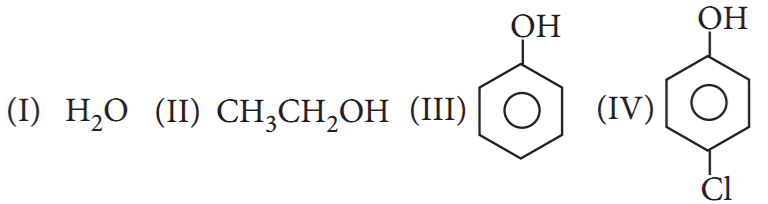
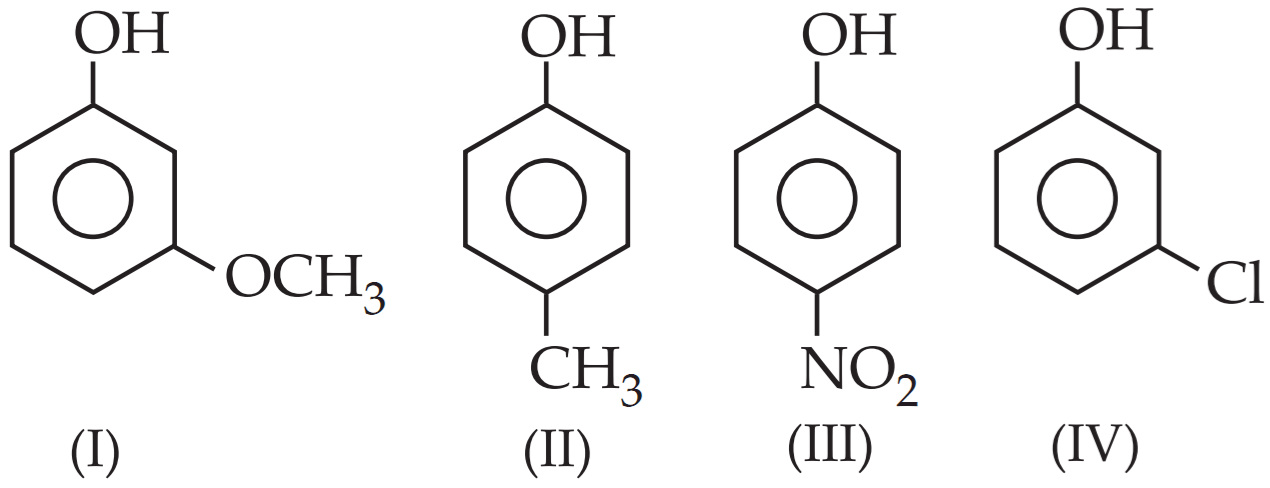
Both alcohols and phenols are acidic in nature, but phenols are more acidic than alcohols. Acidic strength of alcohols mainly depends upon the inductive effect. Acidic strength of phenols depends upon a combination of both inductive effect and resonance effects of the substituent and its position on the benzene ring. Electron withdrawing groups increases the acidic strength of phenols whereas electron donating groups decreases the acidic strength of phenols. Phenol is a weaker acid than carboxylic acid.
The following questions are multiple choice questions. Choose the most appropriate answer:
  1. Phenols are highly acidic as compare to alcohols due to:
  1. The higher molecular mass of phenols.
  2. The stronger hydrogen bonds in phenols.
  3. Alkoxide ion is a strong conjugate base.
  4. Phenoxide ion is resonance stabilised.
  1. The correct order of acidic strength among the following is:
  1. (III) > (IV) > (II) > (I)
  2. (IV) > (III) > (I) > (II)
  3. (IV) > (III) > (II) > (I)
  4. (I) > (II) > (IV) > (III)
  1. The correct decreasing order of $pK_a$ value is:
  1. II > IV > I > III
  2. IV > II > III > I
  3. II I> II > IV > I
  4. IV > I > II > III
  1. The compound that does not liberate $CO_2$, on treatment with aqueous sodium bicarbonate solution is:
  1. Benzoic acid.
  2. Benzenesulphonic acid.
  3. Salicylic acid.
  4. Carbolic acid.
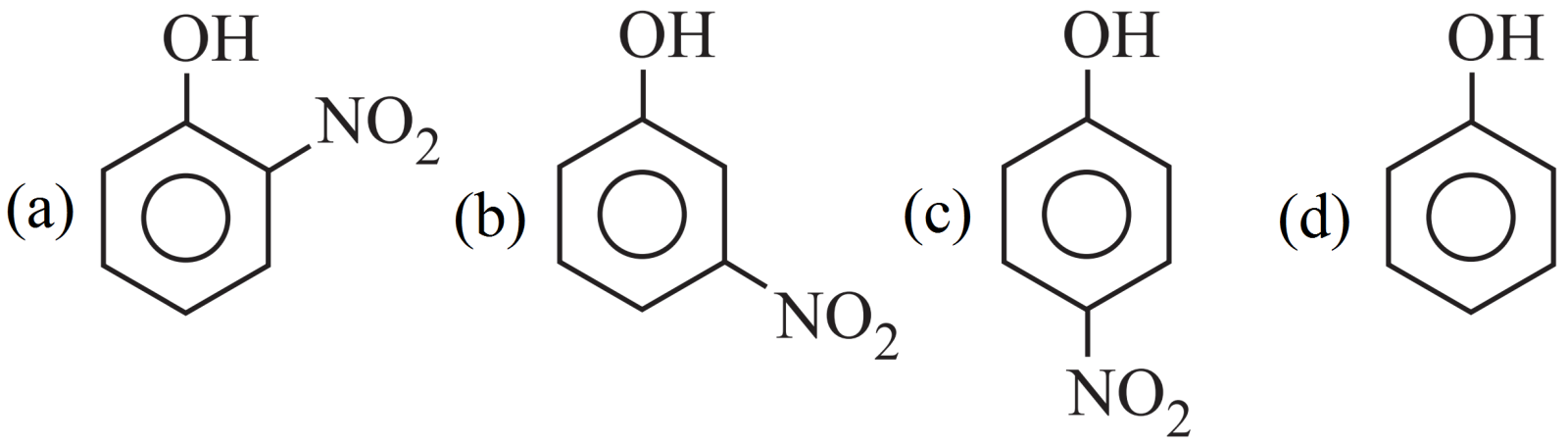
  1. Most acidic amongst the following is:
Read the passage given below and answer the following questions:
In an ideal crystal, there must be regular repeating arrangement of the constituting particles and its entropy must be zero at absolute zero temperature. However, it is impossible to obtain an ideal crystal, and it suffers from certain defects called imperfections. In pure crystal, these defects arises either due to disorder or dislocation of the constituting particles from their normal positions or due to the movement of the particles even at absolute zero temperature. Such defects increase with rise in temperature. In addition to this, certain defects arise due to the presence of some impurities. Such defects not only modify the existing properties of the crystalline solids, but also impart certain new characteristics to them.
The following questions are multiple choice questions. Choose the most appropriate answer:
  1. $AgCl$ is crystallized from molten $AgCl$ containing a little $CdCl_2$ The solid obtained will have.
  1. Cationic vacancies equal to number of $Cd^{2+}$ ions incorporated.
  2. Cationic vacancies equal to double the number of $Cd^{2+}$ ions.
  3. Anionic vacancies.
  4. Neither cationic nor anionic vacancies.
  1. Lattice defect per $10^{15}$ $NaCl$ is $1$. What is the number of lattice defects in a mole of $NaCl?$
  1. $6.02 \times 10^{23}$
  2. $6.02 x 10^8$
  3. $10^{14}$
  4. None of these
  1. The ionic substances in which the cation and anion are of almost similar size shows.
  1. Non-stoichiometric defect
  2. Schottky defect
  3. Frenkel defect
  4. All of these.
  1. If $Al^{3+}$ ions replace $Na^+$ ions at the edge centres of $NaCl$ lattice, then the number of vacancies in $1$ mole of $NaCl$ will be.
  1. $3.01 \times 10^{23}$
  2. $6.02 \times 10^{23}$
  3. $9.03 \times 10^{23}$
  4. $12.04 \times 10^{23}$
  1. Which of the following gives both Frenkel and Schottky defect?
  1. $AgCl$
  2. $CsCl$
  3. $KCl$
  4. $AgBr$
Read the passage given below and answer the following questions:In contrast to the disorders of gases and liquids, there is translational order in crystals. However, disordered or amorphous solids also exist which lack such order, they are really highly viscous liquids. In translational order entire structure or lattice, can be generated by repeated replication of a small regular figure, termed as unit cell. The planes of any crystalline structure can be specified using Miller indices, which is also serve to identify single crystal faces.The ordered structure, or lattice, of a solid can be determined by X-ray or neutron diffraction studies, in which a beam of X-rays of neutrons is scattered from the sample to produce a diffraction pattern which can be analyzed to reveal the crystal structure of the sample. All crystal lattices can be classified into 14 Bravais lattices belonging to 7 systems. For example, the simple cubic, face-centred cubic and body-centred cubic lattices are the 3 lattices of the cubic system. Cubic and hexagonal close-packed structures have the structure of tightly packed spheres, where each sphere touches 12 neighbours, 6 in the same plane and 3 above and 3 below. These two dose-packed structures differ in the placement of successive planes or layers. For the hexagonal close packing, a third layer is laid down to reproduce the first layer, so that the structure could be represented by ABABAB …. For cubic close packing, third layer is again displaced, corresponding to ABCABC.
The following questions are multiple choice questions. Choose the most appropriate answer:
  1. In hexagonal close packing, a sphere has coordination number of.
  1. 4
  2. 6
  3. 8
  4. 12
  1. Which of the following arrangements correctly represents hexagonal and cubic close packed structure respectively?
  1. ABCABC...and ABAB...
  2. ABAB...and ABCABC...
  3. Both have ABAB ... arrangement.
  4. Both have ABCABC... Arrangement.
  1. The arrangement of the first two layers, one above the other, in hep and ccp arrangements is.
  1. Exactly same in both cases
  2. Partly same and partly different
  3. Different from each other
  4. Nothing definite.
  1. Which of the following statements is not correct?
  1. The amorphous solids have a random, disordered arrangement of constituents.
  2. The simple cubic, face-centred and body-centred are the three lattices of the cubic system.
  3. The number of Bravais lattice in which a crystal can be categorized is 7.
  4. A metal that crystallizes in hep structure has coordination number 12.
  1. Which of the following statements about amorphous solids is incorrect?
  1. They melt over a range of temperature.
  2. There is no orderly arrangement of particles.
  3. They are anisotropic.
  4. They are rigid and incompressible.
Read the passage given below and answer the following questions:
At $298\ K$, the vapour pressure of pure benzene, $C_6, H_6$ is $0.256$ bar and the vapour pressure of pure toluene $C_6 H_5 CH_3$ is $0.0925$ bar. Two mixtures were prepared as follows:
  1. $7.8g of C_6 H_6 + 9.2g$ of toluene
  2. $3.9g of C_6 H_6 + 13.8g$ of toluene
The following questions are multiple choice questions. Choose the most appropriate answer:
  1. The total vapour pressure (bar) of solution I is.
  1. $0.128$
  2. $0.174$
  3. $0.198$
  4. $0.258$
  1. Which of the given solutions have higher vapour pressure?
  1. $I$
  2. $II$
  3. Both have equal vapour pressure
  4. Cannot be predicted
  1. Mole fraction of benzene in vapour phase in solution I is.
  1. $0.128$
  2. $0.174$
  3. $0.734$
  4. $0.266$
  1. Which of the following statements is/are correct?
  1. Mole fraction of toluene in vapour phase is more in solution I.
  2. Mole fraction of toluene in vapour phase is less in solution I.
  3. Mole fraction of benzene in vapour phase is less in solution I.
  1. Only II
  2. Only I
  3. I and III
  4. II and III
  1. Solution I is an example of a/an.
  1. Ideal solution.
  2. Non-ideal solution with positive deviation.
  3. Non-ideal solution with negative deviation.
  4. Can't be predicted.