Question
Read the passage given below and answer the following questions:
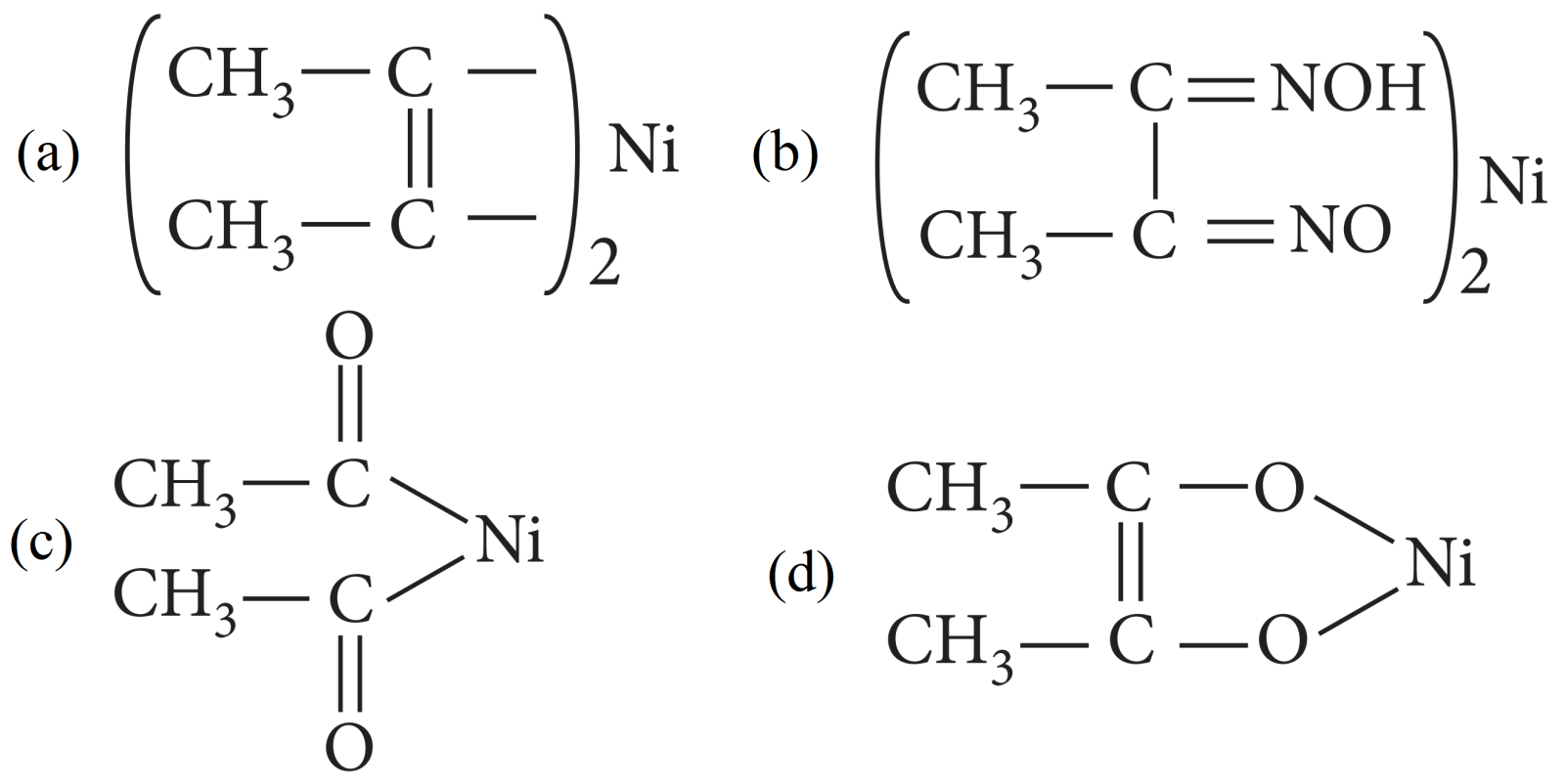
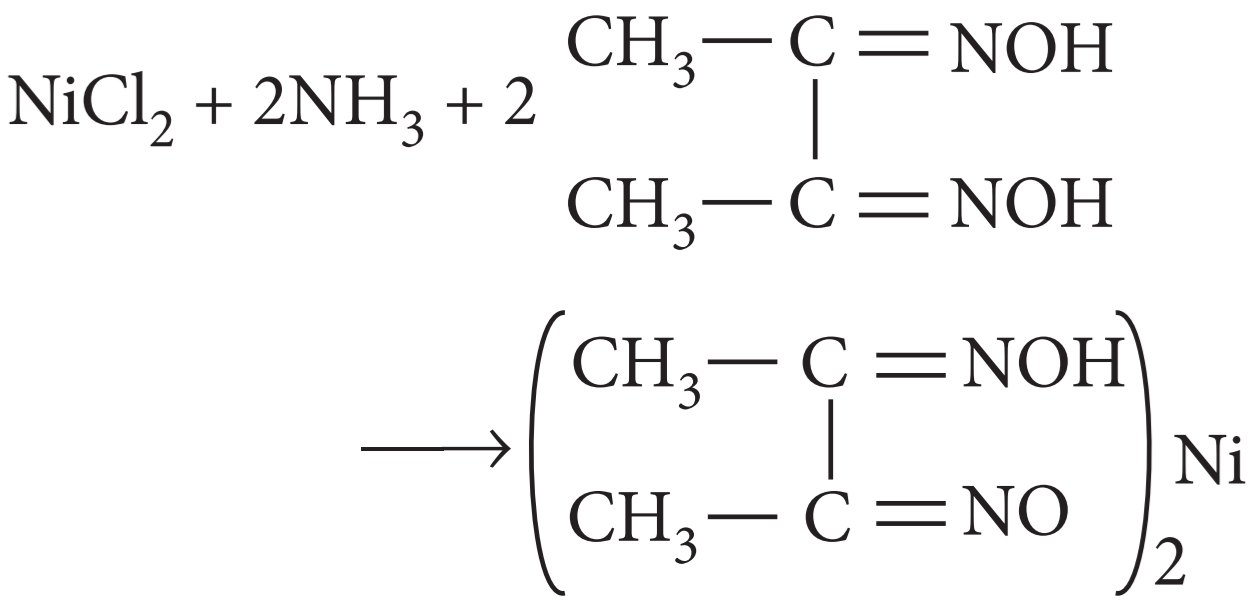
The molecular compounds which are formed from the combination of two or more simple stable compounds and retain their identity in the solid as well as in the dissolved state are called coordination compounds. Their properties are completely different from the constituents. ln coordination compounds, the central metal atom or ion is linked to a number ofions or neutral molecules, called ligands, by coordinate bonds. For example, Dimethylglyoxime (dmg) is a bid en date ligand chelating large amounts of metals. When dimethyl glyoxime is added to alcoholic solution of $NiCl_2$ and ammonium hydroxide is slowly added to it, a rosy red precipitate of a complex is formed.
The following questions are multiple choice questions. Choose the most appropriate answer:
- The structure of the complex is:
- Oxidation number of Ni in the given complex is:
- $+3$
- $+1$
- $+2$
- $Zero$
- Hybridisation and structure of the complex is:
- $Sp^3$, tetrahedral.
- $dsp^2$, square planar.
- $Sp^3$, square planar.
- $Sp^3d$, trigonal bipyramidal.
- Which of the following is true about this complex?
- It is paramagnetic, containing $2$ unpaired electrons.
- It is paramagnetic, containing $1$ unpaired electron.
- It is paramagnetic, containing $4$ unpaired electrons.
- It is diamagnetic with no unpaired electron.
- Which one will give test for $Fe^{3+}$ ions in the solution?
- $[Fe(CN)_6]^{3-}$
- $[Fe(CN)_6]^{2-}$
- $(NH_4)_2SO_4·FeSO_4·6H_2O$
- $Fe_2(S0_4)_3$


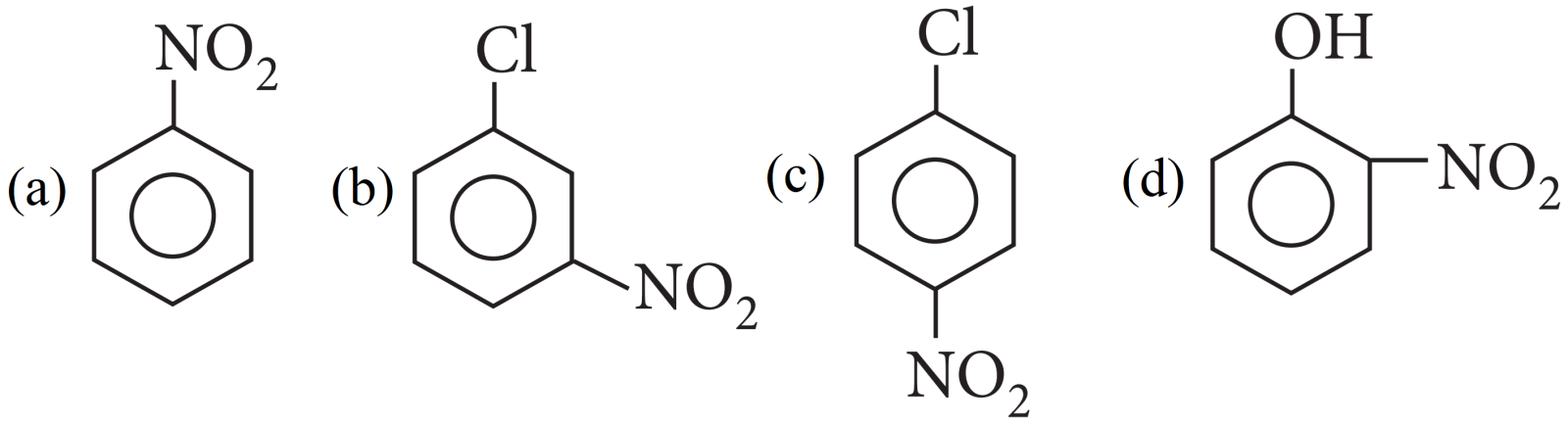
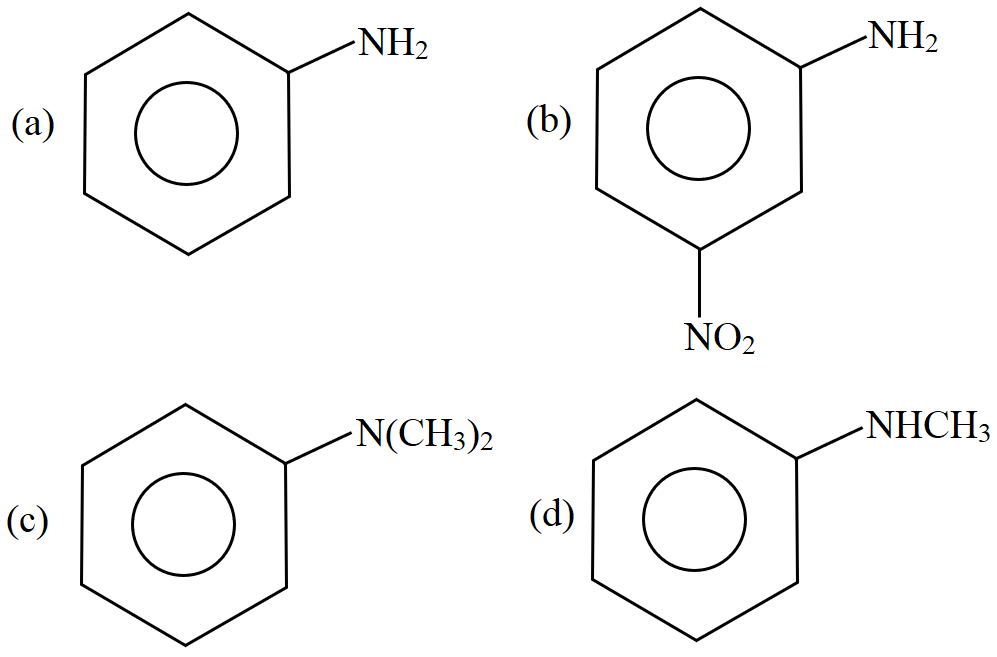
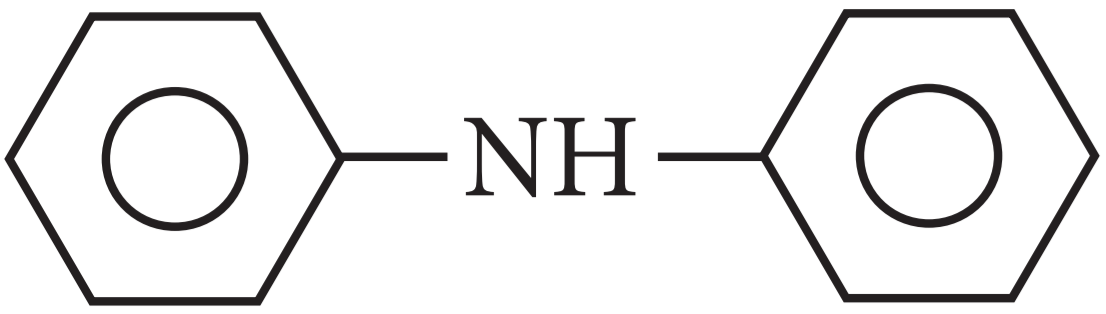
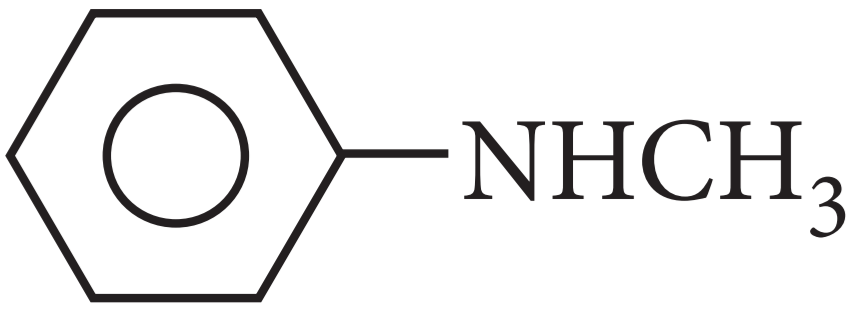
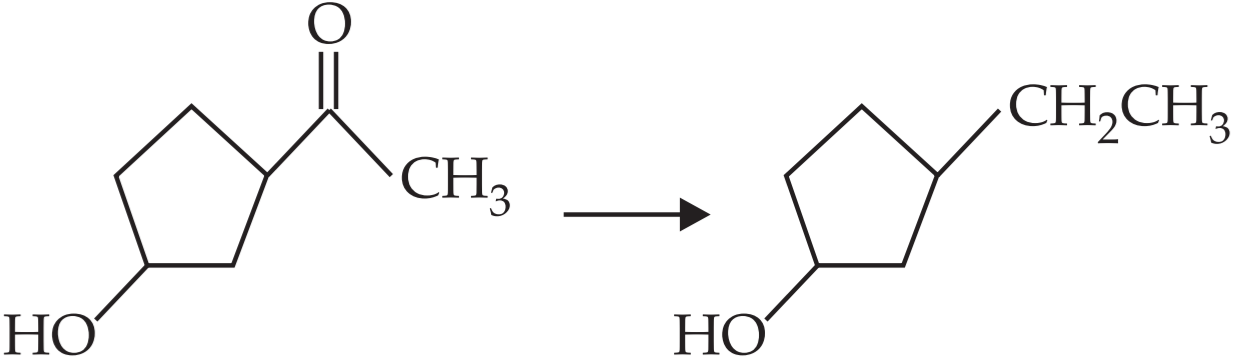
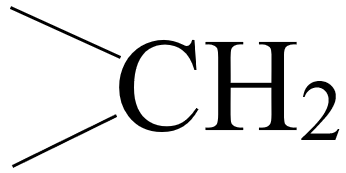 group on treatment with Zn-Hg and cone. HCl (Clemmensen reduction) or with hydrazine followed by NaOH or KOH in highly boiling solvent such as ethylene glycol (Wolff-Kishner reduction).Aldehydes differ from ketones in their oxidation reactions. Aldehydes are easily oxidised to carboxylic acids on treatment with $HNO_3, KMnO_4, K_2Cr_2O_7$ etc. Even mild oxidising agents mainlyTollens' reagent and Fehling's solution also oxidise aldehydes. Ketones are generally oxidised under vigorous conditions i.e., strong oxidising agents and at elevated temperatures, to give mixture of carboxylic acids having lesser number of C-atoms than the parent ketone.
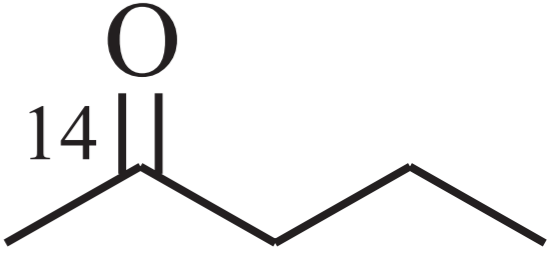 by acidified $K_2Cr_2O_7$, the products are: