Question
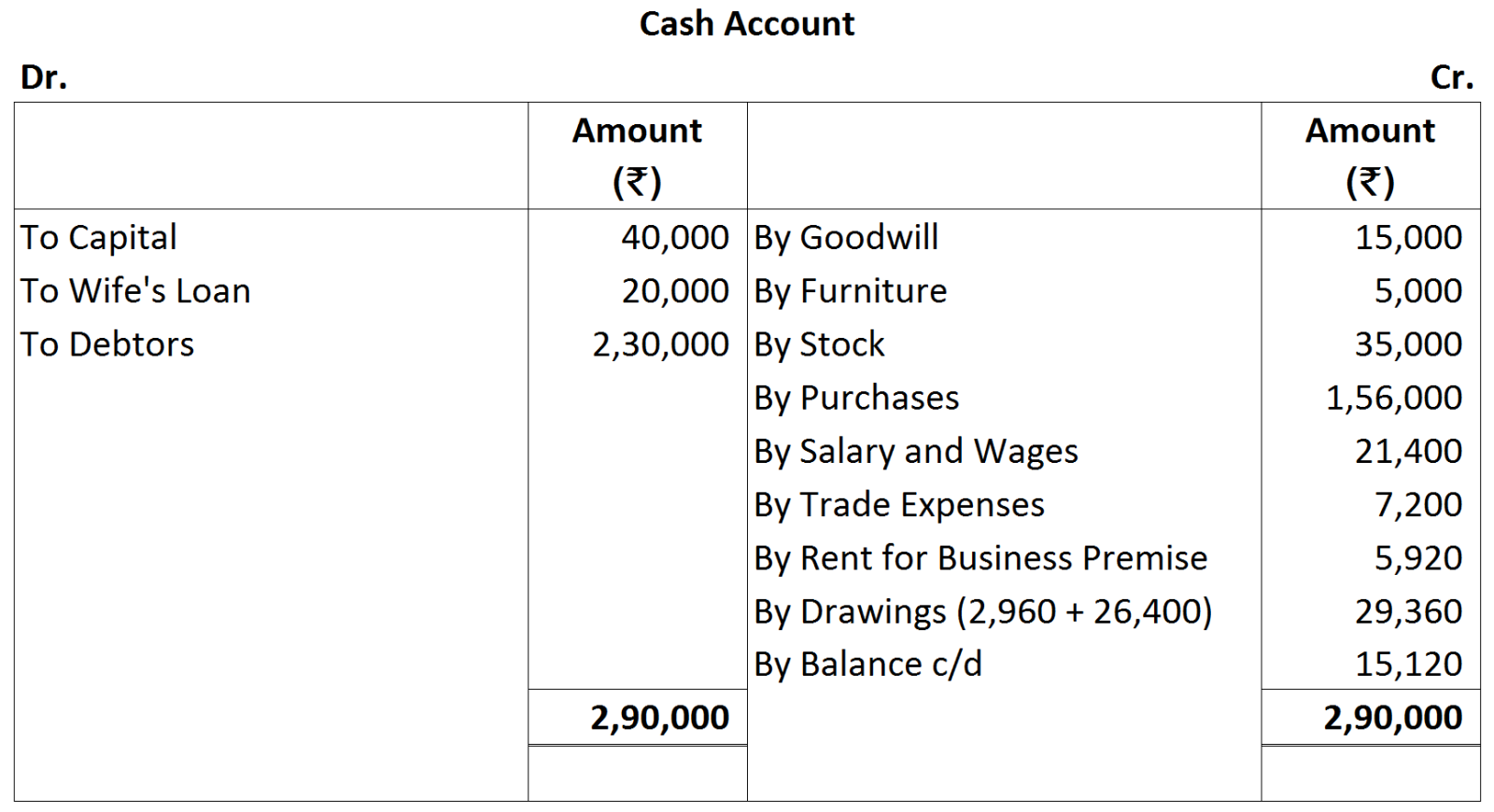
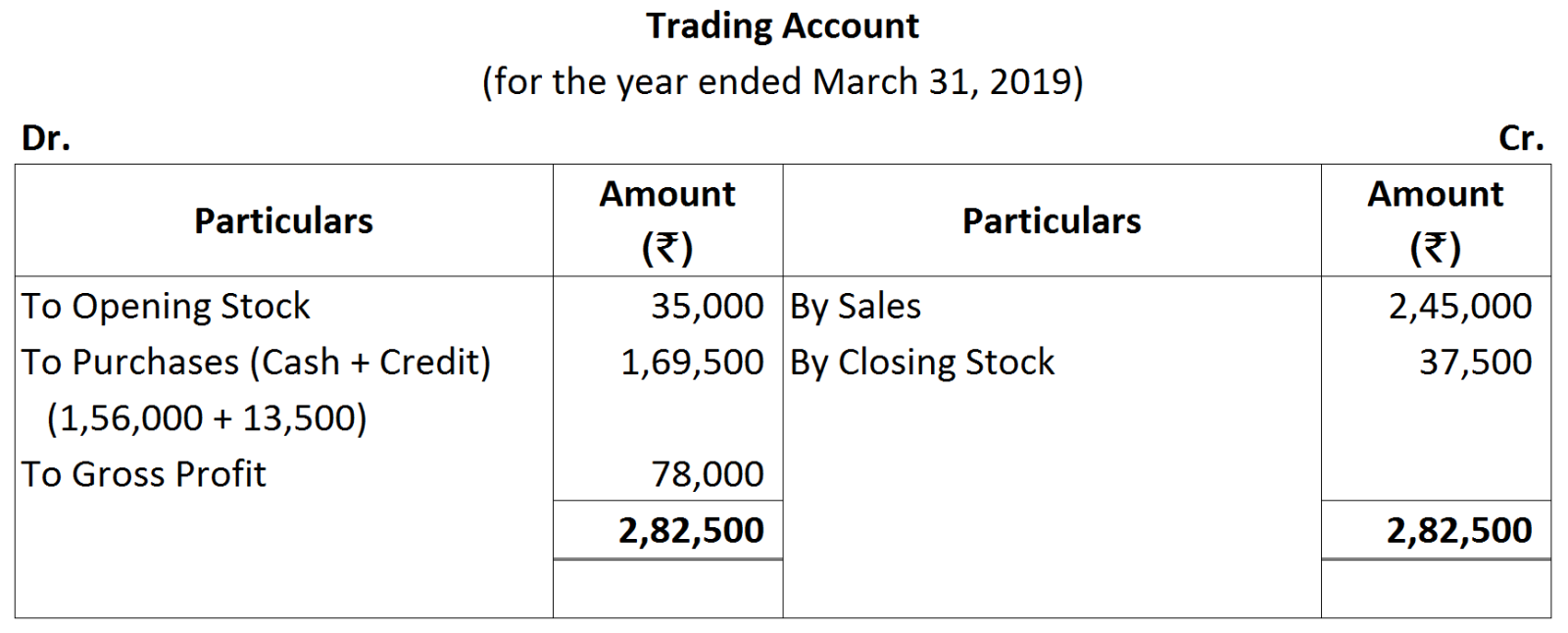
Roshan, whose accounts are maintained by Single Entry System, acquired a retail business on 1st April, 2017. He had ₹ 40,000 of his own and he borrowed ₹ 20,000 from his wife. He paid ₹ 15,000 for Goodwill, ₹ 5,000 for Furniture and ₹ 35,000 for Stock.
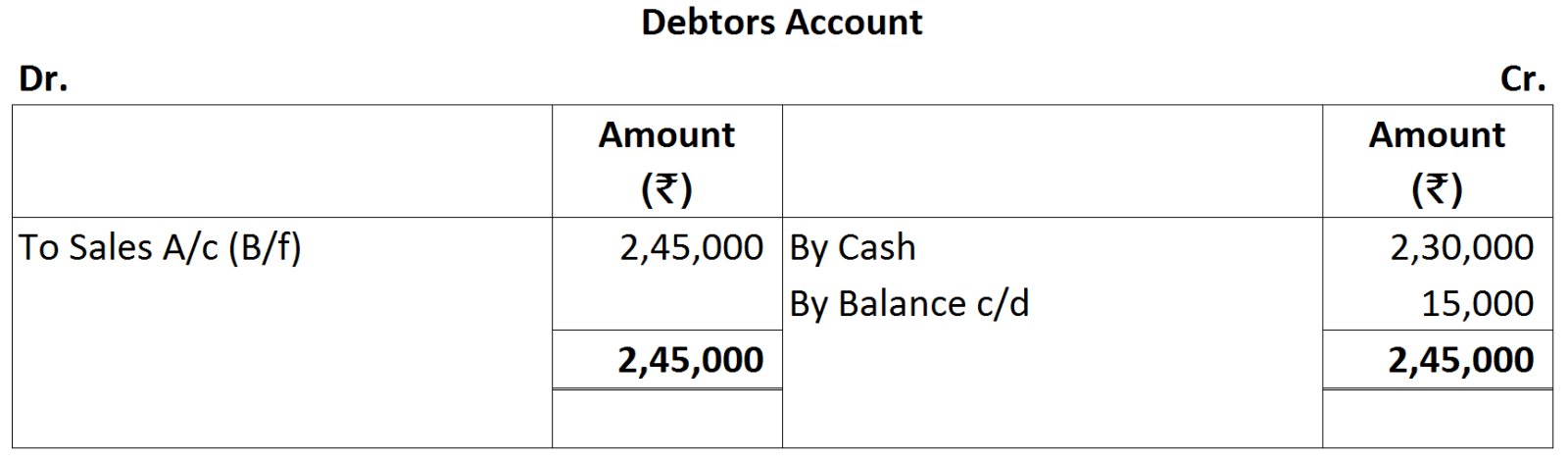
Total cash received by him during the financial year from the Debtors was ₹ 2,30,000. His payments were:
 
Purchases 1,56,000
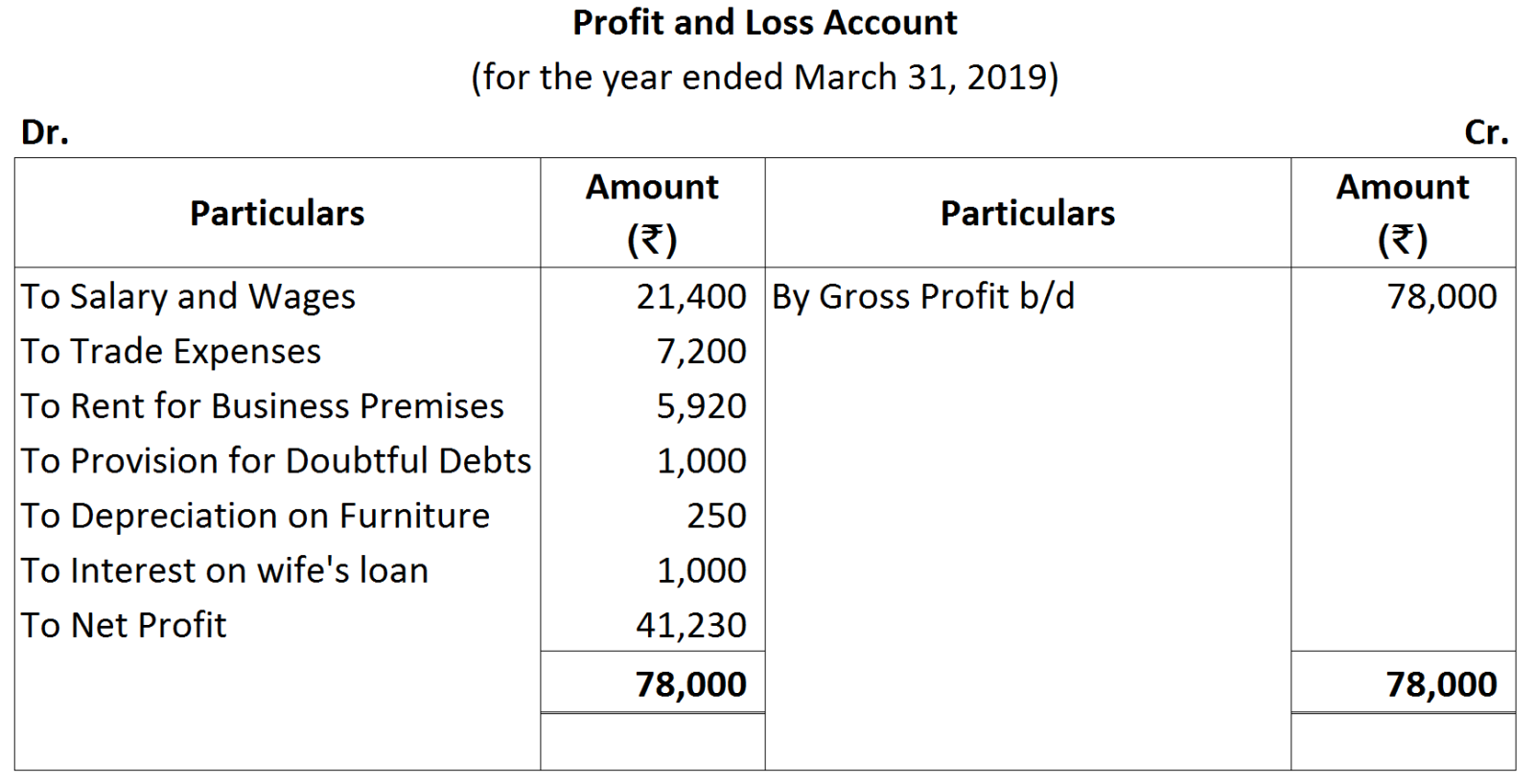
Salary and Wages 21,400
Trade Expenses 7,200
Rent:
For business premises 5,920
For private house 2,960
Payments made for domestic purposes and drawings 26,400
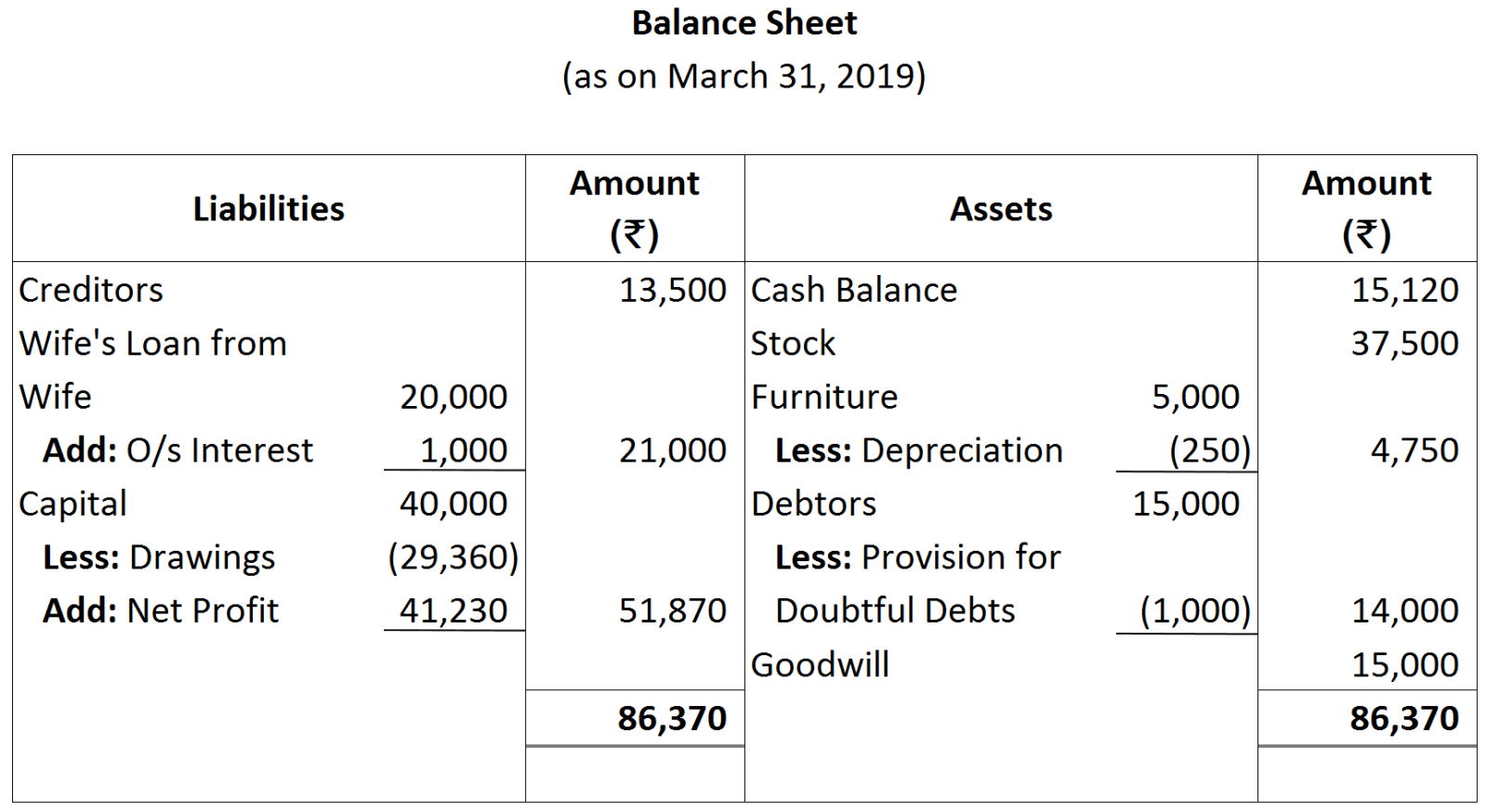
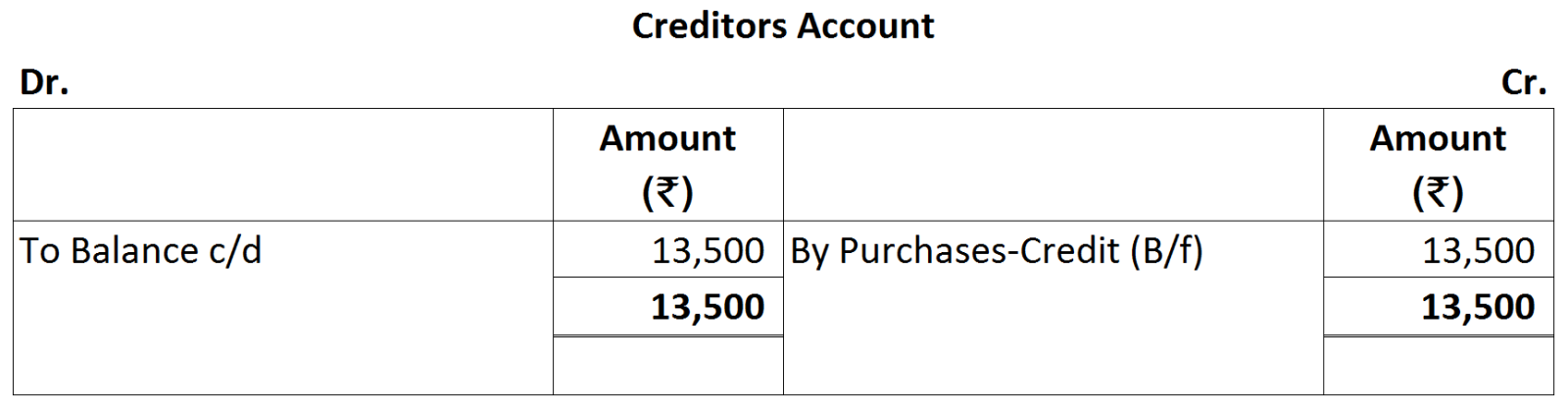
At the end of the year, the Stock was ₹ 37,500. He owed ₹ 13,500 to Creditors for goods and his customers owed to him ₹ 15,000. Provide 5% for Depreciation on Furniture, Interest at 5% on wife's Loan and ₹ 1,000 for Doubtful Debts.
Prepare the Cash Account, the Profit and Loss Account for the year ended 31st March, 2018 and the Balance Sheet at the close of the year.
Answer


Working Notes:

Need a full question paper?

Generate a complete, print-ready paper with questions like this in minutes — across 16+ boards, with answer keys.

Start Generating Free

Similar questions

Define Software. Explain different types of softwares used in a Computer System.
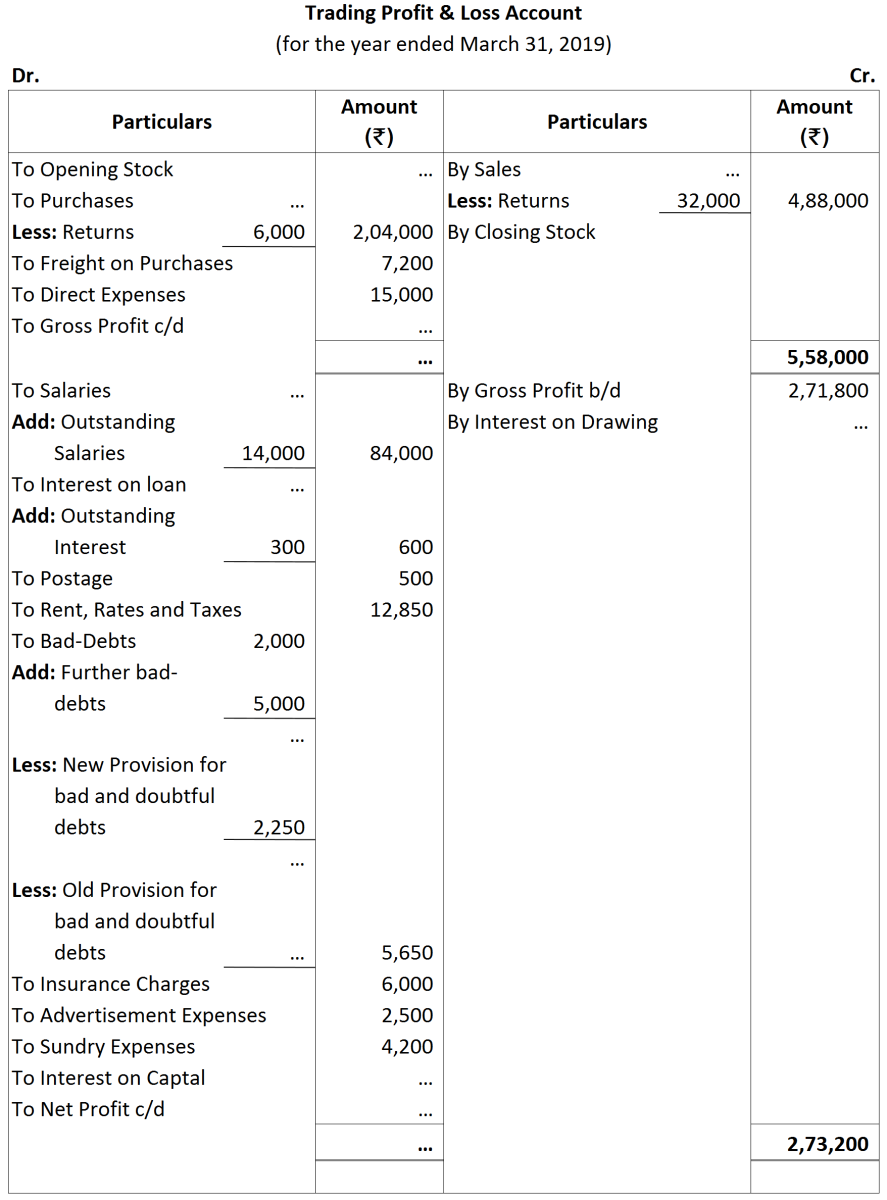
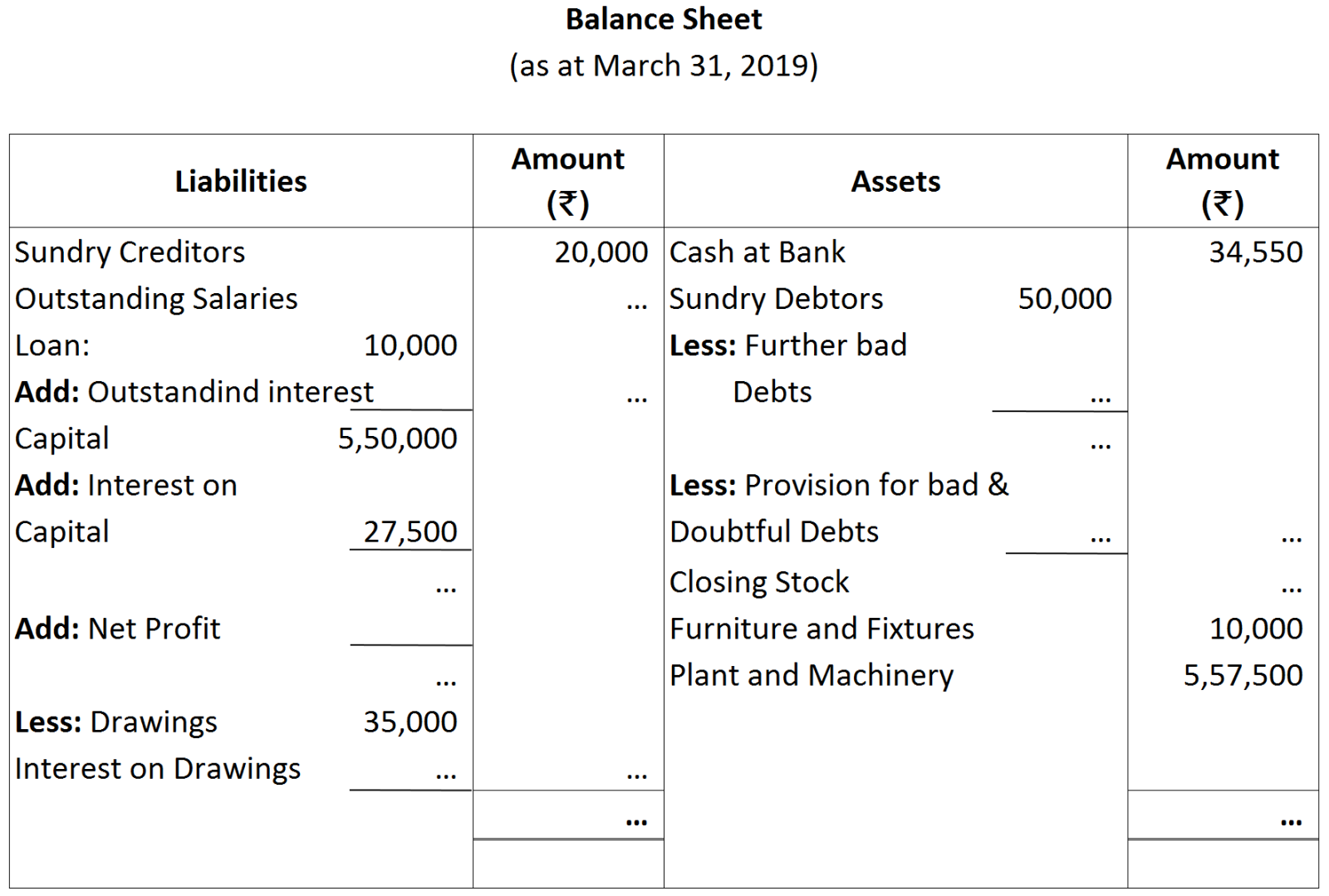
Fill in the missing figures in the following:

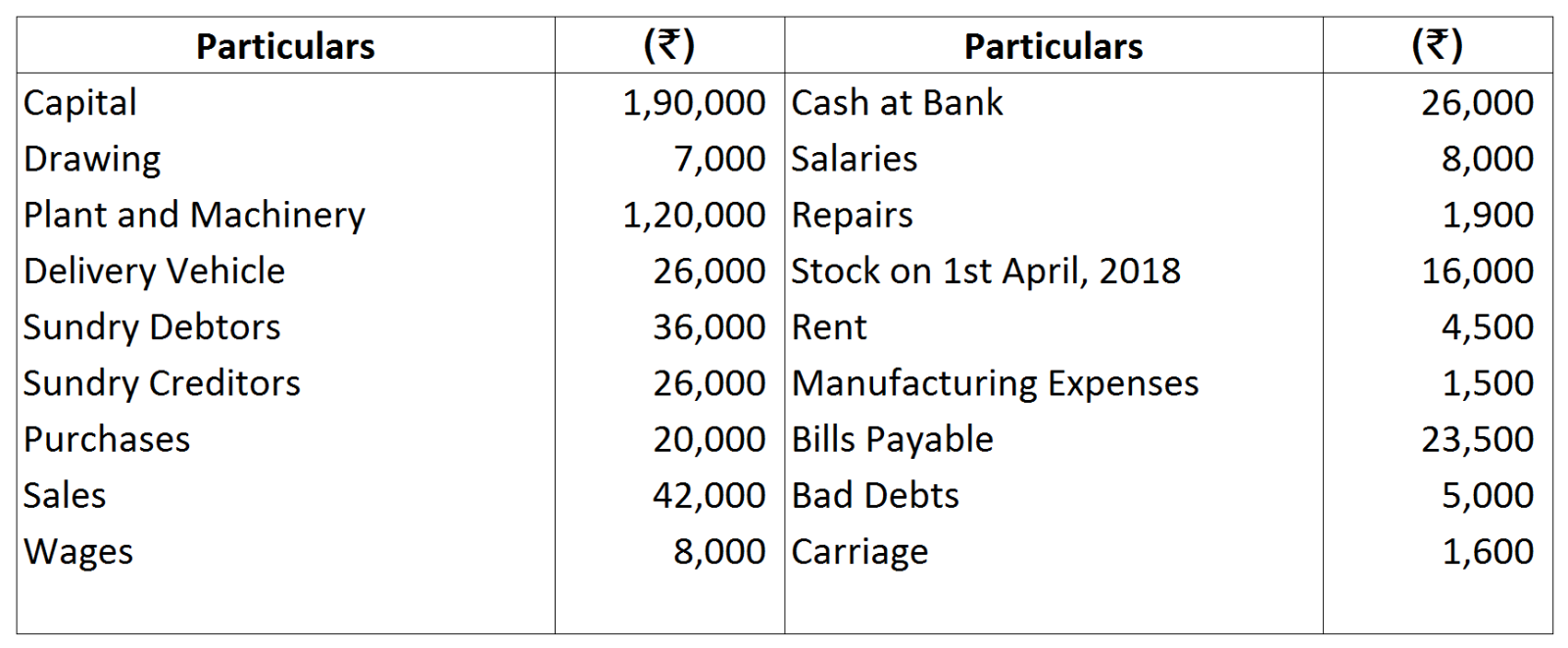
Following are the balance extracted from the books of Manish on 31st March, 2019:

Prepare Trading and Profit and Loss Account and Balance Sheet as 31st March, 2019 after following adjustments are made:
  1. Closing Stock was ₹ 16,000.
  2. Depreciation Plant and Machinery @ 10% and Delivery Vehicle @ 15%.
  3. Unpaid Rent amounted to ₹ 500.
On 30th June, 2019, bank column of the Cash Book showed balance of ₹ 12,000 but the Pass Book showed a different balance due to the following reasons:
  1. Cheques paid into the bank ₹ 8,000 but out of these only cheques of ₹ 6,500 credited by bankers.
  2. The receipts column of the Cash Book undercast by ₹ 200.
  3. On 29th June, a customer deposited ₹ 3,000 directly in the Bank Account but it was entered in the Pass Book only.
  4. Cheques of ₹ 9,200 were issued of which ₹ 2,200 were presented for payment on 15th July.
  5. Pass Book shows a credit of ₹ 330 as interest and a debit of ₹ 60 as bank charges.
Prepare Bank Reconciliation Statement as on 30th June, 2019.
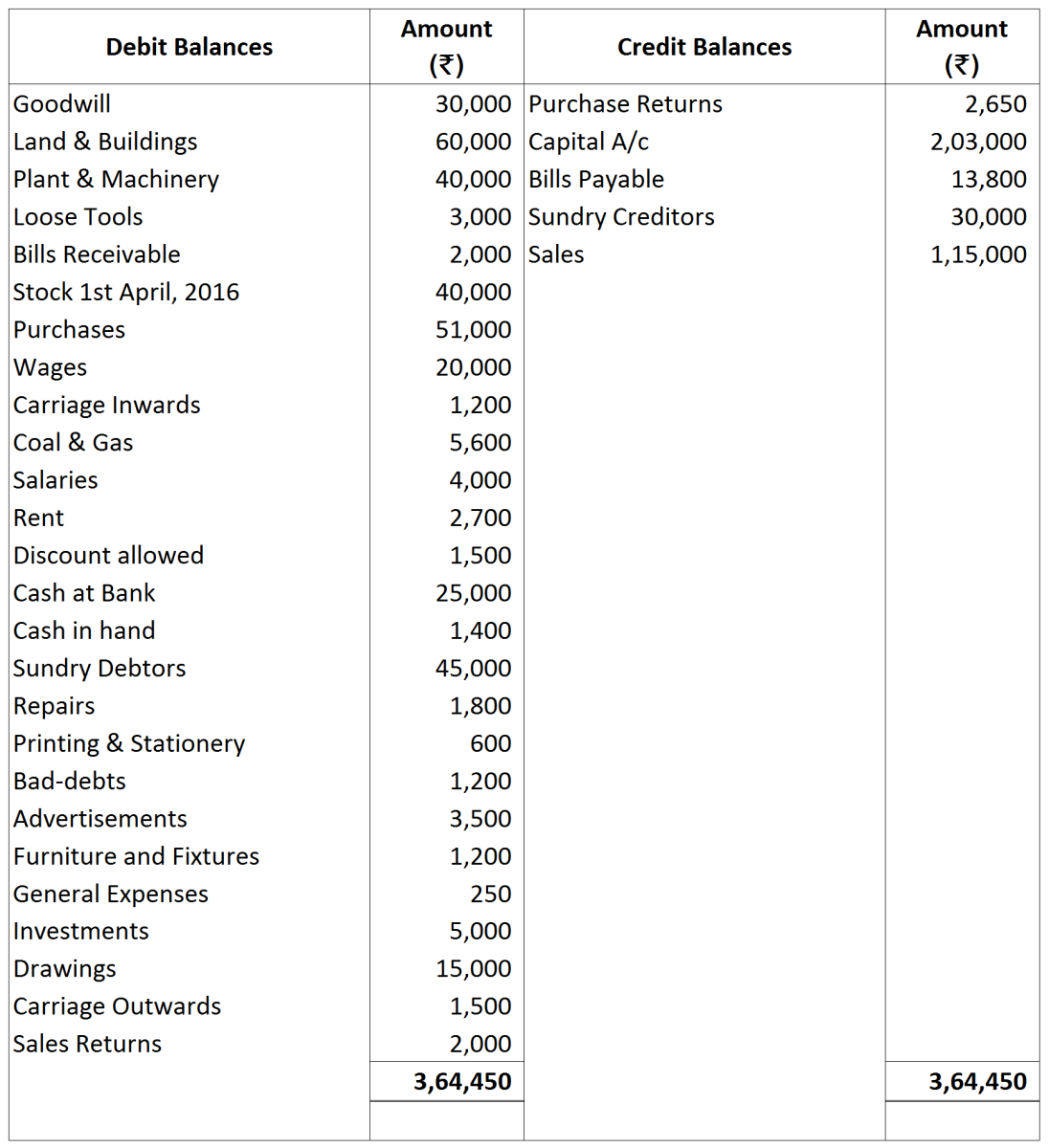
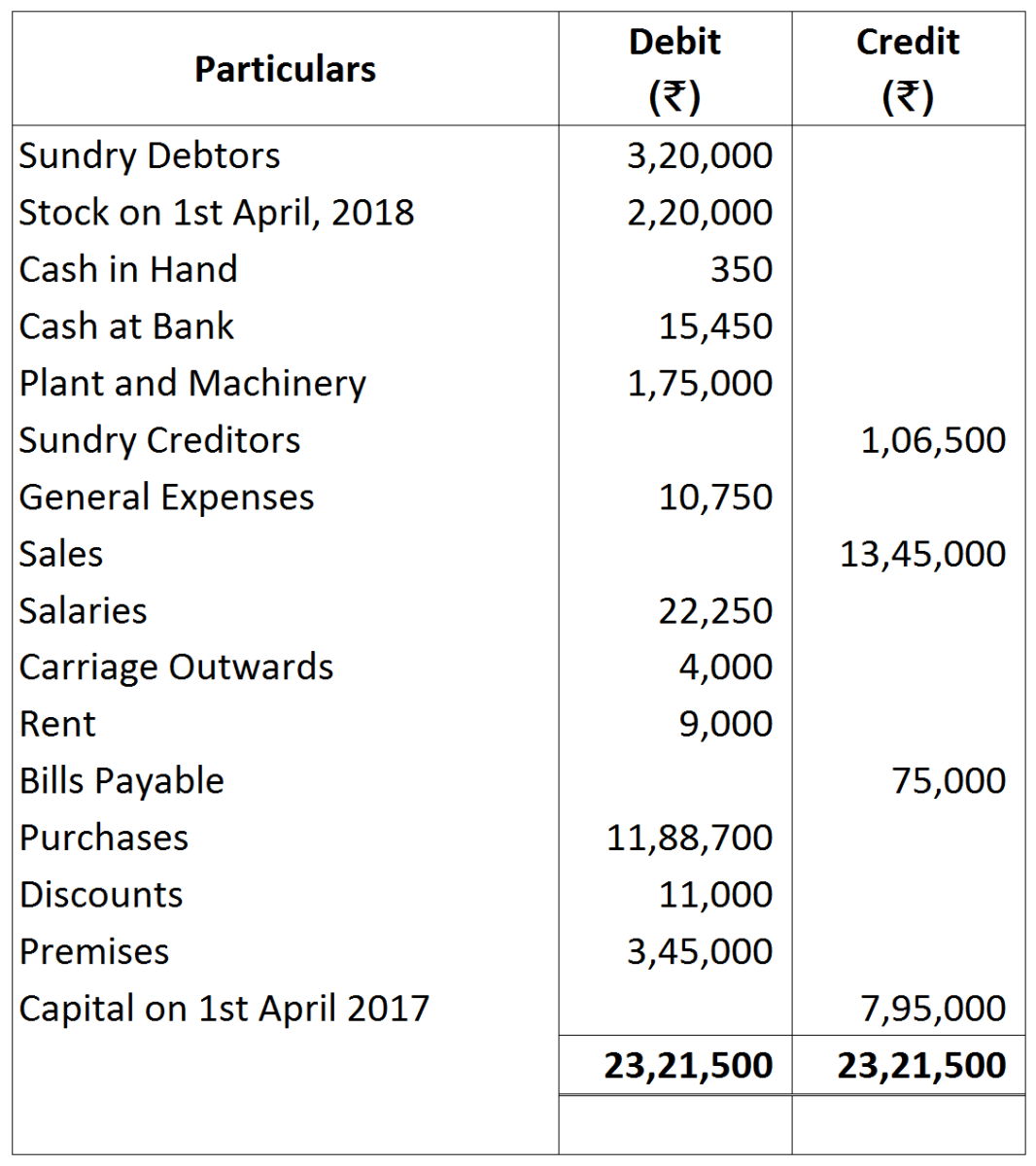
Following is the Trial Balance of Mr. Gautam as at 31st March, 2017:

You are required to prepare Final Accounts after taking into account the following adjustments:
  1. Closing Stock on 31st March, 2017 was ₹ 60,000.
  2. Depreciate Plant and Machinery at 5%, Loose Tools at 15% and Furniture and fixtures at 5%.
  3. Provide $2\frac{1}{2}\%$ for discount on Sundry Debtors and also provide 5% for Bad and Doubtful Debts on Sundry Debtors.
  4. Only three quarter's rent has been paid, the last quarter's rent being outstanding.
  5. Interest earned but not received ₹ 600.
  6. Write off $\frac{1}{4}\text{th}$ of Advertisement expenses.
Prepare Bank Reconciliation Statement as on 31st March, 2019 from the following particulars:
  1. R's overdraft as per Pass Book ₹ 12,000 as on 31st March.
  2. On 30th March, cheques had been issued for ₹ 70,000 of which cheques amounting to ₹ 3,000 only had been encashed up to 31st March.
  3. Cheques amounting to ₹ 3,500 had been paid into the bank for collection but of these only ₹ 500 had been credited in the Pass Book.
  4. Bank has charged ₹ 500 as interest on overdraft and the intimation of which has been received on 2nd April, 2019.
  5. Bank Pass Book shows credit for ₹ 1,000 representing ₹ 400 paid by debtor of Rdirect into the bank and ₹ 600 collected directly by the bank in respect of interest on R's investment. R had no knowledge of these items.
  6. A cheque for ₹ 200 has been debited in the bank column of Cash Book by R but it was not sent to the bank at all.
From the following Trial Balance and other information, prepare Trading and Profit and Loss Account for the year ended 31st March, 2019 and Balance Sheet as at that date:

Stock on 31st March, 2019 was ₹ 1,24,500. Rent was unpaid to the extent of ₹ 850 and ₹ 1,500 were outstanding for General Expenses; ₹ 4,000 are to be written off as bad debts out of the above debtors; and 5% is to be provided for doubtful debts. Depreciate Plant and Machinery by 10% and Premises by 2%.
Manager is entitled to a commission of 5% on net profit after charging his commission.
Bring out the relationship between MIS and AIS.
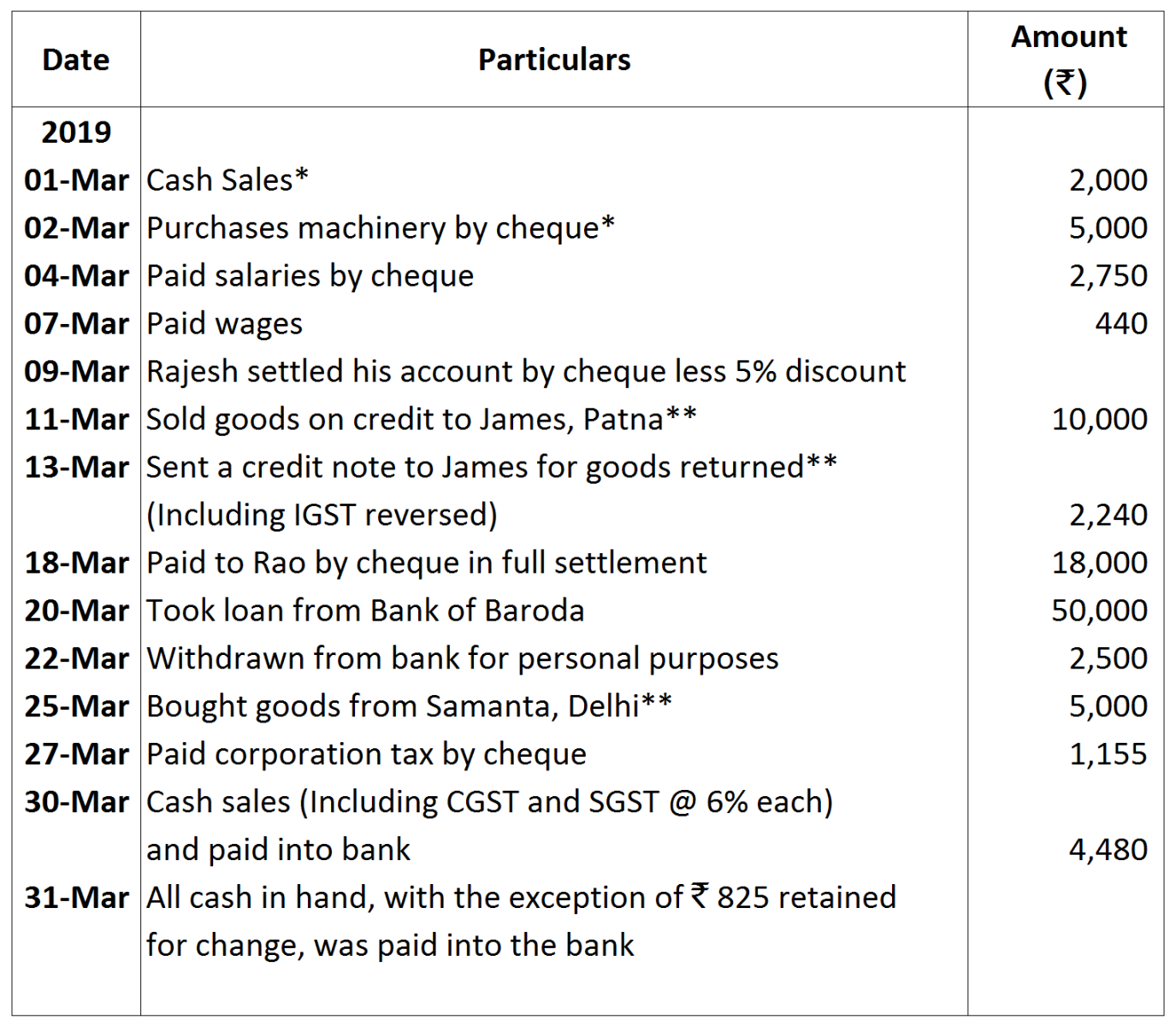
R. Chetan, Kolkata has the following balances in his books on 1st March, 2019: Cash ₹ 15,400; Cash at Bank ₹ 82,500; Stock ₹ 1,92,500; Plant and Machinery ₹ 4,40,000. Sundry Debtors: Rajesh ₹ 27,500; James ₹ 13,750. Sundry Creditors: Rao ₹ 19,250, Samanta; ₹ 35,750; Capital ₹ 7,16,650. The following are the transactions for the month of March 2019:
Transactions marked with (*) are intra-state transactions subject to CGST and SGST @ 6% each. Transactions marked with (**) are inter-state transactions subject to IGST @ 12%. Record these transactions in his subsidiary books, post to the Ledger and prepare a Trial Balance as on 31st March, 2019.
What is meant by entity type? How it is different from entity set? Illustrate by giving suitable example from accounting reality.