MCQ
Select the correct statement : (Only force on a particle is due to electric field)
  • A
    A charged particle always moves along the electric line of force.
  • A charged particle may move along the line of force
  • C
    A charge particle never moves along the line of force
  • D
    A charged particle moves along the line of force only if released from rest.
Answer

Correct option: B.
A charged particle may move along the line of force
b
If field is straight then the charge moves along the straight line. if the fielss is a curve then the electrostatic force is not sufficient to change the direction along the curved field line.

Need a full question paper?

Generate a complete, print-ready paper with questions like this in minutes — across 16+ boards, with answer keys.

Start Generating Free

Similar questions

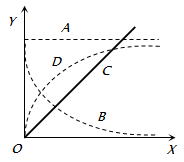
In Fig. X represents time and Y represent activity of a radioactive sample. Then the activity of sample, varies with time according to the curve
A bar magnet of magnetic moment $3.0\ A-m^2$ is placed in a uniform magnetic induction field of $2 × 10^{-5}$ T. If each pole of the magnet experiences a force of $6 × 10^{-4} N$, the length of the magnet is
A series $LCR$ circuit is subjected to an $AC$ signal of $200 \mathrm{~V}, 50 \mathrm{~Hz}$. If the voltage across the inductor $(\mathrm{L}=10 \mathrm{mH})$ is $31.4 \mathrm{~V}$, then the current in this circuit is $\qquad$
The dimension of the magnetic field intensity B is
When the frequency of the source voltage decreases, the impedance of a parallel $RC$ circuit.
If an electron oscillates at a frequency of 1 GHz it gives
What is the purpose of anode in a Cathode ray tube?
Unpolarized light of intensity $I$ is incident on a system of two polarizers, $A$ followed by $B.$  The intensity of emergent light is $I/2.$  If a third polarizer $C$  is placed between $A$ and $B,$  the intensity of emergent light is reduced to $I/3 .$  The angle between the polarizers $A$ and $C$ is $\theta $ . Then
Two infinitely long parallel wires carry currents of magnitude $I_1$ and $I_2$ are at a distance $4 cm$ apart. The magnitude of the net magnetic field is found to reach a non-zero minimum value between the two wires and $1 \,cm$ away from the first wire. The ratio of the two currents and their mutual direction is
A point charge q is rotated along a circle in the electric field generated by another point charge Q. The work done by the electric field on the roatating charge in one complete revolution is: