MCQ
Shift by which the object appears to be raised depends on:
- AThe refractive index of the medium
- BThe thickness of denser medium
- CColour of incident light
- DAll
Shift by which the object appears to be raised depends on:
Explanation:
Shift by which the object appears to be raised depends on these 4 factors. The shift increases with increase in refraction index of medium and also with the thickness of denser medium.
Generate a complete, print-ready paper with questions like this in minutes — across 16+ boards, with answer keys.
$\omega\propto\frac{1}{\text{r}}$
$\omega\propto\text{r}$
$\omega=0$
$\omega$ is independent of r.
The ratio of momenta of an electron and an α- particle which are accelerated from rest by a potential difference of 100 V is
|
(a) 1 |
(b) |
(c) |
(d) |
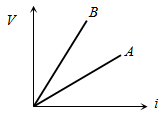
V-i graphs for parallel and series combination of two identical resistors are as shown in figure. Which graph represents parallel combination
|
(a) A |
(b) B |
(c) A and B both |
(d) Neither A nor B |
The rays parallel and close to the principal axis are called:
The shortest wavelength of X-rays emitted from an X-ray tube depends on the
|
(a) Current in the tube |
(b) Voltage applied to the tube |
|
(c) Nature of gas in the tube |
(d) Atomic number of target material |
A charge particle is free to move in an electric field. It will travel
|
(a) Always along a line of force |
|
(b) Along a line of force, if its initial velocity is zero |
|
(c) Along a line of force, if it has some initial velocity in the direction of an acute angle with the line of force |
|
(d) None of the above |
What is the stopping potential when the metal with work function 0.6 eV is illuminated with the light of 2 eV
|
(a) 2.6 V |
(b) 3.6 V |
(c) 0.8 V |
(d) 1.4 V |


