Question
Shweta was teaching "method to solve a linear inequality in one variable" to her daughter.
Step I Collect all terms involving the variable (x) on one side and constant terms on other side with the help of above rules and then reduce it in the form $\mathbf{a x}<\mathbf{b}$ or $\mathbf{a x} \leq \mathbf{b}$ or $\mathbf{a x}>\mathbf{b}$ or $\mathbf{a x} \geq \mathbf{b}$.
Step II Divide this inequality by the coefficient of variable (x). This gives the solution set of given inequality.
Step III Write the solution set.

Based on above information, answer the following questions.

(i) The solution set of $\mathbf{2 4 x}<\mathbf{1 0 0}$, when $\mathrm{x}$ is a natural number is
    (a) $\{1,2,3,4\}$     (b) $(1,4)$     (c) $[1,4]$     (d) None of these

(ii) The solution set of $24100 \mathrm{x}<$, when $\mathrm{x}$ is an integer is
    (a) $\{\ldots \ldots-4,-3,-2,-1,0,1,2,3,4\}$     (b) $(-\infty, 4]$     (c) $[4, \infty]$     (d) None of the above

(iii) The solution set of $-\mathbf{5 x}+\mathbf{2 5}>0$ is
    (a) $[5, \infty)$     (b) $(-\infty, 5]$    (c) $(5, \infty)$     (d) $(-\infty, 5)$

(iv) The solution set of $\mathbf{3 x}-\mathbf{5}<\mathbf{x + 7}$ is
    (a) $(6, \infty)$     (b) $[6, \infty)$     (c) $(-\infty, 6)$     (d) $(-\infty, 6]$

(v) The solution set of $x+\frac{x}{2}+\frac{x}{3}<11$ is
    (a) $(-\infty, 6]$     (b) $(-\infty, 6)$     (c) $[6, \infty)$     (d) None of these
Answer

(i) (a) We have, $\mathbf{2 4 x}<\mathbf{1 0 0}$
On dividing both sides by 24 , we get
$
=\frac{24 x}{24}<\frac{100}{24} \Rightarrow x<\frac{25}{6}
$
When $\mathbf{x}$ is a natural number, then solutions of the inequality $x<\frac{25}{6}$, are all natural numbers, which are less than $\frac{25}{6}$. In this case, the following values of $x$ make the statement true.
$
\mathrm{x}=1,2,3,4
$
Hence, the solution set of inequality is $\{\mathbf{1 , 2 , 3 , 4}\}$.

(ii) (a) We have, $24 \mathrm{x}<\mathbf{1 0 0}$
On dividing both sides by 24 , we get
$
=\frac{24 x}{24}<\frac{100}{24} \Rightarrow x<\frac{25}{6}
$
When $\mathbf{x}$ is an integer.
In this case, solutions of given inequality are
$
\ldots,-4,-3,-2,-1,0,1,2,3,4
$
Hence, the solution set of inequality is
$
\{\ldots,-4,-3,-2,-1,0,1,2,3,4\}
$

(iii) (d) We have, $-5 x+25>0$
On adding $5 \mathbf{x}$ both sides, we get
$
-5 x+25+5 x>0+5 x \Rightarrow 25>5 x \Rightarrow 5 x<25
$
On dividing both sides by 5 , we get
$
\Rightarrow \frac{5 x}{5}<\frac{25}{5} \Rightarrow x<5
$
Hence, the required solution set is $(-\infty, 5)$.

(iv)
(c) We have, $3 \mathbf{x}-\mathbf{5} < \mathbf{x}+\mathbf{7}$
$\Rightarrow 3 x-5+5 < x+7+5$
$\Rightarrow 3 \mathrm{x}<\mathrm{x}+12$
$\Rightarrow 3 \mathrm{x}-\mathrm{x}<\mathrm{x}+12-\mathrm{x}$
[adding 5 both sides]
[subtracting $\mathbf{x}$ from both sides]
$
\begin{aligned}
& \Rightarrow \quad 2 x<12 \\
& \Rightarrow \quad \frac{2 x}{2}<\frac{12}{2} \\
& \Rightarrow \quad x<6
\end{aligned}
$
[dividing both sides by 2]
The solution set is $\{\mathbf{x}: \mathbf{x} \in \mathbf{R}$ and $\mathbf{x}<6\}$ i.e., any real number less than 6 . This can also be written as $(-\infty, 6)$.

(v) (b) We have, $x+\frac{x}{2}+\frac{x}{3}<11$
$
\Rightarrow \frac{6 x+3 x+2 x}{6}<11 \Rightarrow \frac{11 x}{6}<11
$

On multiplying both sides by $\frac{6}{11}$, we get
$
\begin{aligned}
& \frac{11 x}{6} \times \frac{6}{11}<11 \times \frac{6}{11} \Rightarrow x<6 \\
& \therefore \quad x \in(-\infty, 6) \\
&
\end{aligned}
$

Need a full question paper?

Generate a complete, print-ready paper with questions like this in minutes — across 16+ boards, with answer keys.

Start Generating Free

Similar questions

Consider the data
$x_i$ $4$ $8$ $11$ $17$ $20$ $24$ $32$
$f _{ i }$ $3$ $5$ $9$ $5$ $4$ $3$ $1$
$i.$ Find the standard deviation. $(1)$
$ii.$ Find the variance.$ (1)$
$iii$. Find the mean. $(2)$
$OR$
Write the formula of variance? $(2)$
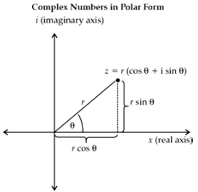
Consider the complex number $Z = 2 - 2i.$ Complex Number in Polar Form
Image
$i.$ Find the principal argument of $Z . (1)$
$ii.$ Find the value of $\bar{z} \bar{z}$ ? $(1)$
$iii.$ Find the value of $| Z |. (2)$
OR
Find the real part of $Z. (2)$
 
An analysis of monthly wages paid to workers in two firms $A$ and $B,$ belonging to the same industry, gives the following results:
Particulars Firm $A$ Firm $B$
No. of wage earners $586$ $648$
Mean of monthly wages $₹ 5253$ $₹ 5253$
Variance of the distribution of wages $100$ $121$

Image

$i$. Which firm $A$ or $B$ shows greater variability in individual wages? $(1)$
$ii$. Find the standard deviation of the distribution of wages for frim $B.\ (1)$
$iii$. Find the coefficient of variation of the distribution of wages for firm $A. \ (2)$
OR
Find the amount paid by firm $A. \ (2$)
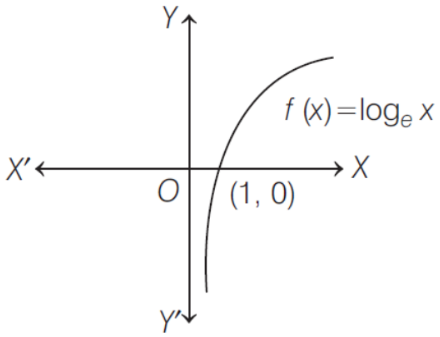
The logarithmic function expressed as $\log _e R^{+} \rightarrow R$ and given by $\log _e x=y$ iff $e^y=x$. The graph of the function is given below :
Image
(i) Domain of $f(x)=(0, \infty)$ or $R^{+}$
(ii) Range of $f(x)=(-\infty, \infty)$ or $R$

To find the limit of functions involving logarithmic function, we use the following theorem Theorem $\lim _{x \rightarrow 0} \frac{\log _e(1+x)}{x}=1$

Based on above information, answer the following questions.

(i) $\lim _{x \rightarrow 0} \frac{\log _e(1+5 x)}{x}$ is equal to
    (a) 5     (b) 4     (c) 3     (d) 1

(ii) $\lim _{x \rightarrow 0} \frac{\log _e(1+6 x)-5 x^2}{x}$ is equal to
    (a) 1     (b) 2     (c) 3     (d) 6

(iii) $\quad \lim _{x \rightarrow 0} \frac{\sqrt{1+x}-1}{\log (1+x)}$ is equal to
    (a) 1     (b) $\frac{1}{2}$     (c) $\frac{1}{3}$     (d) $\frac{3}{2}$

(iv) $\quad \lim _{x \rightarrow 5} \frac{\log x-\log 5}{x-5}$ is equal to
    (a) $\frac{1}{5}$     (b) $\frac{3}{5}$     (c) $\frac{1}{4}$     (d) $\frac{2}{3}$

(v) $\quad \lim _{x \rightarrow 0} \frac{\log (5+x)-\log (5-x)}{x}$ is equal to
    (a) $\frac{1}{5}$     (b) $\frac{2}{5}$     (c) $\frac{3}{5}$     (d) $\frac{4}{5}$
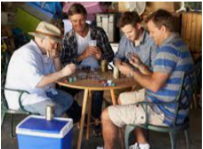
Four friends Dinesh, Yuvraj, Sonu, and Rajeev are playing cards. Dinesh, shuffling a cards and told to Rajeev choose any four cards. 
Image
$i$. What is the probability that Rajeev getting all face card. $(1)$
$ii$. What is the probability that Rajeev getting two red cards and two black card. $(1)$
$iii$. What is the probability that Rajeev getting one card from each suit. $(2)$
OR
What is the probability that Rajeev getting two king and two Jack cards. $(2)$
In a class test of class XI, a teacher asked to students to consider $\mathbf{A}+\mathbf{B}=\frac{\pi}{4}$, where $\mathbf{A}$ and $\mathbf{B}$ are acute angles.
Based on the above information, answer the following questions.
(i) Find the value of $(1+\tan A)(1+\tan B)$ ?
(ii) Find the value of $(\cot \mathbf{A}-1)(\cot \mathbf{B}-1)$ ?
(iii) Find the value of
$
\sin (A+B)-\cos (A+B)+\tan (A+B) .
$
Consider the data.
Class Frequency
$0-10$ $6$
$10-20$ $7$
$20-30$ $ 15$
$30-40$ $ 16$
$40-50$ $4$
$50-60$ $2$
$i$. Find the mean deviation about median. $(1)$
$ii$. Find the Median. $(1)$
$iii$. Write the formula to calculate the Mean deviation about median? $(2)$
OR
Write the formula to calculate median? $(2)$
Two complex numbers $Z _1= a + ib$ and $Z _2= c + id$ are said to be equal, if $a = c$ and $b = d$.
$i.$ If $(x+i y)(2-3 i)=4+i$ then find the value of $(x, y)$.
$ii.$ If $\frac{(1+i)^2}{2-i}=x+i y$, then find the value of $x+y. (1)$
$iii.$ If $\left(\frac{1-i}{1+i}\right)^{100}=a+i b$, then find the values of $a$ and $b. (2)$
$OR$
If $(a-2,2 b+1)=(b-1, a+2)$, then find the real values of $a$ and $b. (2)$
The conjugate of a complex number $z$, is the complex number, obtained by changing the
sign of imaginary part of $z$ . It is denoted by $\bar{z}$.
The modulus $($or absolute value$)$ of a complex number, $z = a +$ ib is defined as the non
negative real number
$\sqrt{a^2+b^2}$. It is denoted by $|z|$. i.e.
$|z|=\sqrt{a^2+b^2}$
Multiplicative inverse of $z$ is $\frac{\bar{z}}{|z|^2}$. It is also called reciprocal of $z .$
$z \bar{z}=|z|^2$
$i.$ If $f(z)=\frac{7-z}{1-z^2}$, where $z=1+2 i$, then find $|f(z)|. ( 1 )$
$ii.$ Find the value of $(z+3)(\bar{z}+3). (1)$
$iii.$ If ( $x-i y)(3+5 i)$ is the conjugate of $-6-24 i$, then find the value of $x+y. (2)$
OR
If $z=3+4 i$, then find $\bar{z}. (2)$
The school organised a cultural event for $100$ students. In the event, $15$ students participated in dance, drama and singing. $25$ students participated in dance and drama; $20$ students participated in drama and singing; $30$ students participated in dance and singing. $8$ students participated in dance only; $5$ students in drama only and $12$ students in singing only.

Based on the above information, answer the following questions.
  1. The number of students who participated in dance, is:
  1. $18$
  2. $30$
  3. $40$
  4. $48$
  1. The number of students who participated in drama, is:
  1. $35$
  2. $30$
  3. $25$
  4. $20$
  1. The number of students who participated in singing, is:
  1. $42$
  2. $45$
  3. $47$
  4. $37$
  1. The number of students who participated in dance and drama but not in singing, is:
  1. $20$
  2. $5$
  3. $10$
  4. $15$
  1. The number of students who did not participate in any of the events, is:
  1. $20$
  2. $30$
  3. $25$
  4. $35$