Question
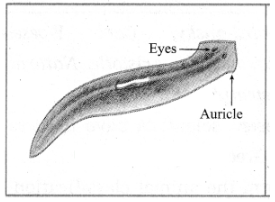
Sketch, labell and classify: Planaria
Answer


Image
Classification:
Kingdom: Animalia
Division: Non-chordata
Phylum: Platyhelminthes
Example: Planaria

Need a full question paper?

Generate a complete, print-ready paper with questions like this in minutes — across 16+ boards, with answer keys.
Start Generating Free

Similar questions

X, Y, and Z are three animals. The animal X can fly but animal Y can only run on ground or walls. The forelimbs of animals X and Y have the same basic design but they are used for different purposes such as flying and running respectively. The animal Z became extinct an long time ago. The study of fossils of Z tells us that it had some features like those of X and some like those of Y. In fact, Z is said to form a connecting link in the evolutionary chain of X and Y.
  1. What could the animals X, Y and Z be?
  2. What name is given to the forelimbs like those of X and Y which have the same basic design but different functions?
  3. Name one feature in which Z resembled X.
  4. Name one feature in which Z resembled Y.
  5. Which is the correct evolutionary chain involving X, Y and Z : X → Z → Y or Y → Z → X?
Write the various steps involved in the sexual reproduction in plants.

Image

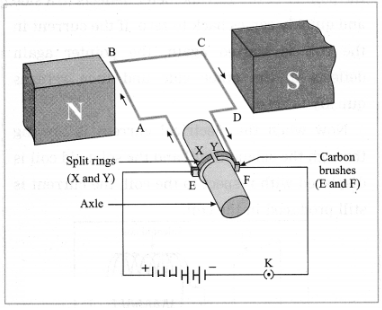
Observe the following diagram and answer the questions. (Practice Activity Sheet – 1)
(a) Construction of which equipment does the following diagram show?
(b) On which principle does this equipment work?
(c) According to which law does the coil ABCD rotate?
(d) Write the law in your own words.
(e) Where is this equipment used?
Write Short note: Regeneration.
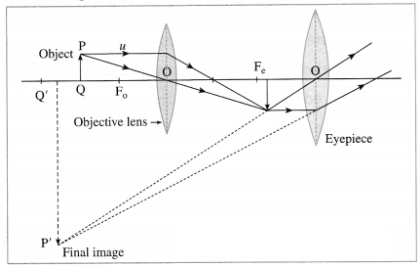
(a) In which type of microscope do you find the lens arrangement as shown in the following diagram?
Image
(b) Write in brief, the working of this microscope.
(c) Where is this microscope used?
The liquid connective tissue A circulates in our body continuously without stopping. This tissue contains a pigment B which imparts it a colour C. The tissue A consists of four components D, E, F and G. The component D fights infection and protects us from diseases. The component E helps in the clotting of tissue A if a person gets a cut. The component F is a liquid which consists mainly of water with many substances dissolved in it and component G carries oxygen from the lungs to all the parts of the body.
  1. What is (i) tissue A, (ii) pigment B and (iii) colour C?
  2. Name (i) D, (ii) E, (iii) F and (iv) G.
  3. Name one substance (other than oxygen) which is transported by tissue A in the human body.
  4. Which two components of tissue A are the cells without nucleus?
  5. Name any two organisms (animals) which do not have liquid like A in their body.
Write short notes: Functional group.
A nuclear reaction is represented by the equation:$^{2}_{1}\text{H}+{^{2}_{1}\text{H}}\rightarrow{^{3}_{2}\text{He}}+\text{xc}+\text{E}$
  1. Name the process represented by this equation and describe what happens during this reaction.
  2. Identify the particle c and the number x of such particles produced in the reaction.
  3. What does E represent?
  4. State two conditions under which such a reaction takes place.
  5. What type of nuclear bomb is based on similar reactions?
The transport system in plants consists of two kinds of tissues X and Y. The tissue X is made up of living cells and consists of two components A and B. The component A has tiny pores in its end walls and contains only cytoplasm but no nucleus. On the other hand, component B has cytoplasm as well as nucleus. The tissue Y is made up of dead cells and consists of two components C and D. The component C has open ends whereas component D does not have open ends. In flowering plants, either only C or both C and D transport water but D is the only water conducting tissue in non - flowering plants.
  1. What is (i) tissue X, (ii) component A and (iii) component B?
  2. What is (i) tissue Y, (ii) component C and (iii) component D?
The organisms A, B and C can obtain their food in three different ways. Organism A derives its food from the body of another living organism which is called its D, without killing it. The organism B takes in the solid food by the process of ingestion, digests a part of this food and throws out undigested food in the process called E. The organism C obtains its food from dead and decaying plants.
  1. What is the mode of nutrition of (i) organism A (ii) organism B, and (iii) organism C?
  2. What is the organism like D called?
  3. Name the process E.
  4. Give one example each of organisms like A, B and C.
  5. What is the general name of three modes of nutrition exhibited by organisms A, B and C?