MCQ
Standing waves can be produced
  • A
    On a string clamped at both the ends
  • B
    On a string clamped at one end and free at the other
  • C
    When incident wave gets reflected from a wall
  • All of the above.

Answer

Correct option: D.
All of the above.
d
(d) Standing waves can be produced only when two similar type of waves (same frequency and speed, but amplitude may be different) travel in opposite directions.

Need a full question paper?

Generate a complete, print-ready paper with questions like this in minutes — across 16+ boards, with answer keys.
Start Generating Free

Similar questions

A hole diffuses from the p-side to the n-side in a p-n junction. This means that.
  1. A bond ia broken on the n-side and the electron freed from the bond jumps to the conduction band.
  2. A conduction electron on the p-side jumps to a broken bond to complete it.
  3. A bond is broken on the n-side and the electron freed from the bond jumps to a broken bond on the p-side to complete it.
  4. A bond is broken on the p-side and the electron freed from the bond jumps to a broken bond on the n-side to complete it.
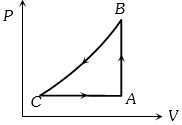
A sample of an ideal gas is taken through a cycle a shown in figure. It absorbs $50J$ of energy during the process $AB$, no heat during $BC$, rejects $70J$ during $CA.$ $40J$ of work is done on the gas during $BC$. Internal energy of gas at $A$ is $1500J$, the internal energy at $C$ would be ........ $J$
One second is equal to
Maximum and minimum magnitudes of the resultant of two vectors of magnitudes $P$ and $Q$ are in the ratio $3:1.$ Which of the following relations is true
A ball of mass $150\,g$ starts moving with an acceleration of $20m/{s^2}$. When hit by a force, which acts on it for $0.1\, sec$. The impulsive force is ........ $N-s$
$STATEMENT-1$

An astronaut in an orbiting space station above the Earth experiences weightlessness. and

$STATEMENT-2$

An object moving around the Earth under the influence of Earth's gravitational force is in a state of 'free-fall'.

A body of mass $0.5\; kg$ travels in a stratght line with velocity $v=a x^{3 / 2}$ where $a=5\; m ^{-1 / 2} s ^{-1}$ What is the work done (in $J$) by the net force during its displacement from $x=0$ to $x=2\; m ?$
A motor cyclist moving with a velocity of $72\, km/hour$ on a flat road takes a turn on the road at a point where the radius of curvature of the road is $20$ meters. The acceleration due to gravity is $10 m/sec^2$. In order to avoid skidding, he must not bend with respect to the vertical plane by an angle greater than
Two stones of masses $m$ and $2\,m$ are whirled in horizontal circles, the heavier one in a radius $\frac{r}{2}$ and the lighter one in radius $r.$ The tangential speed of lighter stone is $n$ times that of the value of heavier stone when they experience same centripetal forces. The value of $n$ is
The cause of Fraunhoffer lines is