Question
State the impulse-momentum theorem.

Answer

 
Impulse of a force is equal to change in momentum due to that force. This is called impulse momentum theroem. According this theorem is the change in momentum of an object is constant then its impulse will also be constant.
$\overrightarrow{J}=\left(\overrightarrow{P_2}-\overrightarrow{P_1}\right)
$
That is, if the forces $\vec{F}_1$ and $\vec{F}_2$ are applied to produce the same impulse of an object for time $t_1$ and $t_2$ respectively then,
$\overrightarrow{F_1} t_1=\overrightarrow{F_2} t_2$

Need a full question paper?

Generate a complete, print-ready paper with questions like this in minutes — across 16+ boards, with answer keys.
Start Generating Free

Similar questions

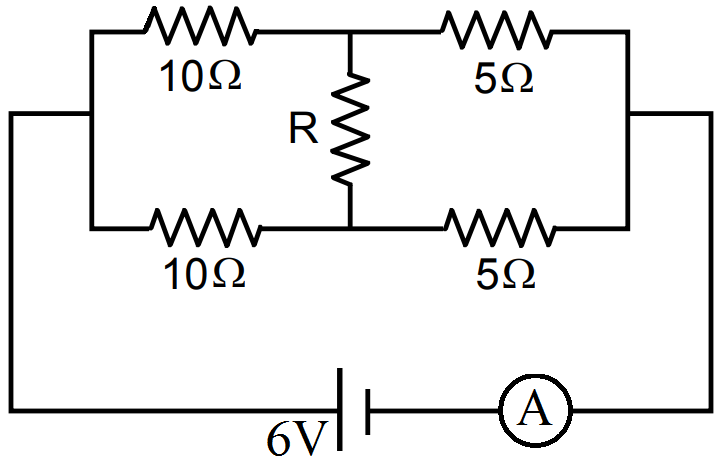
What should be the value of R in the figure. for which the current in it is zero?

The radius of a planet is R1 and a satellite revolves round it in a circle of radius R2. The time period of revolution is T. Find the acceleration due to the gravitation of the planet at its surface.
A disc of mass M and radius r is rotating with an angular velocity $\omega.$ If gently, two masses m are placed at a distance $\frac{\text{r}}{2}$ on either side of the axis, what will be its angular velocity?
Determine the speed with which the earth has to rotate on its axis so that a person on the equator weigh $\Big(\frac{3}{5}\Big)^{\text{th}}$ as much as at present. Take the equatorial radius as 6400km.
From the given example, find if the motion is one or two or three-dimensional.
  1. A kite flying in the sky.
  2. A cricket ball hit by a player.
  3. Moon revolving around the earth.
  4. The motion of a stone in a circle.
Find the dimensions of:
  1. Linear momentum.
  2. Frequency.
  3. Pressure.
Calculate the ratio of the mean free paths of the molecules of two gases having molecular diameters 1 A and 2 A. The gases may be considered under identical conditions of temperature, pressure and volume.
A proton beam is going from east to west. Is there an electric current? If yes, in what direction?
The electric current in a charging R-C circuit is given by $\text{i}=\text{i}_0\text{e}^{-\frac{\text{t}}{\text{RC}}}$ where $\text{i}_0,$ R and C are constant parameters of the circuit and t is time. Find the rate of change of current at
  1. t = 0.
  2. t = RC.
  3. t = 10RC.
The average speed of a snail is 0.020 miles/hour and that of a leopard is 70 miles/hour. Convert these speeds in SI units.