Question
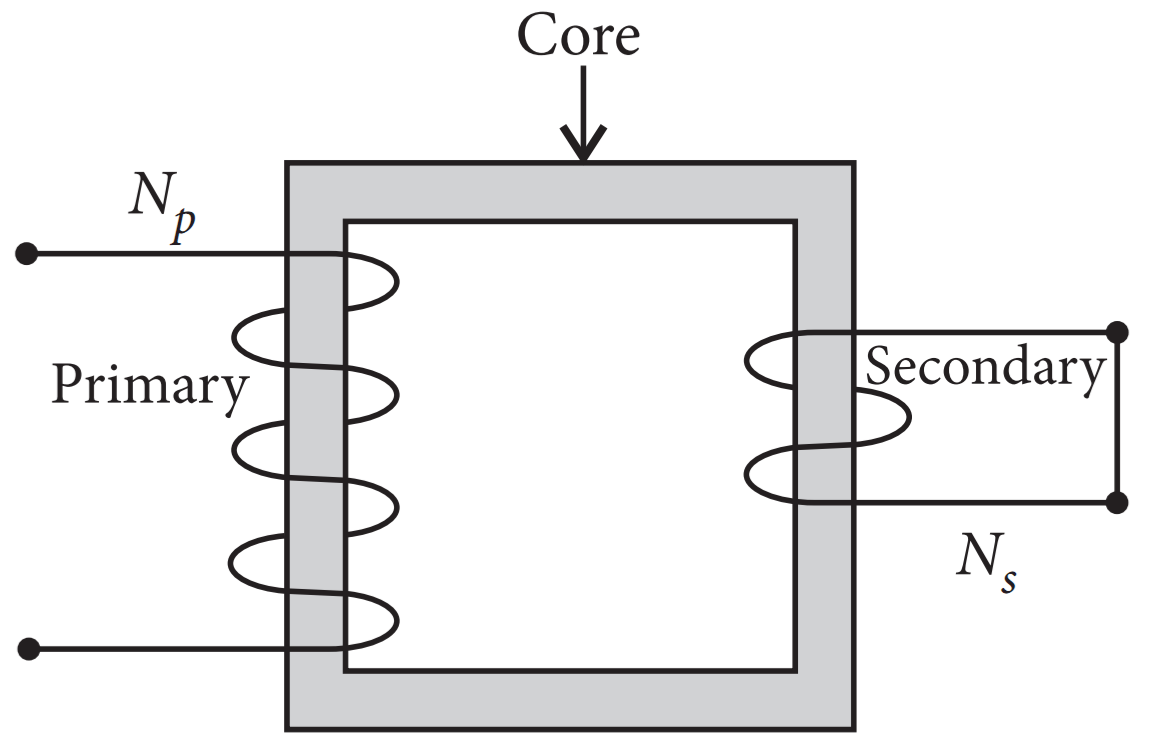
Step-down transformers are used to decrease or step-down voltages. These are used when voltages need to be lowered for use in homes and factories. A small town with a demand of 800kW of electric power at 220V is situated 15km away from an electric plant generating power at 440V. The resistance of the two wire line carrying power is 0.5Q per km. The town gets power from the line through a 4000 - 220V step-down transformer at a sub-station in the town.
  1. The value of total resistance of the wires is:
  1. $25\Omega$
  2. $30\Omega$
  3. $35\Omega$
  4. $15\Omega$
  1. The line power loss in the form of heat is:
  1. 550kW
  2. 650kW
  3. 600kW
  4. 700kW
  1. How much power must the plant supply, assuming there is negligible power loss due to leakage?
  1. 600kW
  2. 1600kW
  3. 500W
  4. 1400kW
  1. The voltage drop in the power line is:
  1. 1700V
  2. 3000V
  3. 2000V
  4. 2800V
  1. The total value of voltage transmitted from the plant is:
  1. 500V
  2. 4000V
  3. 3000V
  4. 7000V

Answer

  1. (d) $15\Omega$

Explanation:

Resistance of the two wire lines carrying power $=0.5\frac{\Omega}{\text{Km}}$

Total resistance $=(15+15)0.5=15\Omega$

  1. (c) 600kW

Explanation:

Line power loss = I2R

RMS current in the coil,

$\text{I}=\frac{\text{P}}{\text{V}_1}=\frac{800\times10^3}{4000}=200\text{A}$

$\therefore$ Power loss = (200)2 × 15 = 600kW

  1. (d) 1400kW

Explanation:

Assuming that the power loss is negligible due to the leakage of the current.

The total power supplied by the plant,

= 800kW + 600kW = 1400kW

  1. (b) 3000V

Explanation:

Voltage drop in the power line = IR

= 200 × 15 = 3000V

  1. (d) 7000V

Explanation:

Total voltage transmitted from the plant,

= 3000V + 4000V = 7000V

Need a full question paper?

Generate a complete, print-ready paper with questions like this in minutes — across 16+ boards, with answer keys.

Start Generating Free

Similar questions

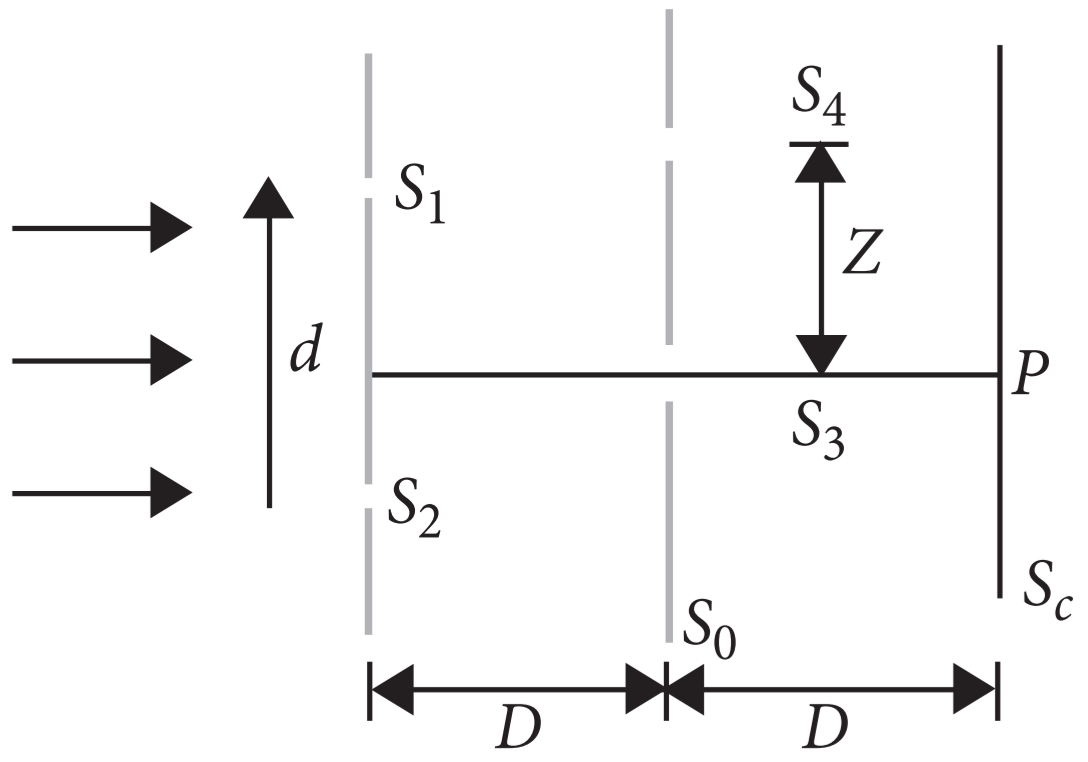
Consider the situation shown in figure. The two slits S1 and S1 placed symmetrically around the central line are illuminated by monochromatic light of wavelength $\lambda$. The separation between the slits is d. The light transmitted by the slits falls on a screen S0 place at a distance D from the slits. The slits S3 is at the central line and the slit S4 is at a distance from S3. Another screen Sc is placed a further distance D away from Sc.

  1. Find the path difference if $\text{z}=\frac{\lambda\text{D}}{2\text{d}}$.

  1. $\lambda$

  2. $\frac{\lambda}{2}$

  3. $\frac{3}{2\lambda}$

  4. $2\lambda$

  1. Find the ratio of the maximum to minimum intensity observed on Sc if $\text{z}=\frac{\lambda\text{D}}{\text{d}}$

  1. 4
  2. 2
  3. $\infty$

  4. 1
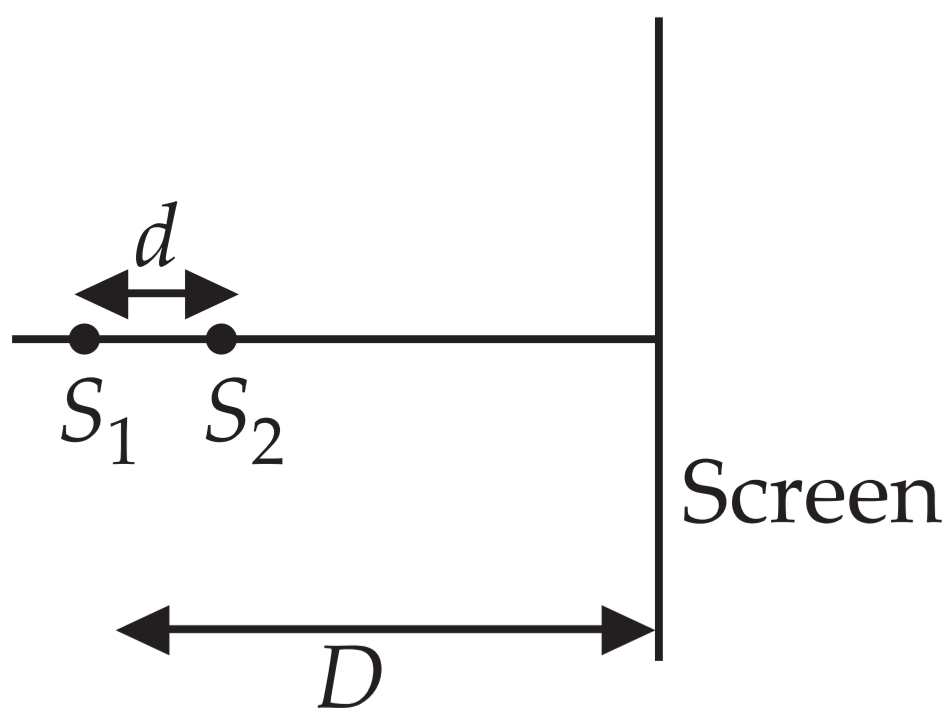
  1. Two coherent point sources S1 and S2 are separated by a small distanced as shown in figure. The fringes obtained on the screen will be:

  1. Concentric circles.
  2. Points.
  3. Straight lines.
  4. Semi-circles.
  1. ln the case of light waves from two coherent sources S1 and S2, there will be constructive interference at an arbitrary point P, if the path difference S1P - S2P is:
  1. $\Big(\text{n}+\frac{1}{2}\Big)\lambda$

  2. $\text{n}\lambda$

  3. $\Big(\text{n}-\frac{1}{2}\Big)\lambda$

  4. $\frac{\lambda}{2}$

  1. Two monochromatic light waves of amplitudes 3A and 2A interfering at a point have a phase difference of 60º. The intensity at that point will be proportional to:
  1. 5A2
  2. 13A2
  3. 7A2
  4. 19A2
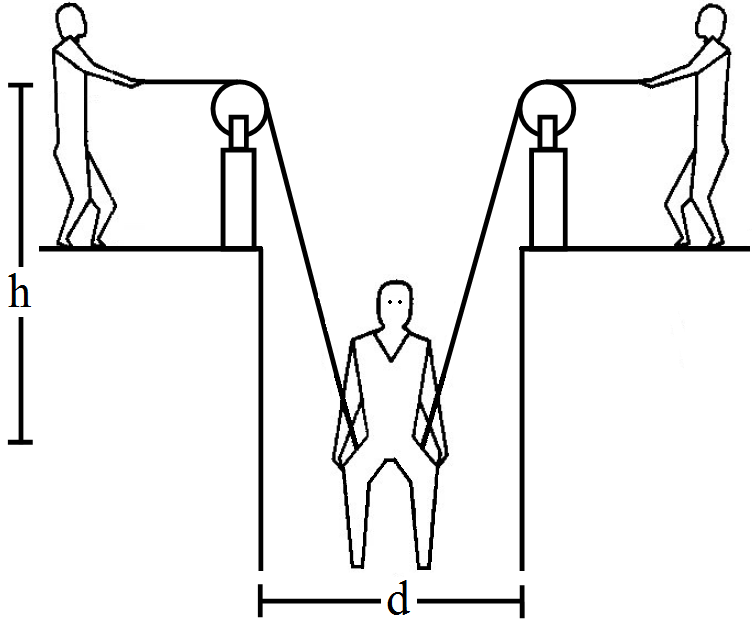
A man has fallen into a ditch of width d and two of his friends are slowly pulling him out using a light rope and two fixed pulleys as shown in figure. Show that the force (assumed equal for both the friends) exerted by each friend on the road increases as the man moves up. Find the force when the man is at a depth h.

What is logic gate? Differentiate between AND gate and OR gate.
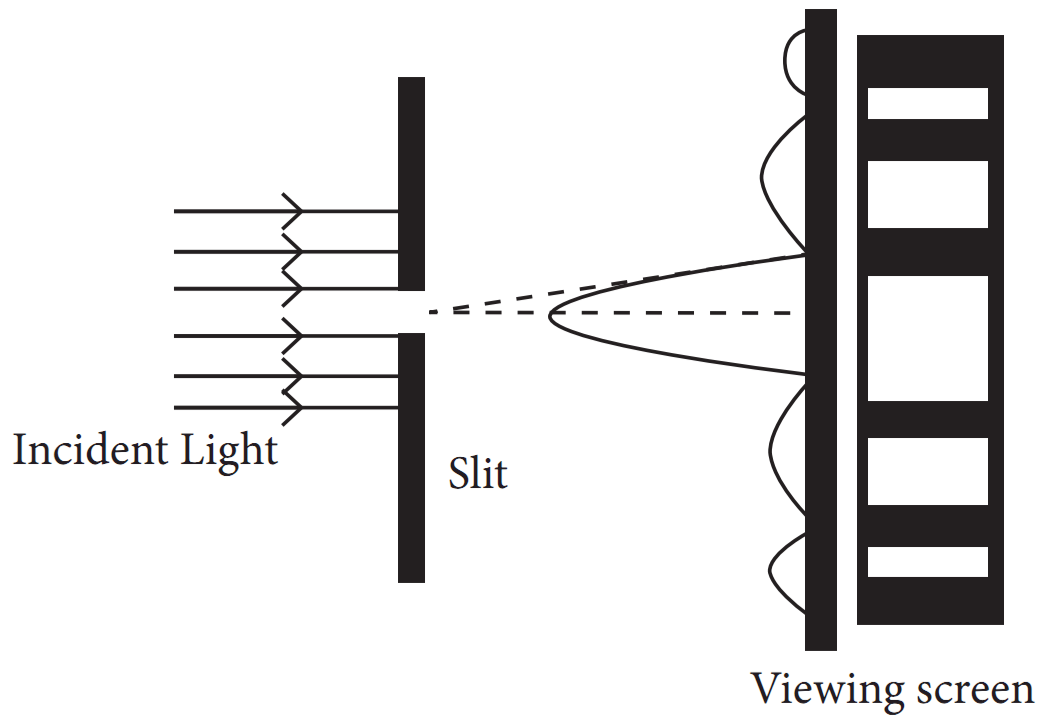
When light from a monochromatic source is incident on a single narrow slit, it gets diffracted and a pattern of ahem ate bright and dark fringes is obtained on screen, called "Diffraction Pattern" of single slit. ln diffraction pattern of single slit, it is found that.

  1. Central bright fringe is of maximum intensity and the intensity of any secondary bright fringe decreases with increase in its order.
  2. Central bright fringe is twice as wide as any other secondary bright or dark fringe.

  1. A single slit of width 0.1mm is illuminated by a parallel beam oftight of wavelength $6000\mathring{\text{A}}$ and diffraction bands are observed on a screen 0.5m from the slit. The distance of the third dark band from the central bright band is:

  1. 3mm
  2. 1.5mm
  3. 9mm
  4. 4.5mm
  1. ln Fraunhofer diffraction pattern, slit width is 0.2mm and screen is at 2m away from the lens. If wavelength of tight used is $5000\mathring{\text{A}}$ then the distance between the first minimum on either side the central maximum is:
  1. 10-1m
  2. 10-2m
  3. 2 × 10⁻²m
  4. 2 × 10⁻¹m
  1. Light of wavelength 600nm is incident normally on a slit of width 0.2mm. The angular width of central maxima in the diffraction pattern is (measured from minimum to minimum).
  1. 6 × 10⁻³rad
  2. 4 × 10⁻³rad
  3. 2.4 × 10⁻³rad
  4. 4.5 × 10⁻³rad
  1. A diffraction pattem is obtained by using a beam of red light. What will happen, if the red light is replaced by the blue light?
  1. Bands disappear
  2. Bands become broader and farther apart
  3. No change will take place
  4. Diffraction bands become narrower and crowded together.
  1. To observe diffraction, the size of the obstacle.
  1. Should be $\frac{\lambda}{2}$, where $\lambda$, is the wavelength.

  2. Should be of the order of wavelength.
  3. Has no relation to wavelength.
  4. Should be much larger than the wavelength.
A metal rod is placed along the axis of a solenoid carrying a high-freqμency alternating current. It is found that the rod gets heated. Explain why the rod gets heated.
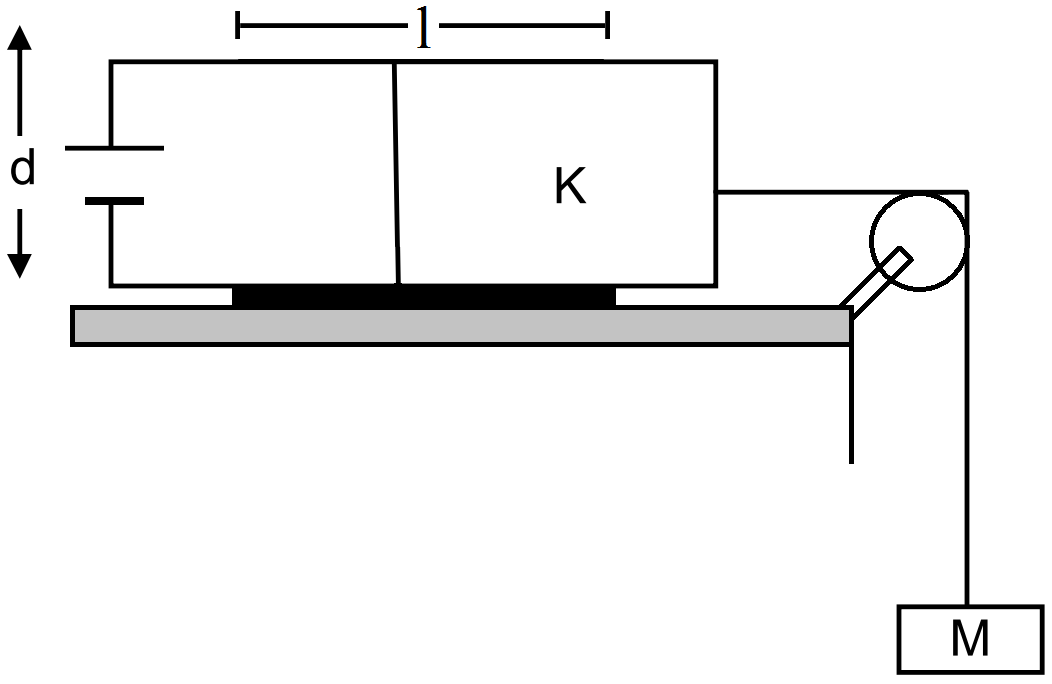
Consider the situation shown in figure. The width of each plate is b. The capacitor plates are rigidly clamped in the laboratory and connected to a battery of emf $\in.$ All surfaces are frictionless. Calculate the value of M for which the dielectric slab will stay in equilibrium.

Write one-one use of the following waves: (i) Micro waves (ii) Infrared waves (iii) Ultraviolet waves (iv) Radio waves
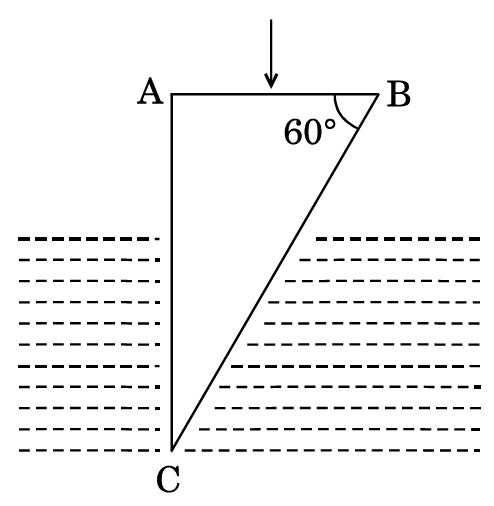
  1. A ray of light is incident normally on the face AB of a right-angled glass prism of refractive index $_{a}\mu_{g} =1.5$The prism is partly immersed in a liquid of unknown refractive index. Find the value of refractive index of the liquid so that the ray grazes along the face BC after refraction through the prism.

  1. Trace the path of the rays if it were incident normally on the face AC.
The magnetometer of the previous problem is used with the same magnet in $\tan-\text{B}$ position. Where should the magnet be placed to produce a 37° deflection of the needle?
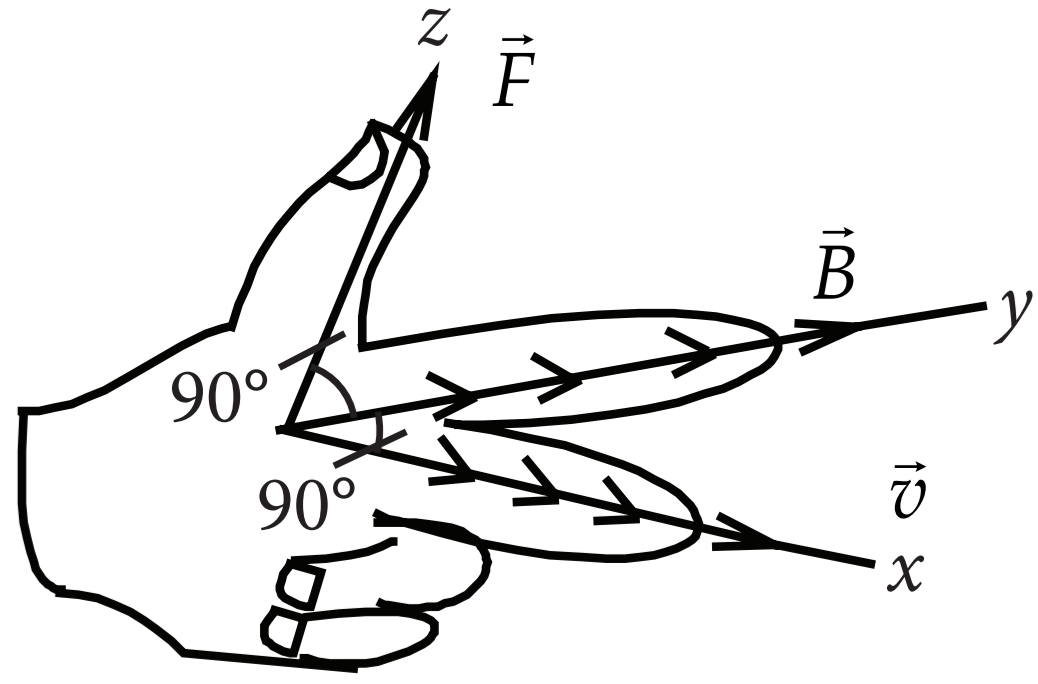
A charged particle moving in a magnetic field experiences a force that is proportional to the strength of the magnetic field, the component of the velocity that is perpendicular to the magnetic field and the charge of the particle.

This force is given by $\vec{\text{F}}=\text{q}(\vec{\text{v}}\times\vec{\text{B}})$ where q is the electric charge of the particle, v is the instantaneous velocity of the particle, and Bis the magnetic field (in tesla).

The direction of force is determined by the rules of cross product of two vectors.

Force is perpendicular to both velocity and magnetic field. Its direction is same as $\vec{\text{v}}\times\vec{\text{B}}$ if q is positive and opposite of $\vec{\text{v}}\times\vec{\text{B}}$ if q is negative.

The force is always perpendicular to both the velocity of the particle and the magnetic field that created it. Because the magnetic force is always perpendicular to the motion, the magnetic field can do no work on an isolated charge. It can only do work indirectly, via the electric field generated by a changing magnetic field.

  1. When a magnetic field is applied on a stationary electron, it:
  1. Remains stationary.
  2. Spins about its own axis.
  3. Moves in the direction of the field.
  4. Moves perpendicular to the direction of the field.
  1. A proton is projected with a uniform velocity v along the axis of a current carrying solenoid, then,
  1. The proton will be accelerated along the axis.
  2. The proton path will be circular about the axis.
  3. The proton moves along helical path.
  4. The proton will continue to move with velocity v along the axis.
  1. A charged particle experiences magnetic force in the presence of magnetic field. Which of the following statement is correct?
  1. The particle is stationary and magnetic field is perpendicular.
  2. The particle is moving and magnetic field is perpendicular to the velocity.
  3. The particle is stationary and magnetic field is parallel.
  4. The particle is moving and magnetic field is parallel to velocity.
  1. A charge q moves with a velocity 2m s-1 along x-axis in a uniform magnetic field $\vec{\text{F}}=(\vec{\text{i}}+2\vec{\text{j}}+3\vec{\text{k}})\text{T,}$ charge will experience a force.
  1. In z-y plane.
  2. Along -y axis.
  3. Along +z axis.
  4. Along -z axis.
  1. Moving charge will produce.
  1. Electric field only.
  2. Magnetic field only.
  3. Both electric and magnetic field.
  4. None of these.