MCQ

The angular dispersion produced by a prism:

  • A
    Increases if the average refractive index increases.
  • B
    Increases if the average refractive index decreases.
  • C
    Remains constant whether the average refractive index increases or decreases.
  • D
    Has no relation with average refractive index.

Answer

  1. Increases if the average refractive index increases.

Explanation:

If $\mu$ is the average refractive index and A is the angle of prism, then the angular dispersion produced by the prism is given by $\delta=(\mu-1)\text{A}.$

Need a full question paper?

Generate a complete, print-ready paper with questions like this in minutes — across 16+ boards, with answer keys.

Start Generating Free

Similar questions

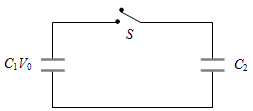
A capacitor of capacity  is charged to the potential of . On disconnecting with the battery, it is connected with a capacitor of capacity   as shown in the adjoining figure. The ratio of energies before and after the connection of switch  S will be

(a) ( 

(b)  

(c)   

(d)  

A magnetic field can be produced by:
  1. A moving charge.
  2. A changing electric field.
  3. Neither of them.
  4. Both of them.

In Young's double slit experiment, if the two slits are illuminated with separate sources, no interference pattern is observed because

(a) There will be no constant phase difference between the two waves

(b) The wavelengths are not equal

(c) The amplitudes are not equal

(d) None of the above

An inductor, a resistor and a capacitor are joined in series with an AC source. As the frequency of the source is slightly increased from a very low value, the reactance.
If a charged particle projected in a gravity-free room deflects:
For two statements are given-one labelled Assertion (A) and the other labelled Reason (R). Select the correct answer to these questions from the codes (a), (b), (c) and (d) as given below.
 When electron remains between orbits, its momentum is:
Momentum of photon of frequency $v$ is ___________ .

An electron moving in a circular orbit of radius r makes n rotation per second. The magnetic field produced at the centre has a magnitude of

(a)   

(b)

(c)    

(d) Zero

Stopping potential is the negative voltage on the collector plate at which the photoelectric current just becomes __________.