Question
The Bulk Modulus for an incompressible liquid is

Answer

We know that the bulk modulus is,

$\mathrm{B}=-\frac{\mathrm{dpV}}{\Delta \mathrm{V}}$

Here $\mathrm{p}=$ Pressure (stress)

$-\frac{\Delta \mathrm{V}}{\mathrm{V}}=\text { Volume strain }$

But liquid is incompressible, so

${\Delta \mathrm{V}=0} $

Hence,  ${\mathrm{B}=-\frac{\mathrm{pV}}{0}=\infty}$

or $\mathrm{B}=\infty$ (infinity)

Need a full question paper?

Generate a complete, print-ready paper with questions like this in minutes — across 16+ boards, with answer keys.
Start Generating Free

Similar questions

A parallel plate capacitor is charged. Then battery is removed now If the plates are pulled apart
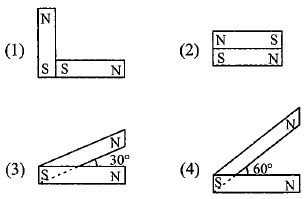
Following figures show the arrangement of bar magnets in different configurations. Each magnet has magnetic dipole moment $\vec m$ . Which configuration has highest net magnetic dipole moment
A rocket is fired upward from the earth's surface such that it creates an acceleration of $20\, m/s^2$. If after $5\, s$ its engine is switched off, the maximum height of the rocket  from the earth's surface would be......$m$
The Clemmenson reduction of acetone yields
If $\overrightarrow{ F }=2 \hat{ i }+\hat{ j }-\hat{ k }$ and $\overrightarrow{ r }=3 \hat{ i }+2 \hat{ j }-2 \hat{ k }$, then the scalar and vector products of $\overrightarrow{ F }$ and $\overrightarrow{ r }$ have the magnitudes respectively as
An object is projected from ground with speed $u$ at angle $\theta$ with horizontal. the radius of curvature of its trajectory at maximum height from ground is ..........
A thin uniform tube is bent into a circle of radius $r$ in the virtical plane. Equal volumes of two immiscible liquids, whose densities are ${\rho _1}$ and ${\rho _2}\left( {{\rho _1} > {\rho _2}} \right)$ fill half the circle. The angle $\theta$ between the radius vector passing through the common interface and the vertical is
At the magnetic poles of the earth, a compass needle will be
If two vectors $\vec{A}$ and $\vec{B}$ having equal magnitude $\mathrm{R}$ are inclined at an angle $\theta$, then
If the ratio of the concentration of electrons to that of holes in a semiconductor is$\frac{7}{5}$ and the ratio of currents is $\frac{7}{4}$ then what is the ratio of their drift velocities?