MCQ
The diatomic molecule is treated as:
  • A
    Harmonic oscillator
  • B
    Rigid rotator
  • C
    Both a and b
  • D
    None

Answer

  1. Rigid rotator

Need a full question paper?

Generate a complete, print-ready paper with questions like this in minutes — across 16+ boards, with answer keys.
Start Generating Free

Similar questions

The position vectors of points $A, B, C$ and $D$ are $A = 3\hat i + 4\hat j + 5\hat k,\,\,B = 4\hat i + 5\hat j + 6\hat k,\,\,C = 7\hat i + 9\hat j + 3\hat k$ and $D = 4\hat i + 6\hat j$ then the displacement vectors $AB$ and $CD $ are
Maximum value of static friction is called
Mark the correct options:
  1. A diode valve can be used as a rectifier.
  2. A triode valve can be used as a rectifier.
  3. A diode valve can be used as an amplifier.
  4. A triode valve can be used as an amplifier.
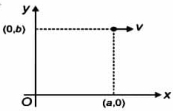
A particle is moving with constant speed $v$ in $x y$ plane as shown in figure. The magnitude of its angular velocity about point $O$ is .........
A projectile is fired with a velocity at right angle to the slope which is inclined at an angle $\theta$ with the horizontal. The expression for the range $R$ along the incline is
The temperature of a gas at pressure $P$ and volume $V$ is $27°C.$ Keeping its volume constant if its temperature is raised to $927°C,$ then its pressure will be
The $ P.E.$ of a particle executing $SHM$ at a distance $x$ from its equilibrium position is
The least count of stop watch is $\frac{1}{5}\,second$. The time of $20$ oscillations of pendulum is measured to be $25\,seconds$. Then percentage error in the measurement of time will be.......... $\%$
One mole of an ideal monoatomic gas undergoes the following four reversible processes:

Step $1$ It is first compressed adiabatically from volume $V_{1}$ to $1 \;m ^{3}$.

Step $2$ Then expanded isothermally to volume $10 \;m ^{3}$.

Step $3$ Then expanded adiabatically to volume $V _{3}$.

Step $4$ Then compressed isothermally to volume $V_{1}$. If the efficiency of the above cycle is $3 / 4$, then $V_{1}$ is ............ $m^3$

The equation of a longitudinal wave is represented as $y = 20\cos \pi (50t - x)$. Its wavelength is ..... $cm$