Question
The energy contained in a small volume through which an electromagnetic wave is passing oscillates with:

Answer

  1. Double the frequency of the wave.
Explanation:
The energy per unit volume of an electromagnetic wave,
$\text{u}=\frac{1}{2}\in_0\text{E}^2+\frac{\text{B}^2}{2\mu_0}$
The energy of the given volume can be calculated by multiplying the volume with the above expression.
$\text{U}=\text{u}\times\text{V}=\Big(\frac{1}{2}\in_0\text{E}^2+\frac{\text{B}^2}{2\mu_0}\Big)\times\text{V}\ ....(\text{i})$
Let the direction of propagation of the electromagnetic wave be along the z-axls. Then, the electric and magnetic fields at a particular point are given by,
$\text{E}_\text{x}=\text{E}_0\sin(\text{kz}-\omega\text{t})$
$\text{B}_\text{y}=\text{B}_0\sin(\text{kz}-\omega\text{t})$
Substituting the values of electric and magnetic fields in (1) we get,
$\text{U}=\Big(\frac{1}{2}\in_0\big(\text{E}_0^2\sin^2(\text{kz}-\omega\text{t})+\frac{\text{B}^2_0\sin^2(\text{kz}-\omega\text{t})}{2\mu_0}\Big)\times\text{V}$
$\text{U}=\Big(\in_0\text{E}^2_0\frac{(1-\cos(2\text{kz}-2\omega\text{t}))}{4}+\frac{\text{B}_0^2(1-\cos(2\text{kz}-2\omega\text{t}))}{4\mu_0}\Big)\times\text{V}$
From the above expression, it can be easily understood that the energy of the electric and magnetic fields have angular frequency $2\omega$ Thus. the frequency of the energy of the electromagnetic wave will also be double.

Need a full question paper?

Generate a complete, print-ready paper with questions like this in minutes — across 16+ boards, with answer keys.
Start Generating Free

Similar questions

The focal length of a convex mirror is 20 cm its radius of curvature will be(a) 10 cm(b) 20 cm(c) 30 cm(d) 40 cm
       
A parallel-plate capacitor is connected to a battery. A metal sheet of negligible thickness is placed between the plates. The sheet remains parallel to the plates of the capacitor:
  1. The battery will supply more charge.
  2. The capacitance will increase.
  3. The potential difference between the plates will increase.
  4. Equal and opposite charges will appear on the two faces of the metal plate.
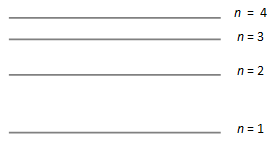
Four lowest energy levels of $H-$atom are shown in the figure. The number of possible emission lines would be
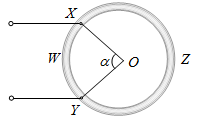
A wire of resistor $R$ is bent into a circular ring of radius $r$. Equivalent resistance between two points $X$ and $Y$ on its circumference, when angle $\text{XOY}$ is a, can be given by
A charged particle moves through a magnetic field perpendicular to its direction. Then:
A point object O is placed on the principal axis of a convex lens of focal length 20 cm at a distance of 40 cm to the left of it. The diameter of the lens is 10 cm. If the eye is placed 60 cm to the right of the lens at a distance h below the principal axis, then the maximum value of h to see the image will be(a) 0 (b) 5 cm(c) 2.5 cm(d) 10 cm
       
Two lithium nuclei in a lithium vapour at room temperature do not combine to form a carbon nucleus because:
  1. A lithium nucleus is more tightly bound than a carbon nucleus.
  2. Carbon nucleus is an unstable particle.
  3. It is not energetically favourable.
  4. Coulomb repulsion does not allow the nuclei to come very close.
A metallic rod of mass per unit length $0.5\ kg m^{–1}$ is lying horizontally on a smooth inclined plane which makes an angle of $30^\circ$ with the horizontal. The rod is not allowed to slide down by flowing a current through it when a magnetic field of induction $0.25$ T is acting on it in the vertical direction. The current flowing in the rod to keep it stationary is:
In a movie hall, the distance between the projector and the screen is increased by 1% illumination on the screen is(a) Increased by 1%(b) Decreased by 1%(c) Increased by 2%(d) Decreased by 2%
       
When no current is passed through a conductor: