MCQ
The lateral displacement depends on ______:
- AThickness of the medium
- BRefractive index of the medium
- CAngle of incidence
- DAll the above
The lateral displacement depends on ______:
Explanation:
Lateral displacement due to a slab is given by $\delta=\text{t}(\mu−1)$; where t is thickness of the medium and μ is refractive index of medium.
Generate a complete, print-ready paper with questions like this in minutes — across 16+ boards, with answer keys.
The magnifying power of a microscope with an objective of 5 mm focal length is 400. The length of its tube is 20 cm. Then the focal length of the eye-piece is
|
(a) 200 cm |
(b) 160 cm |
(c) 2.5 cm |
(d) 0.1 cm |
An electron (mass = 9.1  kg; charge = 1.6
  C) experiences no deflection if subjected to an electric field of 3.2
  V/m, and a magnetic fields of 2.0
  Wb/m2. Both the fields are normal to the path of electron and to each other. If the electric field is removed, then the electron will revolve in an orbit of radius
|
(a) 45 m |
(b) 4.5 m |
(c) 0.45 m |
(d) 0.045 m |
Assertion : The speed of light in a rarer medium is greater than that in a denser medium
Reason : One light year equals to 9.5 × 10¹² km
|
(a) If both assertion and reason are true and the reason is the correct explanation of the assertion. |
|
(b) If both assertion and reason are true but reason is not the correct explanation of the assertion. |
|
(c) If assertion is true but reason is false. |
|
(d) If the assertion and reason both are false. |
Absorption of X-ray is maximum in which of the following different sheets
|
(a) Copper |
(b) Gold |
(c) Beryllium |
(d) Lead |
The figure shows a double slit experiment P and Q are the slits. The path lengths PX and QX are nλ and (n+2)λ respectively, where n is a whole number and λ is the wavelength. Taking the central fringe as zero, what is formed at X

|
(a) First brigh |
(b) First dark |
(c) Second bright |
(d) Second dark |
A double convex thin lens made of glass of refractive index 1.6 has radii of curvature 15 cm each. The focal length of this lens when immersed in a liquid of refractive index 1.63 is
|
(a) – 407 cm |
(b) 250 cm |
(c) 125 cm |
(d) 25 cm |
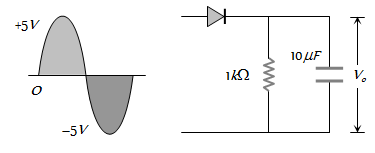
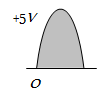
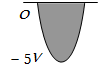
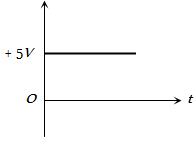
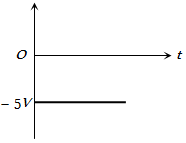
The output in the circuit of figure is taken across a capacitor. It is as shown in figure
(a)
|
(b)
|
(c)
|
(d)
|