MCQ
The mean age of neutron is :
- AAbout 100 seconds
- ✓About 1000 seconds
- CAbout 10 seconds
- DAbout 1 second
Generate a complete, print-ready paper with questions like this in minutes — across 16+ boards, with answer keys.
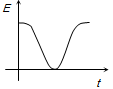
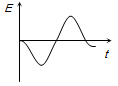
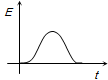
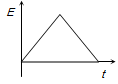
The variation of induced emf (E) with time (t) in a coil if a short bar magnet is moved along its axis with a constant velocity is best represented as

(a)
|
(b)
|
(c)
|
(d)
|
n identical bulbs, each designed to draw a power p from a certain voltage supply, are joined in series across that supply. The total power which they will draw is
|
(a) |
(b) p/n |
(c) p |
(d) np |
Cathode rays are similar to visible light rays in that
|
(a) They both can be deflected by electric and magnetic fields |
|
(b) They both have a definite magnitude of wavelength |
|
(b) They both have a definite magnitude of wavelength |
|
(d) They both can expose a photographic plate |
Which of the following is not an application of eddy currents
|
(a) Induction furnace |
(b) Galvanometer damping |
|
(c) Speedometer of automobiles |
(d) X-ray crystallography |
Equivalent capacitance between A and B is

|
(a) 8 μC |
(b) 6 μF |
(c) 26 μF |
(d) 10/3 μF |
The nucleus  splits exactly in half in a fission reaction in which two neutrons are released. The resultant nuclei are
(a) 
|
(b) 
|
(c) 
|
(d) 
|
The positive temperature coefficient of resistance is for
|
(a) Carbon |
(b) Germanium |
(c) Copper |
(d) An electrolyte |
