MCQ
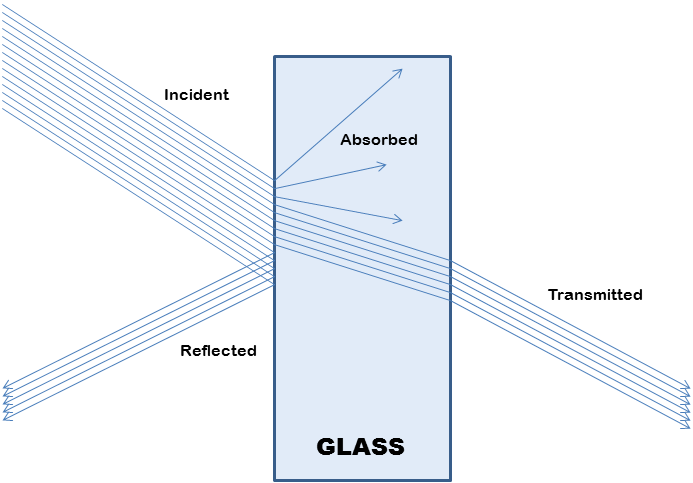
The phenomenon of light passing through the object is called:
- AReflection
- BRefraction
- CDispersion
- DTotal internal reflection
The phenomenon of light passing through the object is called:
Explanation:
The phenomena when light passes through the object (a medium) is known as refraction. Refraction is defined as the bending of light ray when it passes from one medium to another.
Generate a complete, print-ready paper with questions like this in minutes — across 16+ boards, with answer keys.
A 1mA beam of protons with a cross-sectional area of 0.5 sq. mm is moving with a velocity of 3  . Then charge density of beam is
|
(a) 6.6 |
(b) 6.6 |
(c) 6.6 |
(d) None of these |
An electron and a proton are at a distance of 1 . The moment of this dipole will be (C X m)
|
(a) 1.6 |
(b) 1.6 |
(c) 3.2 |
(d) 3.2 |
A ray passes through a prism of angle 60° in minimum deviation position and suffers a deviation of 30°. What is the angle of incidence on the prism
|
(a) 30° |
(b) 45° |
(c) 60° |
(d) 90° |
White light is passed through a prism whose angle is 5°. If the refractive indices for rays of red and blue colour are respectively 1.64 and 1.66, the angle of deviation between the two colours will be
|
(a) 0.1 degree |
(b) 0.2 degree |
(c) 0.3 degree |
(d) 0.4 degree |
An electron in the n = 1 orbit of hydrogen atom is bound by 13.6 eV energy is required to ionize it is
|
(a) 13.6 eV |
(b) 6.53 eV |
(c) 5.4 eV |
(d) 1.51 eV |
The resistance of a galvanometer is 50 ohms and the current required to give full scale deflection is 100μA. In order to convert it into an ammeter, reading upto 10A, it is necessary to put a resistance of
|
(a) 5 |
(b) 5 |
|
(c) |
(d) 99,950 |