MCQ
The probability that a student will score centum in Mathematics is $\frac{3}{10}$. The probability that the student will not score centum is :
  • $\frac{7}{10}$
  • B
    $\frac{6}{10}$
  • C
    $\frac{1}{2}$
  • D
    $\frac{1}{3}$

Answer

Correct option: A.
$\frac{7}{10}$
given : $\text{P(E)}=\frac{3}{10}$
$\text{p}\text{(notE)=1-p (E)}$
$=1-\frac{3}{10}\frac{7}{10}$

Need a full question paper?

Generate a complete, print-ready paper with questions like this in minutes — across 16+ boards, with answer keys.
Start Generating Free

Similar questions

The common difference of the $A.P.\ \frac{1}{\text{p}}, \frac{1 - \text{p}}{\text{p}}, \frac{1 - \text{2p}}{\text{p}},$ is :
The $............$ is the line drawn from the eye of an observer to the point in the object viewed by the observer.
If a solid sphere surface area $48 cm^2$ is bisected into two hemisphere , then the total surface area of any one of the hemisphere is
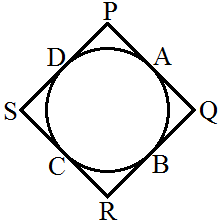
In the given figure, if quadrilateral PQRS circumscribes a circle, then PD + QB =
The value of $\cos1^\circ\cos2^\circ\cos3^\circ.....\cos180^\circ$ is :
A metallic sphere of radius $10.5\ cm$ is melted and then recast into small cones, each of radius $3.5\ cm$ and height $3\ cm$. The number of such cones is :
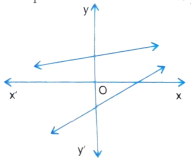
In Fig. graphs of two linear equations are shown. The pair of these linear equations is
Image
A line intersects the $y-$ axis and $X-$axis at the points $ P$ and $ Q,$ respectively. If $(2, – 5) $is the mid $-$ point of $PQ,$ then the coordinates of $P$ and $Q$ are, respectively :
The length of the tangent from an external point $P$ to a circle of radius 5 cm is 10 cm . The distance of the point from the centre of the circle is.
Assertion and Reason Type
Each question consists of two statements, namely, Assertion (A) and Reason (R). For selecting the correct answer, use the following code:
Assertion (A)
Reason (R)
If the volumes of two spheres are in the ratio 27 : 8 then their surface areas are in the ratio 3: 2.
Volume of a sphere $=\frac{4}{3}\pi\text{R}^3.$
Surface area of a sphere $=4\pi\text{R}^2.$