Question
The temperature of the surface of the sun is about 6000K. Can we produce a temp. of 7000K by converging the sun's rays using a large convex lens?

Answer

No, as according to $2^{nd}$ law of thermodyn-amics, heat cannot be transferred on its own from a body at lower temperature to another at higher temperature. The maximum temperature we can produce by this method is 6000K.

Need a full question paper?

Generate a complete, print-ready paper with questions like this in minutes — across 16+ boards, with answer keys.
Start Generating Free

Similar questions

2kg water at 80°C is mixed with 3kg water at 20°C. Assuming no heat losses, find the final temperature of the mixture.
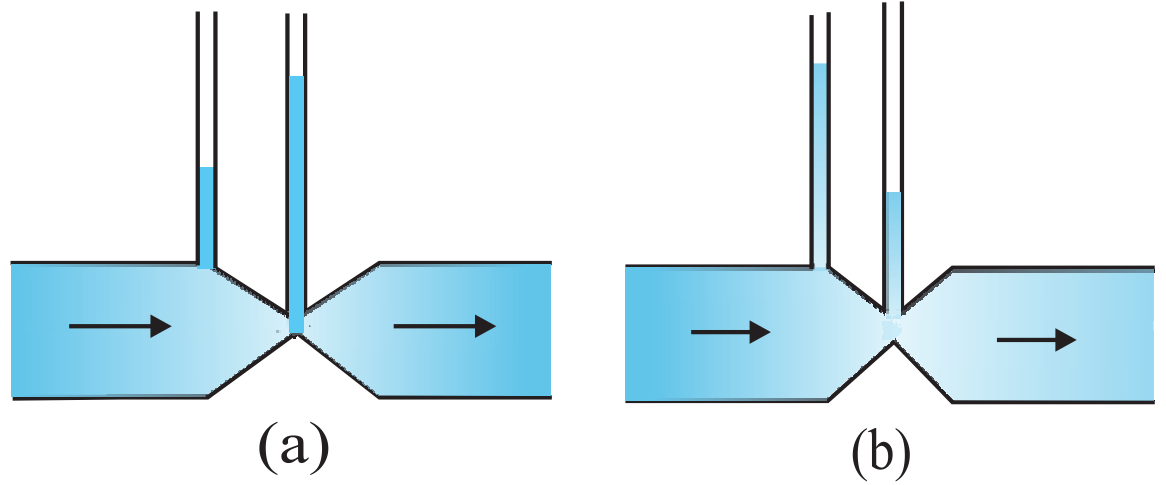
Figures(a) and (b) refer to the steady flow of a (non viscous) liquid. Which of the two figures is incorrect? Why?
A monkey climbs up a slippery pole for 3 seconds and subsequently slips for 3 seconds. Its velocity at time t is given by v(t) = 2t(3 - t); 0 < t < 3 and v(t) = -(t - 3)(6 - t) for 3 < t < 6s in m/s. It repeats this cycle till it reaches the height of 20m. At what time is its velocity maximum?
A parallel beam of monochromatic light of wavelength 663nm is incident on a totally reflecting plane mirror. The angle of incidence is 60° and the number of photons striking the mirror per second is $1.0 \times 10^{19}$. Calculate the force exerted by the light beam on the mirror.
When the temperature of an object is increased slowly, why does it appear red at first?
An aeroplane travels over a rectangular field 100m × 50m, parallel to its length. What should be the speed of the plane so that the field becomes square in the plane frame?
How much below the surface of the earth does the acceleration due to gravity become $70 \%$ of its value at the surface of the earth? Radius of the earth is 6400 km .
For S.H.M. why is a restoring force necessary ?
What is the temperature which has the same numerical value in kelvin scale and Fahrenheit scale?
A metallic wire has resistance of 20 ohm at 20°C and a resistance of 21.2 ohm at 40°C. Calculate the temperature coefficient of resistance.