MCQ
The translation distances $(dx, dy)$ is called as:
  • A
    Translation vector.
  • B
    Shift vector.
  • Both $A$ and $B.$
  • D
    Neither $A$ nor $B.$

Answer

Correct option: C.
Both $A$ and $B.$
Basic theory, $(dx, dy)$ is called as transitional or shift vector.

Need a full question paper?

Generate a complete, print-ready paper with questions like this in minutes — across 16+ boards, with answer keys.

Start Generating Free

Similar questions

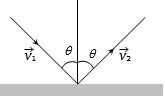
An object of $m\, kg$ with speed of $v\, m/s$ strikes a wall at an angle $\theta$ and rebounds at the same speed and same angle. The magnitude of the change in momentum of the object will be
Three force $F_1=10\,N , F_2=8\,N , F _3=6\,N$ are acting on a particle of mass $5\,kg$. The forces $F _2$ and $F _3$ are applied perpendicular so that particle remains at rest. If the force $F_1$ is removed, then the acceleration of the particle is $......ms^{-2}$
Which of the following statements are true for a stationary wave?
$Assertion$: A rigid disc rolls without slipping on a fixed rough horizontal surface with uniform angular velocity. Then the acceleration of lowest point on the disc is zero.
$Reason$ : For a rigid disc rolling without slipping on a fixed rough horizontal surface, the velocity of the lowest point on the disc is always zero
Internal forces acting in a system of particle can change
A particle is moving along a fixed circular orbit with uniform speed. Then the correct statement among the following is:
The pressure and volume of an ideal gas are related as $\mathrm{PV}^{3 / 2}=\mathrm{K}$ (Constant). The work done when the gas is taken from state $A\left(P_1, V_1, T_1\right)$ to state $\mathrm{B}\left(\mathrm{P}_2, \mathrm{~V}_2, \mathrm{~T}_2\right)$ is :
A body of mass 2.0 kg and radius of gyration 0.5 m is rotating about an axis. If its angular speed is $2.0 rad / s$, the angular momentum of the body (in $kg - m ^2 / s$ ) is:
A particle revolves round a circular path. The acceleration of the particle is
$100$ balls each of mass moving with speed $v$ simultaneously strike a wall normally and reflected back with same speed, in time $t s$. The total force exerted by the balls on the wall is