Question
The work done by all the forces (external and internal) on a system equals the change in:
  1. Total energy.
  2. Kinetic energy.
  3. Potential energy.
  4. None of these.

Answer

  1. Total energy.
Explanation:
The work done by all the forces (external and internal) on a system is equal to the change in the total energy.

Need a full question paper?

Generate a complete, print-ready paper with questions like this in minutes — across 16+ boards, with answer keys.
Start Generating Free

Similar questions

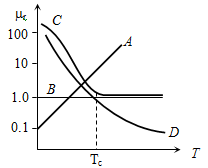
The relative permeability $\left(\mu_{\mathrm{r}}\right)$ of a ferromagnetic substance varies with temperature $(T)$ according to the curve
Basically, the product modulator is (a) An amplifier(b) A mixer(c) A frequency separator(d) A phase separator
   
   
A plane electromagnetic wave with a single frequency moves in vacuum in the positive x direction. Its amplitude is uniform over the yz plane its wavelength:
The magnetic induction at any point due to a long straight wire carrying a current is(a) Proportional to the distance from the wire(b) Inversely proportional to the distance from wire(c) Inversely proportional to the square of the distance from the wire(d) Does not depend on distance


Which instrument is used as the null detector in the Wheatstone bridge?
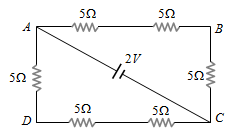
The potential difference between points $A$ and $B$ of adjoining figure is
Work of electric motor is(a) To convert ac into dc(b) To convert dc into ac(c) Both (a) and (b)(d) To convert ac into mechanical work
   
   
Two lenses having $f_1 : f_2 = 2 : 3$ has combination to make no dispersion. Find the ratio of dispersive power of glasses used
A concave lens of glass, refractive index 1.5, has both surfaces of same radius of curvature R. On immersion in a medium of refractive index 1.75, it will behave as a(a) Convergent lens of focal length 3.5 R(b) Convergent lens of focal length 3.0 R(c) Divergent lens of focal length 3.5 R(d) Divergent lens of focal length 3.0 R


The empirical atom model was given by: