MCQ
This question has Statement $1$ and Statement $2.$ Of the four choices given after the Statements, choose the one that best describes the two Statements.

Statement $1 :$ An inventor claims to have constructed an engine that has an efficiency of $30\%$ when operated between the boiling and freezing points of water. This is not possible.

Statement $2:$ The efficiency of a real engine is always less than the efficiency of a Carnot engine operating between the same two temperatures.

  • A
    Statement $1$ is true, Statement $2$ is true,

    Statement $2$ is not the correct explanation of Statement $1.$

  • B
    Statement l is true, Statement 2 is false .
  • C
    Statement $1$ is false, Statement $2$ is true.
  • Statement $1$ is true, Statement $2$ is true,

    Statement $2$ is the correct explanation of Statement $1.$
Answer

Correct option: D.
Statement $1$ is true, Statement $2$ is true,

Statement $2$ is the correct explanation of Statement $1.$

d
According to Carnot's theorem $-$ no heat engine working between two given temperatures of source and sink can be more efficient than a perfectly reversible engine i.e. Carnot engine working between the same two temperatures.

Efficiency of Carnot's engine, $n=1-\frac{T_{2}}{T_{1}}$

$ where, T_{1}= temperature \,of\, source $

$T_{2}= temperature of \sin k$

Need a full question paper?

Generate a complete, print-ready paper with questions like this in minutes — across 16+ boards, with answer keys.

Start Generating Free

Similar questions

For a solenoid keeping the turn density constant its length is halved and its cross section radius is doubled then the inductance of the solenoid increased by.....$\%$
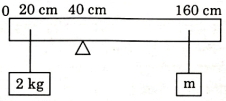
A uniform rod of length $200 \,\mathrm{~cm}$ and mass $500 \,\mathrm{~g}$ is balanced on a wedge placed at $40\,cm$ mark. A mass of $2\, \mathrm{~kg}$ is suspended from the rod at $20\, \mathrm{~cm}$ and another unknown mass $'m'$ is suspended from the rod at $160\, \mathrm{~cm}$ mark as shown in the figure. Find the value of $'m'$ such that the rod is in equilibrium. $\left(\mathrm{g}=10 \,\mathrm{~m} / \mathrm{s}^{2}\right)$
A projectile is fired from horizontal ground with speed $v$ and projection angle $\theta$. When the acceleration due to gravity is $g$, the range of the projectile is $d$. If at the highest point in its trajectory, the projectile enters a different region where the effective acceleration due to gravity is $g^{\prime}=\frac{g}{0.81}$, then the new range is $d^{\prime}=n d$. The value of $n$ is. . . . .
A particle of charge $q$, mass $m$ and kinetic energy E enters in magnetic field perpendicular to its velocity and undergoes a circular arc of radius(r). Which of the following curves represents the variation of $r$ with $E$ ?
A bullet of mass $10\,g$ moving horizontally with a velocity of $400\, m/s$ strikes a wooden block of mass $2\, kg$ which is suspended by a light inextensible string of length $5\, m$. As a result, the centre of gravity of the block is found to rise a vertical distance of $10\, cm$. The speed of the bullet after it emerges out horizontally from the block will be ............... $\mathrm{m}/ \mathrm{s}$
A sinusoidal carrier voltage is amplitude modulated. The resultant amplitude modulated wave has maximum and minimum amplitude of $120\,V$ and $80\,V$ respectively. The amplitude of each sideband is $..........V$
A conducting wire of length $ l$ area of cross-section $A$ and electric resistivity $\rho$ is connected between the terminals of a battery. $A$ potential difference $V$ is developed between its ends, causing an electric current.If the length of the wire of the same material is doubled and the area of cross-section is halved, the resultant current would be
A point mass of $1 \mathrm{~kg}$ collides elastically with a stationary point mass of $5 \mathrm{~kg}$. After their collision, the $1 \mathrm{~kg}$ mass reverses its direction and moves with a speed of $2 \mathrm{~ms}^{-1}$. Which of the following statement(s) is (are) correct for the system of these two masses?

$(A)$ Total momentum of the system is $3 \mathrm{~kg} \mathrm{~ms}^{-1}$

$(B)$ Momentum of $5 \mathrm{~kg}$ mass after collision is $4 \mathrm{~kg} \mathrm{~ms}^{-1}$

$(C)$ Kinetic energy of the centre of mass is $0.75 \mathrm{~J}$

$(D)$ Total kinetic energy of the system is $4 \mathrm{~J}$

If a heavy nucleus has $N / Z$ ratio higher than that required for stability, then
A small ball of mass $m$ and density $\rho$ is dropped in a viscous liquid of density $\rho_0$. After sometime, the ball falls with constant velocity. The viscous force on the ball is :