Question

To demonstrate the phenomenon of interference, we require two sources which emit radiation

(a) Of the same frequency and having a define phase relationship

(b) Of nearly the same frequency

(c) Of the same frequency

(d) Of different wavelengths

Answer

(a) Of the same frequency and having a define phase relationship

Need a full question paper?

Generate a complete, print-ready paper with questions like this in minutes — across 16+ boards, with answer keys.

Start Generating Free

Similar questions

The two metallic plates of radius r are placed at a distance d apart and its capacity is C. If a plate of radius r/2 and thickness d  of dielectric constant 6 is placed between the plates of the condenser, then its capacity will be

(a) 7C/2

(b) 3C/7

(c) 7C/3

(d) 9C/4

The black shapes in the figure are closed surfaces. The electric field lines are in red. For which case the net flux through the surfaces is non-zero?

Condenser A has a capacity of 15μF when it is filled with a medium of dielectric constant 15. Another condenser  B has a capacity of  1 μF with air between the plates. Both are charged separately by a battery of 100 V. After charging, both are connected in parallel without the battery and the dielectric medium being removed. The common potential now is        

(a) 400 V  

(b) 800 V

(c) 1200 V

(d) 1600 V

There is an electric field E in X-direction. If the work done on moving a charge 0.2 C through a distance of 2 m  along a line making an angle 60°  with the X-axis is 4.0, what is the value of E

(a) N/C

(b) 4 N/C

(c) 5 N/C  

(d) None of these

In a simple harmonic motion:
  1. The maximum potential energy equals the maximum kinetic energy.
  2. The minimum potential energy equals the minimum kinetic energy.
  3. The minimum potential energy equals the maximum kinetic energy.
  4. The maximum potential energy equals the minimum kinetic energy.

A charge of magnitude 3e  and mass 2m is moving in an electric field . The acceleration imparted to the charge is

(a) 2Ee/3m

(b) 3Ee/2m

(c) 2m/3Ee

(d) 3m/2Ee

An electric dipole is placed in an electric field generated by a point charge.

A achromatic combination is made with a lens of focal length f and dispersive power ω with a lens having dispersive power of 2ω. The focal length of second will be

(a) 2f

(b) f/2

(c) -f/2

(d) – 2 f

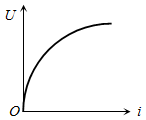
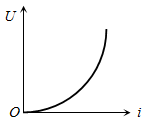
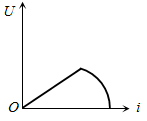
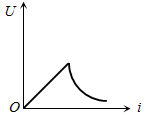
If current flowing through shell of previous objective is equal to i, then energy density at a point distance 2R from axis of the shell varies according to the graph

(a)

(b)

(c)

(d)

Cathode rays are similar to visible light rays in that

(a) They both can be deflected by electric and magnetic fields

(b) They both have a definite magnitude of wavelength

(b) They both have a definite magnitude of wavelength

(d) They both can expose a photographic plate