Question
Two independent parallel wires in which the current is flowing in the same direction. They will:
Answer

(a)attract each other

Need a full question paper?

Generate a complete, print-ready paper with questions like this in minutes — across 16+ boards, with answer keys.

Start Generating Free

Similar questions

In the nuclear reaction $92^{\mathrm{U}^{2 \mathrm{~s}}} \rightarrow \mathrm{z}^{\mathrm{Th}^{\mathrm{A}}}+2^{\mathrm{He}^4}$, the values of $A$ and $Z$ are
Which of the following is an electromagnetic wave?
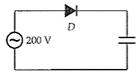
In the circuit given in the figure, an a.c. source of 200 V is connected through a diode D to a capacitor. The potential difference across the capacitor will be

Image
When a metal wire is stretched by a load, the fractional change in its volume $\frac{\triangle\text{V}}{\text{V}}$ is proportional to.
  1. $\frac{\triangle\text{l}}{\text{l}}$
  2. $\Big(\frac{\triangle\text{l}}{\text{l}}\Big)^2$
  3. $\sqrt{\frac{\triangle\text{l}}{\text{l}}}$
  4. None of these.
The significant result deduced from the Rutherford's scattering experiment is that:
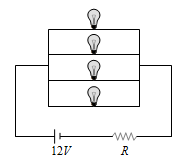
Four identical electrical lamps are labelled $1.5V, 0.5A$ which describes the condition necessary for them to operate at normal brightness. A $12V$ battery of negligible internal resistance is connected to lamps as shown, then
In an ac circuit, the potential differences across an inductance and resistance joined in series are, respectively, 16V and 20V. The total potential difference across the circuit is.
The peak value of voltage of an A.C. circuit is 440 V. Its virtual voltage is :
The electrical circuit used to get smooth dc output from a rectifier circuit is called(a) Oscillator(b) Filter(c) Amplifier(d) Logic gates
       
Four charges equal to $– Q$ are placed at the four corners of a square and a charge $q$ is at its centre. If the system is in equilibrium the value of $q$ is