Two plates are $2\,cm$ apart, a potential difference of $10\;volt$ is applied between them, the electric field between the plates is.........$N/C$
Easy


Download our appand get started for free
Experience the future of education. Simply download our apps or reach out to us for more information. Let's shape the future of learning together!No signup needed.*
Similar Questions
- 1The capacity of a parallel plate condenser is $10\,\mu \,F$, when the distance between its plates is $8 \,cm$. If the distance between the plates is reduced to $4\, cm$, then the capacity of this parallel plate condenser will be.........$\mu \,F$View Solution
- 2A condenser of $2\,\mu F$ capacitance is charged steadily from $0$ to $5\,C$. Which of the following graph represents correctly the variation of potential difference $(V)$ across it's plates with respect to the charge $(Q)$ on the condenser?View Solution
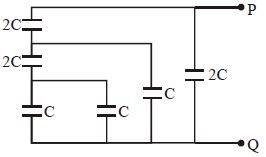
- 3The value of equivalent capacitance of the combination shown in figure, between points $P$ and $Q$ isView Solution
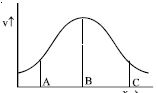
- 4Variation of electrostatic potential along $x$-direction is shown in the graph. The correct statement about electric field isView Solution
- 5Two charged spherical conductors of radius $R_{1}$ and $\mathrm{R}_{2}$ are connected by a wire. Then the ratio of surface charge densities of the spheres $\left(\sigma_{1} / \sigma_{2}\right)$ is :View Solution
- 6A metallic sphere has a charge of $10\,\mu C$. A unit negative charge is brought from $A$ to $B$ both $100\,cm$ away from the sphere but $A$ being east of it while $B$ being on west. The net work done is........$joule$View Solution
- 7View SolutionAn uncharged capacitor is connected to a battery. On charging the capacitor
- 8A particle of mass $m$ and carrying charge $-q_1$ is moving around a charge $+q_2$ along a circular path of radius r. Find period of revolution of the charge $-q_1$View Solution
- 9Two spherical conductors $A$ and $B$ of radii $1\ mm$ and $2\ mm$ are separated by a distance of $5\ cm$ and are uniformly charged. If the spheres are connected by a conducting wire then in equilibrium condition, the ratio of the magnitude of the electric fields at the surfaces of spheres $A$ and $B$ isView Solution
- 10A $20\,F$ capacitor is charged to $5\,V$ and isolated. It is then connected in parallel with an uncharged $30\,F$ capacitor. The decrease in the energy of the system will be.......$J$View Solution