MCQ
Two sound waves of slightly different frequencies propagating in the same direction produce beats due to:
  • A
    Interference.
  • B
    Diffraction.
  • C
    Reflection.
  • D
    Refraction.

Answer

  1. Interference.

Explanation:

Beats are produced on account of interference of sound waves of slightly different frequencies.

Need a full question paper?

Generate a complete, print-ready paper with questions like this in minutes — across 16+ boards, with answer keys.
Start Generating Free

Similar questions

The force required to take away a flat circular plate of radius $2\, cm$ from the surface of water, will be (the surface tension of water is $70\, dyne/cm$)
According to Bernoulli's equation $\frac{P}{{\rho g}} + h + \frac{1}{2}\,\frac{{{v^2}}}{g} = {\rm{constant}}$     The terms $A, B$  and $ C$  are generally called respectively:
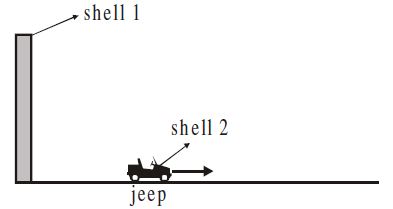
A shell is fired at a speed of $200\ m/s$ at an angle of $37^o$ above horizontal from top of a tower $80\ m$  high. At the same instant another shell was fired from a jeep travelling away from the tower at a speed of $10\ m/s$ as shown. The velocity of this shell relative to jeep is $250\  m/s$ at an angle of $53^o$ with horizontal. Find the time (in $sec$) taken by the two shells to come closest.
The number density of molecules of a gas depends on their distance $r$ from the origin as, $n\left( r \right) = {n_0}{e^{ - \alpha {r^4}}}$. Then the total number of molecules is proportional to
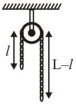
A uniform metal chain of mass $m$ and length ' $L$ ' passes over a massless and frictionless pulley. It is released from rest with a part of its length ' $l$ ' is hanging on one side and rest of its length ' $L -l$ ' is hanging on the other side of the pulley. At a certain point of time, when $l=\frac{L}{x}$, the acceleration of the chain is $\frac{g}{2}$. The value of $x$ is ........
A car accelerates on a horizontal road due to the forces exerted by
If $\overrightarrow{ P }=3 \hat{ i }+\sqrt{3} \hat{ j }+2 \hat{ k }$ and $\overrightarrow{ Q }=4 \hat{ i }+\sqrt{3} \hat{ j }+2.5 \hat{ k }$ then, The unit vector in the direction of $\overrightarrow{ P } \times \overrightarrow{ Q }$ is $\frac{1}{x}(\sqrt{3} \hat{i}+\hat{j}-2 \sqrt{3} \hat{k})$. The value of $x$ is
A child weighing $25$ kg slides down a rope hanging from the branch of a tall tree. If the force of friction acting against him is $2\, N$,  ........ $m/s^2$ is the acceleration of the child (Take $g = 9.8\,m/{s^2})$
When a car is at rest, its driver sees rain drops falling on it vertically. When driving the car with speed $v,$ he sees that rain drops are coming at an angle $60^{\circ}$ from the horizontal. On further increasing the speed of the car to $(1+\beta) v ,$ this angle changes to $45^{\circ} .$ The value of $\beta$ is close to$......$
The graph of pressure $(P)$ and volume $(V)$ according to $PV^n = C$, here $n = 1.4$