MCQ
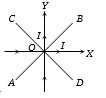
Two very thin metallic wires placed along $X$ and $Y$-axis carry equal currents as shown here. $AB$ and $CD$ are lines at $45^\circ $ with the axes with origin of axes at $O$. The magnetic field will be zero on the line
  • $AB$
  • B
    $CD$
  • C
    Segment $OB$ only of line $AB$
  • D
    Segment $OC$ only of line $CD$

Answer

Correct option: A.
$AB$
a
(a) Every point on line $AB$ will be equidistant from $X $ and $Y$-axis. So magnetic field at every point on line $AB$ due to wire $1$ along $X$-axis is equal in magnitude but opposite in direction to the magnetic field due to wire along $Y$-axis. Hence ${B_{net}}$ on $AB = 0$

Need a full question paper?

Generate a complete, print-ready paper with questions like this in minutes — across 16+ boards, with answer keys.

Start Generating Free

Similar questions

Electron volt is a unit of
At what height from the ground will the value of $‘g’ $ be the same as that in $10 \,km$ deep mine below the surface of earth ......... $km$
The magnetic susceptibility of a material of a rod is $499 .$ Permeability in vaccum is $4 \pi \times 10^{-7}\; {H} / {m}$. Absolute permeability of the material of the rod is $....\,\pi \times 10^{-4} {H} / {m}$
The resistance $R =\frac{ V }{ I },$ where $V =(50 \pm 2) \;V$ and $I=(20 \pm 0.2)\;A.$ The percentage error in $R$ is $x\%$. The value of $x$ to the nearest integer is .........
If three bulbs $60\,W$, $100\,W$ and $200\,W$ are connected in parallel, then
There is no couple acting when two bar magnets are placed coaxially separated by a distance because
person trying to lose weight by burning fat lifts a mass of $10\ kg$ upto a height of $1\ m$ $1000$ times. Assume that the potential energy lost each time he lowers the mass is dissipated. How much fat will he use up considering the work done only when the weight is lifted up? Fat supplies $3.8 \times 10^7\ J$ of energy per kg which is converted to mechanical energy with a $20\%$ efficiency rate. Take $g=9.8$ $ms^{-2}$ 
A rod of length $1.2\,m$ is clamped at the mid point and its fundamental frequency is $2\,MHz$ , then speed of wave inside the rod?
When the distance between the charged particles is halved, the force between them becomes
An electric dipole of moment $\vec p$ is lying along a uniform electric field $\vec E.$ The work done in rotating the dipole by $90^o $ is