MCQ
Water rises to a height of $10\,cm$ in a certain capillary tube. An another identical tube when dipped in mercury the level of mercury is depressed by $3.42\,cm$. Density of mercury is $13.6\, g/cc$. The angle of contact for water in contact with glass is $0^o$ and mercury in contact with glass is $135^o$. The ratio of surface tension of water to that of $Hg$ is :-
  • A
    $1:3$
  • B
    $1:4$
  • C
    $1:55$
  • $1:6.5$

Answer

Correct option: D.
$1:6.5$
d
$h=\frac{2 T \cos \theta}{r \rho g} \Rightarrow \frac{T_{w}}{T_{m}} \times 13.6 \times(-\sqrt{2})=\frac{10}{-3.42}$

$\Rightarrow \frac{T_{w}}{T_{m}} \cong \frac{1}{6.5}$

Need a full question paper?

Generate a complete, print-ready paper with questions like this in minutes — across 16+ boards, with answer keys.

Start Generating Free

Similar questions

If a charged particle at rest experiences no electromagnetic force:
One atomic mass units is equivalent to .............. $MeV$ energy.
If $P, Q, R$ are physical quantities, having different dimensions, which of the following combinations can never be a meaningful quantity?
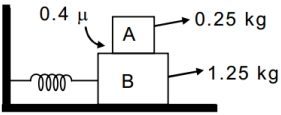
Maximum amplitude(in $cm$) of $SHM$ so block A will not slip on block $B , K =100 N / m$
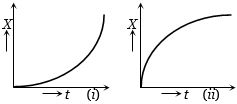
Figures $(i)$ and $(ii)$ below show the displacement-time graphs of two particles moving along the x-axis. We can say that
If $\vec{a}$ and $\vec{b}$ makes an angle $\cos ^{-1}\left(\frac{5}{9}\right)$ with each other, then $|\vec{a}+\vec{b}|=\sqrt{2}|\vec{a}-\vec{b}|$ for $|\vec{a}|=n|\vec{b}|$ The integer value of $n$ is . . . . . . .. 
An $80\, kg$ person is parachuting and is experiencing a downward acceleration of $2.8\, m/s^2$. The mass of the parachute is $5\, kg$. The upward force on the open parachute is  ........... $N$ (Take $g = 9.8\, m/s^2$)
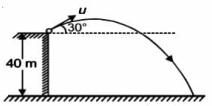
Figure shows a projectile thrown with speed $u=20 \,m / s$ at an angle $30^{\circ}$ with horizontal from the top of a building $40 \,m$ high. Then the horizontal range of projectile is ........... $m$
The ends of stretched wire of length $L$ are fixed at $x\, = 0$ and $x \,= L$. In one experiment, the displacement of the wire is ${y_1} = A\sin\, \left( {\pi x/L} \right)\sin \,\omega t$ and energy is $E_1$. and in another experiment its displacement is ${y_2} = A\sin \,\left( {2\pi x/L} \right)\sin 2\omega t$ and energy is $E_2$, Then
Sound waves travel fastest in