MCQ
Water waves are
  • A
    Longitudinal
  • B
    Transverse
  • Both longitudinal and transverse
  • D
    Neither longitudinal nor transverse
Answer

Correct option: C.
Both longitudinal and transverse
(c) Water waves are transverse as well as longitudinal in nature.

Need a full question paper?

Generate a complete, print-ready paper with questions like this in minutes — across 16+ boards, with answer keys.

Start Generating Free

Similar questions

The Cauchy's dispersion formula is
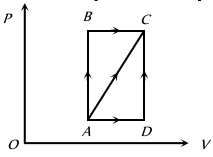
A thermodynamic process is shown in the figure. The pressures and volumes corresponding to some points in the figure are :
$P_A=3 \times 10^4 \mathrm{~Pa}, P_B=8 \times 10^4 \mathrm{~Pa} \text { and }$
$ V_A=2 \times 10^{-3} \mathrm{~m}^3, V_D=5 \times 10^{-3} \mathrm{~m}^3$
In process $A B, 600 \mathrm{~J}$ of heat is added to the system and in process $B C, 200 \mathrm{~J}$ of heat is added to the system. The change in internal energy of the system in process $A C$ would be
Image
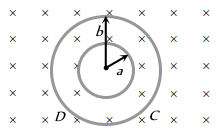
Plane figures made of thin wires of resistance $R=50 \mathrm{milli}$ ohm/metre are located in a uniform magnetic field perpendicular into the plane of the figures and which decrease at the rate $d B / d t=$ $0.1 \mathrm{~m} T / \mathrm{s}$. Then currents in the inner and outer boundary are. (The inner radius $a=10 \mathrm{~cm}$ and outer radius $b=20 \mathrm{~cm}$ )

Image

For photoelectric emission, tungsten requires light of $2300 \mathcal{A}$. If light of $1800 \mathring A$ wavelength is incident then emission
A plane mirror is approaching you at a speed of $10 \mathrm{~cm} / \mathrm{sec}$ You can see your image in it. At what speed will your image approach you
The value of Stefan's constant is
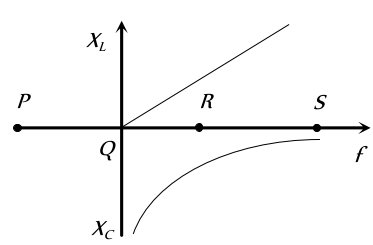
The resonance point in $X_L-f$ and $X_C-f$ curves is

Image

For sky wave propagation of a $10 \ \mathrm{ MHz}$ signal, what should be the minimum electron density in ionosphere
By increasing the temperature, the specific resistance of a conductor and a semiconductor
Pressure-temperature relationship for an ideal gas undergoing adiabatic change is $\left(\gamma=C_p / C_v\right)$