Question
What are polysachharides?

Answer

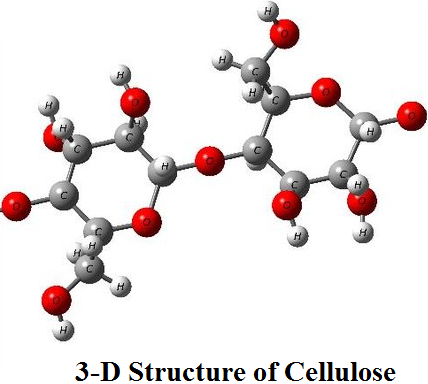
Polysaccharides are long chains of sugars. They are threads containing different monosaccharides as building blocks.

In a polysaccharide chain (say glycogen), the right end is called the reducing end and the left end is called the non-reducing end. Starch forms helical secondary structures. In fact, starch can hold 12 molecules in the helical portion.
Examples: Cellulose, chitin.

Need a full question paper?

Generate a complete, print-ready paper with questions like this in minutes — across 16+ boards, with answer keys.
Start Generating Free

Similar questions

Many discoveries in science have been accidental. This is true for plant hormones also. Can you justify this statement by giving an example? Also what term is used for such accidental findings?
Class XI biology students attended a seminar where the speaker explained the students about the basic macromolecule found in the body, i.e., protein. He started with the monomer unit of protein and explained about different amino acids found. As amino acids are organic compounds containing an amino group and an acidic group as substituents on the same carbon; they are also considered as substituted methane. Suddenly, Ajay stood up and asked about his queries based on the topic. The guest of seminar patiently explained him all the things. Ajay became satisfied and returned home happily from the seminar.
  1. What are the four substituent groups in an amino acid?
  2. Why are there so many different types of amino acids?
  3. Give the general formula of a-amino acids.
  4. Indicate the value of Ajay reflected from the above topic.
The glomerular filtrate in the loop of Henle gets concentrated in the descending limb and then gets diluted in the ascending limb. Explain.
Radha was running on a treadmill at a great speed for 15 minutes continuously. She stopped the treadmill and abruptly came out. For the next few minutes, she was breathing heavily/ fast. Answer the following questions.
  1. What happened to her muscles when she did strenuously exercised?
  2. How did her breathing rate change?
Does the growth pattern in plants differ from that in animals? Do all the parts of plant grow indefinitely? If not, name the regions of plant, which can grow indefinitely.
Distinguish between Red, Brown and Green Algae.
What is consciousness and which are the stimuli for living things to become conscious?
Each plant or group of plants has some phylogenetic significance in relation to evolution: Cycas, one of the few living members of gymnosperms is called as the ‘relic of past’. Can you establish a phylogenetic relationship of Cycas with any other group of plants that justifies the above statement?
What are plasmids? Describe their role in bacteria.
Write the characteristics of heartwood and sapwood.