Questions

3 Marks Question

Take a timed test

40 questions · self-marked practice — reveal the answer and mark yourself.

Question 13 Marks
Find out how much cellulose is made by all the plants in the biosphere and compare it with how much of paper is manufactured by man and hence what is the consumption of plant material by man annually. What a loss of vegetation!
Answer
About 100 billion tonne of cellulose is formed annually in the biosphere out of 170 billion tonne of total organic matter. Paper making consumes about 0.5 billion tonne of wood. Trees are also used to fulfil other requirements of human beings such as medicines, timber and food. A rough estimate shows that food grains constitute 1.5 billion tonne. Full wood required is 2 billion tonne. Hence, it is difficult to calculate the annual consumption of plant material by man. The increase in consumption of cellulose has resulted in a great loss of vegetation.
View full question & answer
Question 23 Marks
Find out and make a list of proteins used as therapeutic agents. Find other applications of proteins (e.g., Cosmetics etc.)
Answer
Proteins used as therapeutic agents are as follows:

  1. Thrombin and fibrinogen – They help in blood clotting.
  2. Antigen (antibody) – It helps in blood transfusion.
  3. Insulin – It helps in maintaining blood glucose level in the body.
  4. Renin – It helps in osmoregulation.

Proteins are also commonly used in the manufacture of cosmetics, toxins, and as biological buffers.

View full question & answer
Question 33 Marks
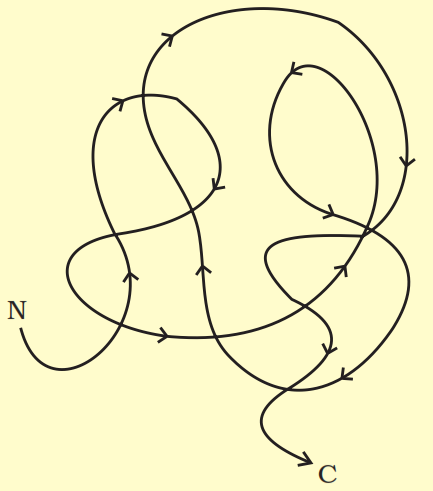
What is meant by tertiary structure of proteins?
Answer
The tertiary structure is a structure formed by the folding of secondary coiled polypeptides forming a hollow, woollen ball-like structure. It is folded in such a way that the functional side groups are present on the surface and the inactive side groups remain in the interior.

View full question & answer
Question 43 Marks
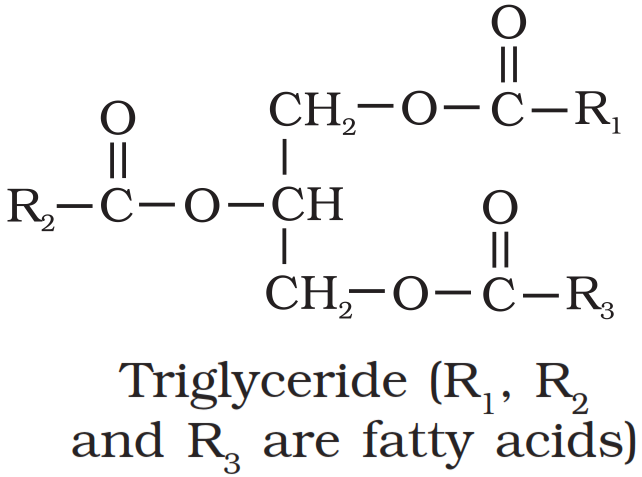
Explain the composition of triglyceride.
Answer
Triglycerides are formed from a single molecule of glycerol combined with three fatty acids on each of the OH groups through ester bonds.

In pure fat, all the three fatty acids of a triglyceride are similar (e.g. tripalmitin), while in mixed fat, they are dissimilar (e.g. palmito-oleo-stearin).
View full question & answer
Question 53 Marks
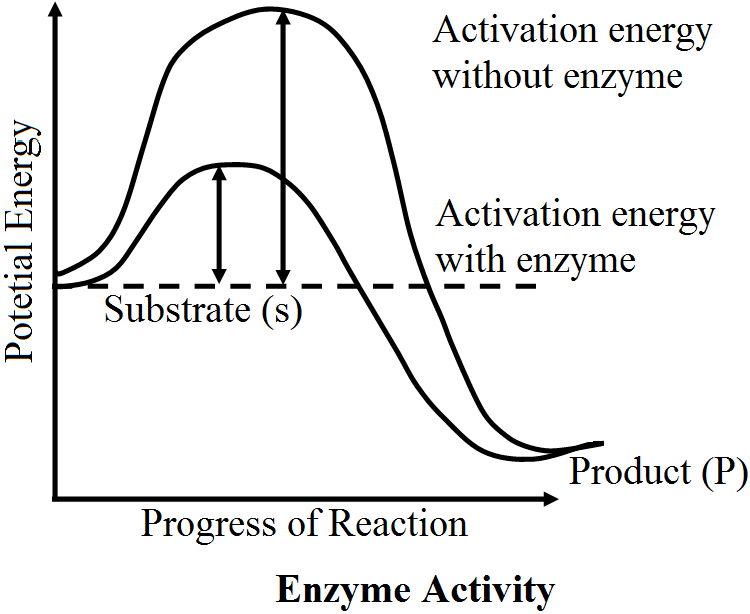
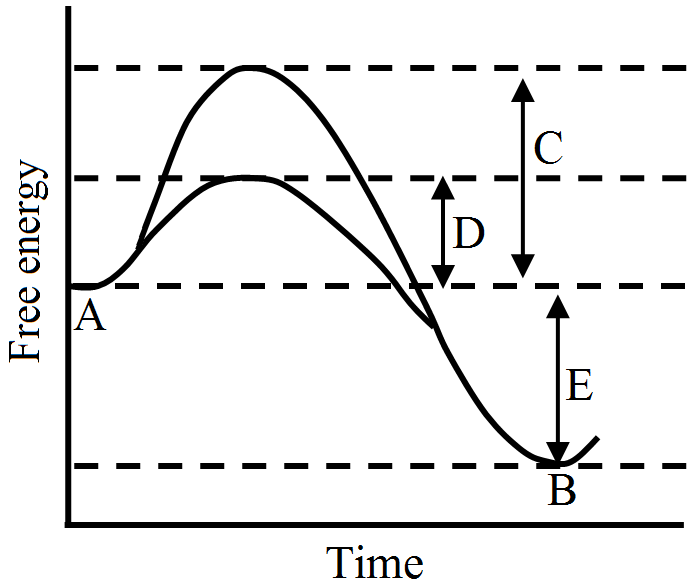
Give a diagrammatic representation of lowering of activation energy by enzyme.
Answer
Activation by enzyme.

View full question & answer
Question 63 Marks
  1. What is the effect of substrate concentration on the action of enzyme?
  2. Distinguish between apoenzyme and coenzyme.
  3. Why are amino acids also called substituted methane?
Answer
  1. Effect of substrate concentration:
  1. With the increase in substrate concentration, the velocity of enzyme reaction increases upto a certain limit.
  2. But the reaction reaches a maximum and does not increase any further with the increase in the concentration of substrate; this is because, there is no free enzyme molecule for the substrate to bind with. 
  1. Differences: ​​​​​​​
Apoenzyme
Coenzyme
It is the protein part of the enzyme.
It is the non-protein organic compound that transiently binds to apoenzyme, to make it catalytically active.
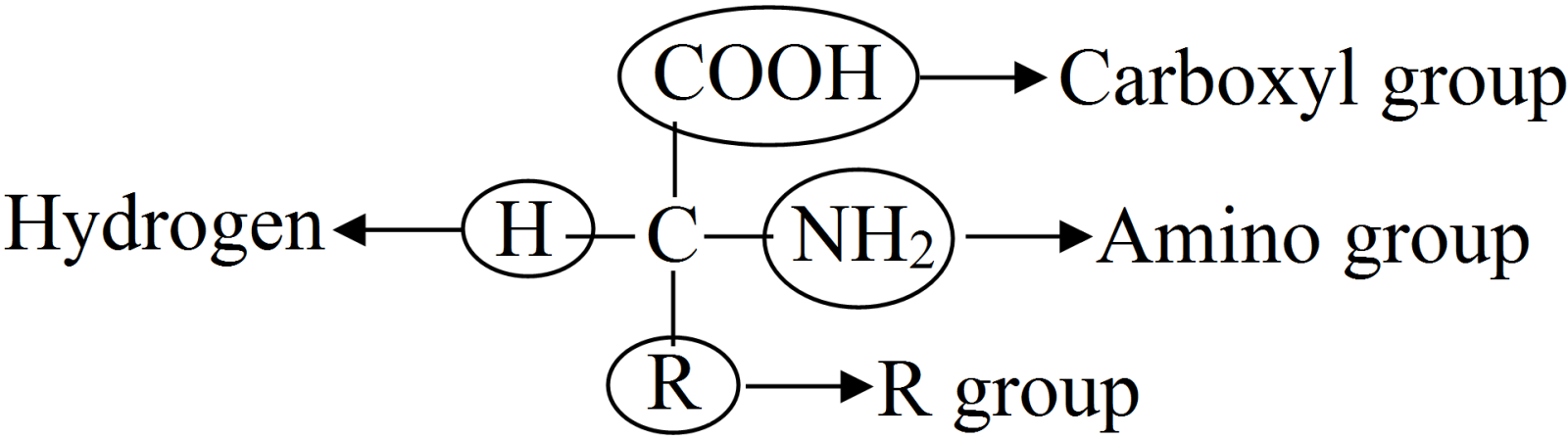
  1.  An amino acid is a substituted methane, because there are four substituent groups occupying the four valency positions of the a-carbon; they are hydrogen, carboxyl group, amino group and a variable group (R-group).
View full question & answer
Question 73 Marks
  1. Why are proteins called heteropolymers and not homopolymers?
  2. Why are essential amino acids to be taken in our diet?
Answer
  1.  
  1. A heteropolymer is a polymer made of different kinds of monomers; since proteins are made of a number of different kinds of monomers (amino acids), they are heteropolymers.
  2. A homopolymer is a polymer made of only one type of a monomer, repeating 'n' number of times; hence protein is not a homopolymer.​​​​​​​
  1. Essential amino acids are those amino acids which our body cannot synthesise; so they have to be taken in the form of food.
View full question & answer
Question 83 Marks
What is the difference between a nucleotide and nucleoside? Give two examples of each with their structure.
Answer
Difference between Nucleotide and Nucleoside.
Nucleotide
Nucleoside
The chemical composition of nucleotide consists of a phosphate group, a sugar and a nitrogenous base.
A nucleoside has a chemical composition that consists of a sugar and a base without the phosphate group.
They are one of the major causes forcancer causing agents to this very day.
They are used as agents in medicine that are primarily used against viruses and cancer causing agents.
Some of the major examples of nucleotides are adenosine, guano sine etc.
Some of the key examples of nucleosides are the same as nucleotides only with the addition of phosphate groups.
View full question & answer
Question 93 Marks
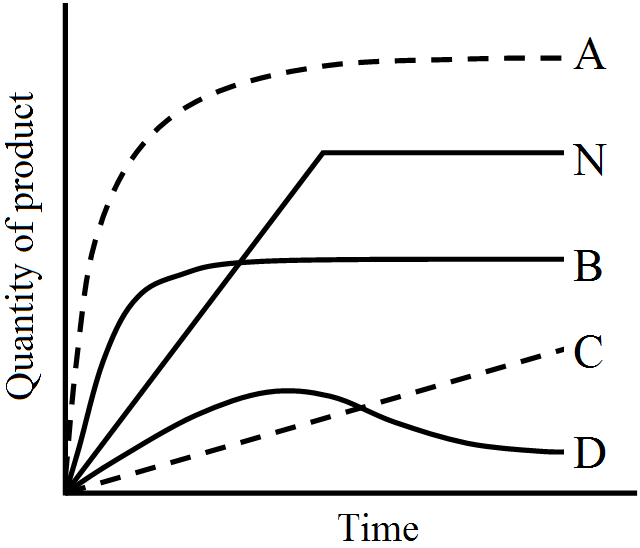
The lines A to D below show how change in temperature can affect the rate of enzyme reaction. Line N shows the rate of reaction under optimum temperature. Which line A, B, C or D shows the rate of enzyme reaction at 60°C?

Answer
Line B, will show the rate of reaction at 60°C because the rate of reaction initially is more rapid, but then decreases as the enzyme becomes denatured by the high temperature. Thus, the quantity of product remains constant at a lower amount compared to line N.
View full question & answer
Question 103 Marks
Living state and metabolism are synonyms. Justify

OR

Without metabolism, the living state can not exist Justify.

OR

Comment on the statement 'living state is a non-equilibrium steady state to be able to perform work'.

Answer
The most important fact of biological systems is that all living organisms exist in a steady-state characterised by the concentration of each of the biomolecule. These biomolecules are in a metabolic flux. Any chemical or physical process moves spontaneously to equilibrium. Thus, steady state is a non-equilibrium state.
As living organisms work continuously, they cannot afford to reach equilibrium. Hence, the living state is anon-equilibrium steady-state to be able to perform work. This is achieved by energy input. Metabolism provides a mechanism for the production of energy.
Hence, the living state and metabolism are synonymous. Without metabolism, there cannot be a living state.
View full question & answer
Question 113 Marks
What are the functions of polysaccharides?
Answer
The functions of polysaccharides are:
  1. Starch and glycogen are the major storage food of organic world.
  2. On hydrolysis, storage carbohydrates provide both energy and carbon chains.
  3. Chitin is the structural carbohydrate of fungal walls and exoskeleton of arthropods. (insects).
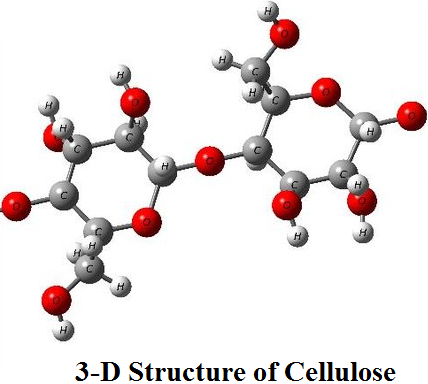
  4. Cellulose is the structural substance of cell walls in most of the plants.
  5. Cellulose is economically important in the production of
  6. Furniture, shelter, fuel, paper, textiles, ropes, rayon, cellophane, plastics, etc.
View full question & answer
Question 123 Marks
Explain classification of enzymes.
Answer
Classification and Nomenclature of Enzymes
Thousands of enzymes have been discovered, isolated and studied. Most of these enzymes have been classified into different groups based on the type of reactions they catalyse. Enzymes are divided into 6 classes each with 4-13 subclasses and named accordingly by a four-digit number.
Oxidoreductases/ dehydrogenases: Enzymes which catalyse oxidoreduction between two substrates S and S'.
Transferases: Enzymes catalysing a transfer of a group, G (other than hydrogen) between a pair of substrate S and S'. Hydrolases. Enzymes catalysing hydrolysis of ester, ether, peptide, glycosidic, C-C, C-halide or P-N bonds.
Lyases: Enzymes that catalyse removal of groups from substrates by mechanisms other than hydrolysis leaving double bonds.
Isomerases: Includes all enzymes catalysing inter-conversion of optical, geometric or positional isomers.
Ligases: Enzymes catalysing the linking together of 2 compounds, e.g., enzymes which catalyse the joining of C - O, C - S, C- N, P-O etc. bonds.
View full question & answer
Question 133 Marks
Is rubber a primary metabolite or a secondary metabolite? Write four sentences about rubber.
Answer
Rubber (cis 1, 4-polyisopyrene) is a secondary metabolite. Secondary metabolites are chemicals produced by plants for which no role has been found yet in growth, photosynthesis, reproduction or other primary functions.
  1. Rubber is extracted from Have abrasiliensis (rubber tree).
  2. It is a byproduct of the lactiferous tissue of the vessels that are in the form of latex.
  3. It is the largest of the terpenoids because it contains over 400 isoprene units.
  4. It is elastic, water proof and a good electrical conductor.
View full question & answer
Question 143 Marks
What are polysachharides?
Answer
Polysaccharides are long chains of sugars. They are threads containing different monosaccharides as building blocks.

In a polysaccharide chain (say glycogen), the right end is called the reducing end and the left end is called the non-reducing end. Starch forms helical secondary structures. In fact, starch can hold 12 molecules in the helical portion.
Examples: Cellulose, chitin.
View full question & answer
Question 153 Marks
Proteins have been called 'biological polymers'.Explain.
Answer
All the cells are basically made up of proteins. Enzymes which carry out biological reactions are also proteinaceous in nature. Antibodies, haemoglobin and even adrenaline receptors are all proteins. Therefore, they are called as biological polymers.
View full question & answer
Question 163 Marks
Describe the influence of temperature on enzyme action.
Answer
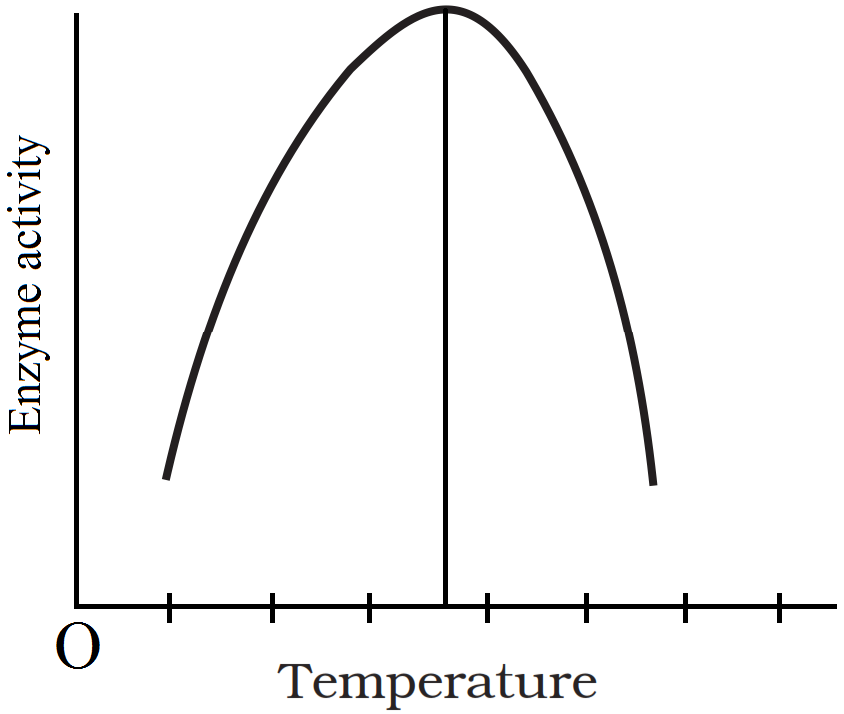
Enzymes generally function at a narrow range of temperature. The temperature at which the enzyme shows its maximum activity, is called its optimum temperature. The enzyme activity decreases at temperatures below and above the optimum temperature. At low temperatures, the enzyme is inactive, while at high temperature, the enzyme is denatured and so it loses its activity.

View full question & answer
Question 173 Marks
Give a tabular representation of different constituents of a living cell.
Answer
Average Composition of a Cell:
Component
% of Total Cellular Mass
Water
70-90%
Proteins
10-15%
Carbohydrates
3%
Lipidse
2%
Nucleic Acids
5-7%
Ions
1%
View full question & answer
Question 183 Marks
Explain the basic structure of an Amino acid.
Answer
Amino acid is an organic compound, which has an amino group and an acidic group, present as substituents on the same carbon; i.e., the a-carbon. Because of this amino acids are also called a-amino acids. On four valency positions there The are four substituent groups. They are hydrogen, carboxyl group, amino group and On a variable group. The variable group is called the 'R' group. The nature of R group decides the type of an amino acid.

View full question & answer
Question 193 Marks
Differentiate between anabolism and catabolism, along with an example for each.
Answer
Differences between anabolism and catabolism are:
S. No
Anabolism
Catabolism
(a)
The metabolic pathways that lead to the synthesis of complex molecules from simpler ones, constitute anabolism.
The metabolic pathways that lead to the formation of simpler molecules from a largermolecule by its breakdown, constitute catabolism.
(b)
These are the biosynthetic pathways.
These are the degradative pathways.
(c)
Energy is stored in the form of chemical bonds.
Chemical bonds are broken and energy is released.
(d)
They consume energy, e.g., protein synthesis from amino
acids.
They release energy, e.g. reakdown of glucose into pyruvic acid in glycolysis.
View full question & answer
Question 203 Marks
Discuss the types of enzyme cofactors that are required for the efficient activity of enzymes.
Answer
Cofactors are non-protein molecules that are relatively stable at high temperatures, consisting of three main types, i.e., inorganic ions, coenzymes and prosthetic groups.
  1. Examples of inorganic ions are calcium ions (activates the enzyme thrombokinase to convert prothrombin into thrombin during the blood clotting process) and chloride ions (activates salivary amylase to convert starch into maltose).
  2. Examples of coenzymes are NAD, acetyl coenzyme A, ATP and NADP.
  3. Prosthetic groups are molecules that are permanently attached to the enzyme.Examples of prosthetic groups are haem and FAD.
View full question & answer
Question 213 Marks
Comment on the statement “living state is a non-equilibrium steadystate to be able to perform work”.
Answer
According to the law of physics; a system in equilibrium can not work. The same logic is true for any biological system. A biological system is always in non-equilibrium and is in steady state. The state of non-equilibrium ensures that the biological system is always in working mode. Various processes in the living being are attempts towards preventing it from falling into equilibrium. This is done by providing energy inputs through metabolic processes. Synchronisation among various metabolic processes maintain the steady state of the biological system.
View full question & answer
Question 223 Marks
What is the tertiary structure of protein?
Answer
Tertiary structure of protein: The overall shape of a single protein molecule; the spatial relationship of the secondary structures to one another. Tertiary structure is generally stabilized by non-local interactions, most commonly the formation of a hydrophobic core, but also through salt bridges, hydrogen bonds, disulfide bonds, and even post-translational modifications. The term “tertiary structure” is often used as synonymous with the term fold. The tertiary structure is what controls the basic function of the protein.
View full question & answer
Question 233 Marks
Explain the basic structure of a nucleotide.
Answer
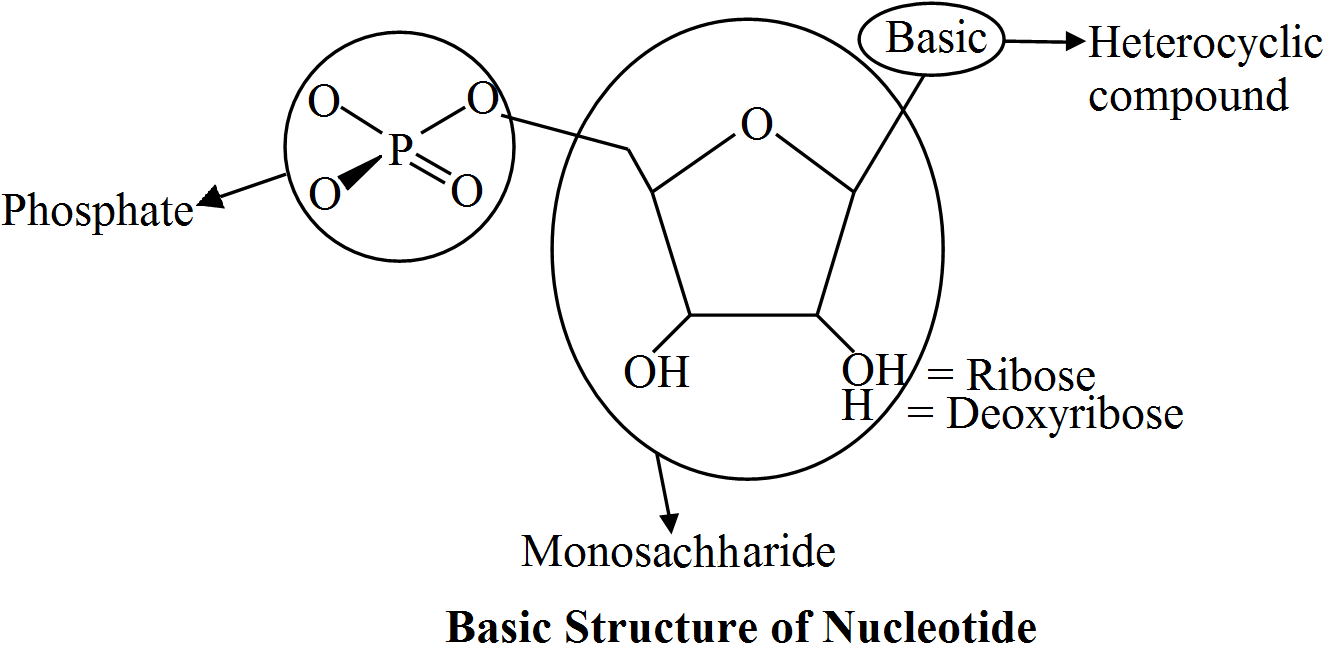
A nucleotide is a building block of nucleic acids. A nucleotide has following components:

  1. A heterocyclic compound (base).
  2. A monosaccharide.
  3. A phosphoric acid or a phosphate.

​​​​​​​

View full question & answer
Question 243 Marks
Give a brief description of nucleic acid.
Answer
For nucleic acids, the building block is a nucleotide. A nucleotide has three chemically distinct components. One is a heterocyclic compound, the second is a monosaccharide and the third a phosphoric acid or phosphate. The heterocyclic compounds in nucleic acids are the nitrogenous bases named adenine, guanine, uracil, cytosine, and thymine. Adenine and Guanine are substituted purines while the rest are substituted pyrimidines. The skeletal heterocyclic ring is called as purine and pyrimidine respectively. The sugar found in polynucleotides is either ribose (a monosaccharide pentose) or 2' deoxyribose. A nucleic acid containing deoxyribose is called deoxyribonucleic acid (DNA) while that which contains ribose is called ribonucleic acid (RNA).
View full question & answer
Question 253 Marks
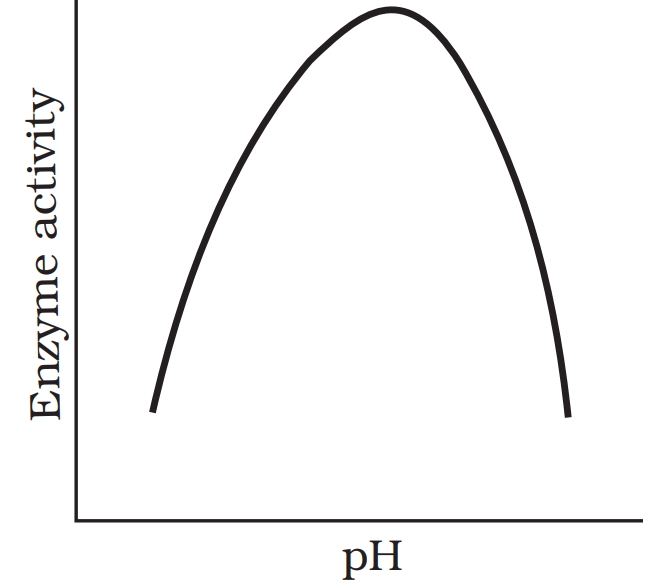
Enzymes are proteins. Proteins are long chains of aminoacids linked to each other by peptide bonds. Aminoacids have many functional groups in their structure. These functional groups are, many of them at least, ionisable. As they are weak acids and bases in chemical nature, this ionization is influenced by pH of the solution. For many enzymes, activity is influenced by surrounding pH. This is depicted in the curve below, explain briefly.

Answer
Every enzyme has an optimum pH when it is most effective. A rise or fall in pH reduces enzyme activity by changing the degree of ionisation of its side chains. A change in pH may also start reverse reaction. Fumarase catalyses  fumarate → malate at 6.2 pH and reverse at 7.5 pH. Most of the intracellular enzymes function near neutral pH with the exception of several digestive enzymes which work either in acidic range of pH or alkaline, e.g., 2 pH for pepsin and 8.5 pH for trypsin.
View full question & answer
Question 263 Marks
Account for the following. Phospholipids form a thin layer on the surface of an aqueous medium.
Answer
The hydrocarbon chains of the two fatty acids function as hydrophobic non-polar tails of the phospholipid molecule. The phosphate and the additional group behave as hydrophilic polar head of the molecule. In the aqueous medium, the phospholipid molecules arrange themselves to form a thin double layer. The polar hydrophilic heads of the molecules form the two surfaces which are in contact with water. The hydrophobic or non-polar tails of the phospholipid molecules are towards the centre of the bilayer.
View full question & answer
Question 273 Marks
Make a list of some proteins and their functions.
Answer
Some Proteins and their functions:
Proteins
Functions
Collagen
Intercellular Ground Substance
Trypsin
Enzymes
Insulin
Hormone
Antibody
Fights against infections
Receptors
Sensory reception (ex: taste)
GLUT-4
Enables glucose transport in cells
View full question & answer
Question 283 Marks
What are proteins? How are proteins formed? Describe the primary, secondary and tertiary structures of proteins.

OR

How are proteins formed? Describe the primary, secondary and tertiary structures of proteins.

Answer
Proteins are formed by the polymerisation of amino acids, i.e. when amino acids are linked by peptide bonds.
Primary structure:
  • In the primary structure, the protein exists as a long chain of amino acids, where the left end is represented by the first amino acid and the right end the last amino acid; the amino acids are linked by peptide bonds.
Secondary structure:
  • In the secondary structure of proteins, there is interaction between every fourth amino acid by formation of hydrogen bonds; the polypeptide assumes a helical shape (a-helix) e.g., keratin.
  • Only right handed (a-helix) helices are seen.
Tertiary structure:
  • When a polypeptide chain is folded upon itself like a hollow woollen ball, it is said to be in its tertiary structure; this gives the 3-dimensional structure of a protein.
View full question & answer
Question 313 Marks
Name two examples for each of the following in living tissues:
  1. Pigments in plants.
  2. Alkaloids.
  3. Terpenoides.
  4. Toxins.
  5. Polymeric substances.
Answer
  1. Carotene, anthocyanin.
  2. Morphine, codeine.
  3. Monoterpenes, diterpenes.
  4. Abrin, Ricin.
  5. Rubber, gums, resins.
View full question & answer
Question 323 Marks
Class XI biology students attended a seminar where the speaker explained the students about the basic macromolecule found in the body, i.e., protein. He started with the monomer unit of protein and explained about different amino acids found. As amino acids are organic compounds containing an amino group and an acidic group as substituents on the same carbon; they are also considered as substituted methane. Suddenly, Ajay stood up and asked about his queries based on the topic. The guest of seminar patiently explained him all the things. Ajay became satisfied and returned home happily from the seminar.
  1. What are the four substituent groups in an amino acid?
  2. Why are there so many different types of amino acids?
  3. Give the general formula of a-amino acids.
  4. Indicate the value of Ajay reflected from the above topic.
Answer
  1. Hydrogen, carboxyl group, amino group, variable (R) group.
  2. Due to the enormously varying R group, there are many amino acids.
  3. $\ \ \ \ \ \ \ \ \ \ \ \ \ \text{H}\\ \ \ \ \ \ \ \ \ \ \ \ \ \ \ \text{|}\\\text{NH}_2-\text{C}-\text{COOH}\\\ \ \ \ \ \ \ \ \ \ \ \ \ \ \text{|}\\ \ \ \ \ \ \ \ \ \ \ \ \ \ \text{R}$
  4. Ajay was inquisitive, intelligent, want to gain more knowledge.
View full question & answer
Question 333 Marks
Enlist the functions of polysaccharides.
Answer
Following are the functions of polysaccharides:
  1. Starch and glycogen are the major storage foods of organic world. On hydrolysis, storage carbohydrates provide both energy and carbon chains.
  2. Chitin is the structural carbohydrate of fungal walls and exoskeleton of arthropods. Cellulose is the structural substance of cell walls in most of the plants.
View full question & answer
Question 343 Marks
Enlist the different types of amino acids based on the number of carboxyl and amino groups in them. Also, give one example of each of these amino acids.
Answer
There are three types of amino acids:

  1. Acidic amino acids.

Example: Glutamic acid.

  1. Basic amino acids,

 Example: Lysine.

  1. Neutral amino acids.

Example: Valine.

View full question & answer
Question 363 Marks
Nutan's grandfather read in the newspaper that, for predicting the identity of criminals or for deciding the controversies regarding biological parents of the child, court always asks for DNA test. He wanted to know the procedure behind it. So, asked Nutan about DNA as she was studying biology in class XI. She replied that it is a substance present in the cells of living organisms which store the information about an individual.
  1. According to you, what is DNA? And what percentage of DNA varies from one individual to the other?
  2. What are the main constituents of DNA?
  3. Why are biologists interested in studying human genome?
  4. What values are reflected from Nutan's grandfather behaviour?
Answer
  1. DNA forms the genome of living organism and is a type of macromolecule present in the cells. DNA is an abbreviation of deoxyribonucleic acid. DNA is almost 99% similar in all individuals, i.e., the variation is only about 1% or even less.
  2. Each nucleotide unit of DNA consists of three different molecules, i.e., phosphate, a 5-carbon deoxyribose sugar and a nitrogenous base.
  3. DNA sequencing of human genome will help in the identification of genes regulating various processes as well as cause of various genetic diseases in man.
  4. Nutan's grandfather was a critical thinker, had asthetic values and had habit of clarifying doubts.
View full question & answer
Question 373 Marks
Explain a glycosidic, peptide and a phosphodiester bond.
Answer
  1. A glycosidic bond is formed between two carbon atoms of two adjacent monosaccharides.
  2. A peptide bond is formed between the carboxyl group of one amino acid and the amino group of the next amino acid.
  3. A phosphodiester bond refers to the bond between a phosphate moiety and the 3' carbon of sugar of one nucleotide on one side and the 5' carbon of the sugar of another nucleotide on the other side.
View full question & answer
Question 383 Marks
Ankita prepared hard for the test at home. All text based question and one practical based question on lock and key hypothesis was given to check whether the students had understood the phenomenon or not. Ankita who was a topper of class was the only student who was able to solve the problem. All others were unable to attempt the same. Teacher felt happy and asked Ankita to explain the process in the class.
  1. Who proposed the lock and key hypothesis?
  2. What is the nature of enzyme action?
  3. Why are enzymes also called biocatalyst?
  4. What values are reflected from Ankita's character?
  5. The hypothesis was given by Emil Fischer in 1894.
Answer
  1. Each enzyme (E) has a substrate binding site(S) in order to form a highly reactive enzyme substrate complex(ES). The complex, so formed is short lived and dissociated into its product which results in the intermediate formation of the enzyme product complex(EP).
  2. Enzymes are also called biocatalysts because these are useful in catalysing biochemical reactions in ilving cells.
  3. Values reflected from Ankita's character was awareness about the process, attentive in class, critical thinking and seriousness about studies.
View full question & answer
Question 393 Marks
Observe the given figure related to enzyme action and answer the following questions.
  1. What is the figure showing?
  2. Name the substances marked as (A) and (B).
  3. What does the arrows marked (C) to (E) indicate?

Answer
  1. Figure is showing the activation energy requirement for non catalysed and enzyme catalysed reactions.
  2. Substances marked on arrows A and B are A-Substrate B-End products.
  3. Arrows marked shows:
  • C- Energy of activation without enzyme.
  • D- Energy of activation with enzymes.
  • E- Free energy difference between the substrate and
  • the end product.
View full question & answer
Question 403 Marks
Succinic dehydrogenase is an enzyme that causes the substrate, succinate, to breakdown into fumarate.
Malonate is a substance that resembles succinate and inhibits the activity of succinic dehydrogenase.
  1. State the type of inhibition of succinic dehydrogenase by malonate.
  2. Explain how this type of inhibition affects the activity of the enzyme.
Answer
  1. The type of inhibition of succinic dehydrogenase by malonate is competitive inhibition.
  2. The inhibitor competes with the substrate for the active sites of enzyme molecules as it has a structure similar to the substrate that allows it to combine with the active site, preventing any substrate molecule from occupying that site. This reduces the rate of the reaction since, the substrate can only use the enzyme molecules that are not occupied by the inhibitor, resulting in the same quantity of product being formed at a slower rate.
View full question & answer