Question
What are the salient features in Tally?

Answer

SALIENT FEATURES OF TALLY:
Tally 9 is very popular Accounting software. A person who just knows basics of Accounts can operate Tally Software easily and can generate instant reports which help the management in taking quick decisions. Its latest version 9 makes it very unique as it has various features as follows:
  1. In Tally, inventory management is possible. Once the available units are entered in it, updated stock summary after each transaction can be obtained.
  2. There is no need of keeping record of salary and wages separately as Payroll feature facilitates the same.
  3. Preparation of Tax reports and tax filing work becomes very easy in Tally as Balance Sheet, P & L statement, TDS returns, Excise forms, VAT forms, Service Tax returns etc. can be generated easily in Tally at any point of time.
  4. To find out the cost of a particular job is very easy as Tally provides cost centre facility in it.
  5. Syncronization of data is another main feature of Tally which facilitates to manage the data over different locations.
  6. Various MIS reports can be generated easily and Budget can be maintained in Tally.
  7. It also calculates interest on outstanding amount.

Need a full question paper?

Generate a complete, print-ready paper with questions like this in minutes — across 16+ boards, with answer keys.

Start Generating Free

Similar questions

Rectify the following errors:
  1. Wages paid for the construction of office debited to the Wages Account, ₹ 5,000.
  2. Machinery purchased for ₹ 35,000 was passed through the Purchases Book.
  3. Old furniture sold for ₹ 1,000, passed through the Sales Book.
  4. ₹ 2,000 paid to Mehta Bros. against acceptance were debited to Malhotra Bros. Account.
  5. Sales of ₹ 204 to Ram debited to his account as ₹ 402 and purchases of ₹ 1,012 from Shyam credited to his account as ₹ 1,210.
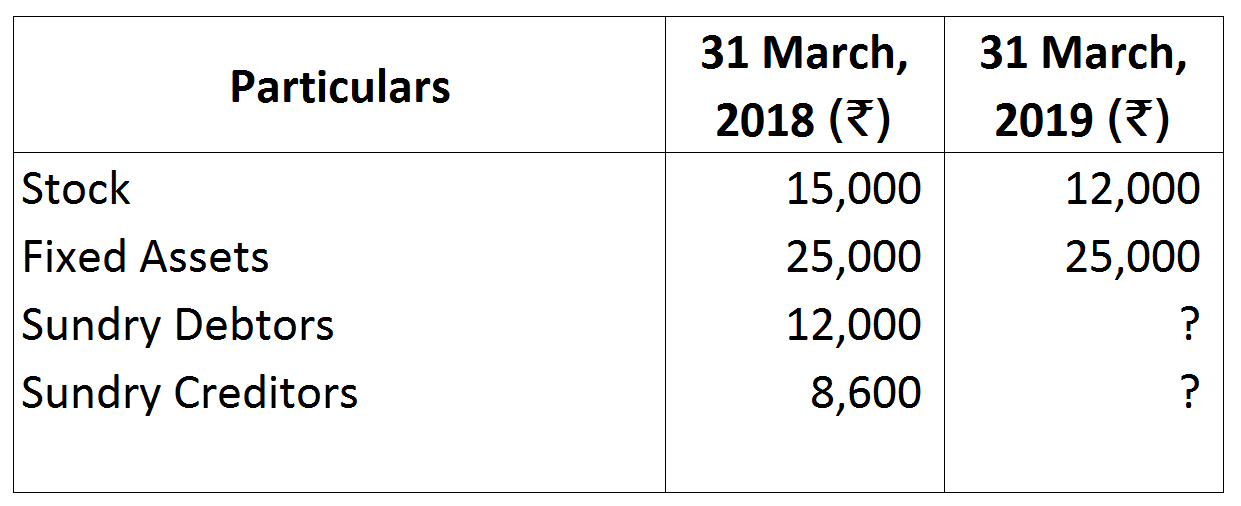
Mr. Asif Ali, a retail trader, who keeps Incomplete Records gives you the following information for the year $2018-19:$
The Assets and Liabilities were as follows:
Other Informations:
  1. Credit Sales during the year were $₹\ 35,100.$
  2. Sales returns $₹\ 800.$
  3. Credit Purchases during the year were $₹\ 30,000.$
  4. Discount allowed to Debtors $₹\ 300.$
  5. Discount received from Creditors $₹\ 130.$
Adjustments:
  1. Make a provision for doubtful debts $@\ 5\%$ on Debtors.
  2. Also make a provision for discount $@\ 2\%$ on Debtors.
Prepare his Trading, P & L A/c and a Balance Sheet as at $31^{st}$ March, $2019.$
On 1st October, 2011, X Ltd. purchased a machinery for ₹ 2,50,000. A part of machinery which was purchased for ₹ 20,000 on 1st October, 2011 became obsolete and was disposed off on 1st January, 2014 (having a book value ₹ 17,100 on 1st April, 2013) for ₹ 2,000. Depreciation is charged @ 10% annually on written down value. Prepare Machinery Disposal Account and also show your workings. The books being closed on 31st March of every year.
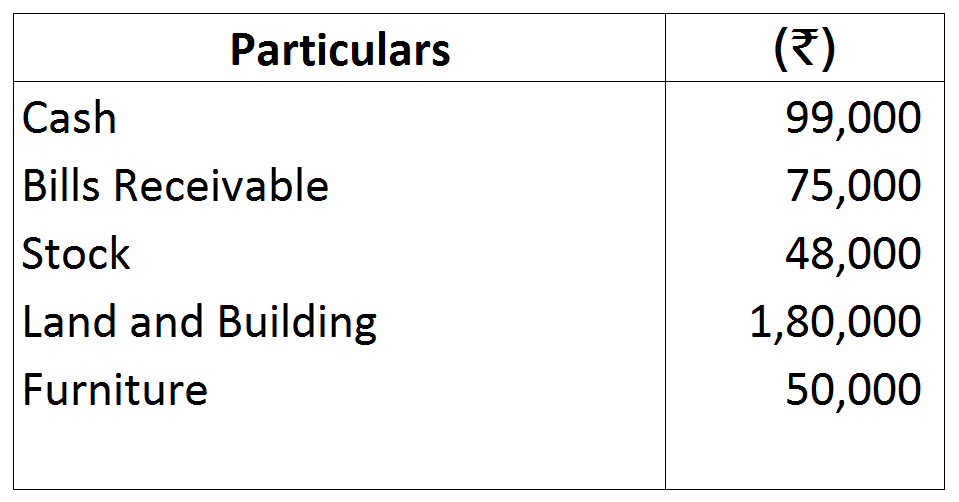
Tulsi started business on $1^{st}$April, $2016$ with a capital of ₹ $4,50,000.$ On $31^{st}$ March, $2017 $her position was as under:

She owed ₹ $45,000$ to her friend Parvati on that date. She withdrew ₹ $8,000$ per month for household purposes. Ascertain her profit or loss for the year ended $31^{st}$​​​​​​​ March,$ 2017:$
A owed B ₹ 8,000. He gave a bill for the same on 1st August, 2018 payable after 4 months at the Bank of India, Chandni Chowk, Delhi. Immediately after receiving the bill, B endorsed it to C in payment of his debt. On 1st September, C discounted the bill at 12% p.a. The bill is met on due date.
Pass the necessary Journal entries in the books of A, B and C.
Prepare Bank Reconciliation Statement from the following:On 31st March, 2019, a merchant's Cash Book showed a credit bank balance of ₹ 10,500 but due to the following reasons the Pass Book showed a difference:
  1. A cheque of ₹ 540 issued to Mohan has not been presented for payment.
  2. A post-dated cheque for ₹ 100 has been debited in the bank column of the Cash Book but under no circumstances was it possible to present it.
  3. Four cheque of ₹ 1,200 sent to the bank have not been collected so far. A cheque of ₹ 400 deposited in the bank has been dishonoured.
  4. As per instructions, the bank paid ₹ 50 as Fire Insurance premium but the entry has not been made in the Cash Book.
  5. There was a debit in the Pass Book of ₹ 15 in respect of bank charges and a credit of ₹ 25 for interest on Current Account but no record exists in the Cash Book.
  6. Cheque of ₹ 5,000 dated 15th April, 2019 issued to M & Co. was dishonoured being post dated. It was also not recorded in the books of account yet.
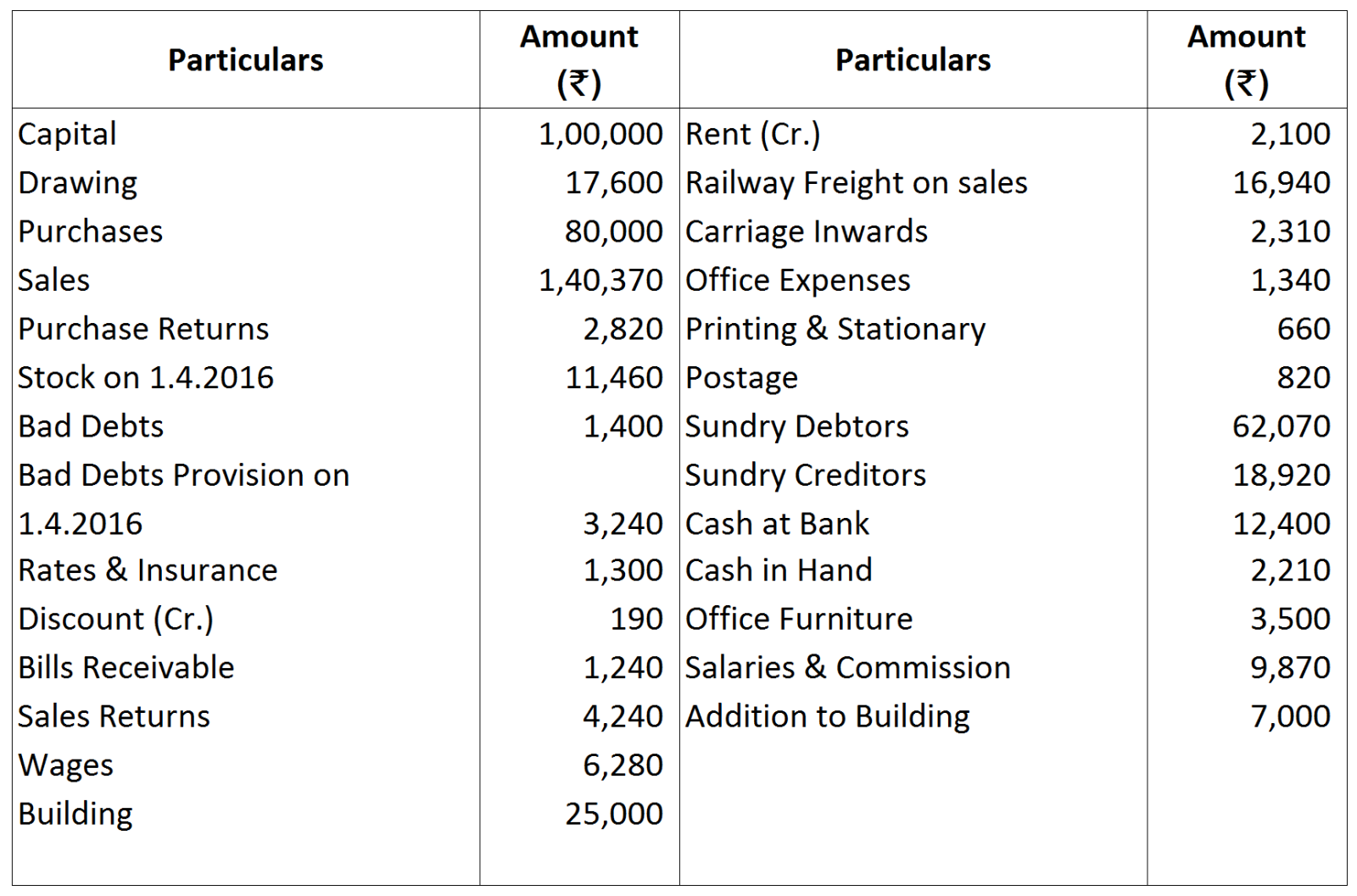
The following balances were taken from the books of Shri R. Lal as at 31st March, 2017.

Prepare Trading and Profit & Loss A/c and a Balance Sheet as at 31st March, 2017, after keeping in view the following adjustments:
  1. Depreciate old Building at $2\frac{1}{2}\%$ and addition to Building at 2% and Office Furniture at 5%.
  2. Write off further Bad-debts ₹ 570.
  3. Increase the Bad-debts Provision to 6% of Debtors.
  4. On 31st March, 2017 ₹ 570 are outstanding for salary.
  5. Rent receivable ₹ 200 on 31st March, 2017.
  6. Interest on capital at 5% to be charged.
  7. Unexpired Insurance ₹ 240.
  8. Stock was valued at ₹ 14,290 on 31st March, 2017.
Explain the data base design for Model-I for producing the receipts the series of SQL statements for producing the payment side of cash book for Model-II.
State three points of difference between Single Entry and Double Entry System. Difference between Double Entry System and Single Entry System?
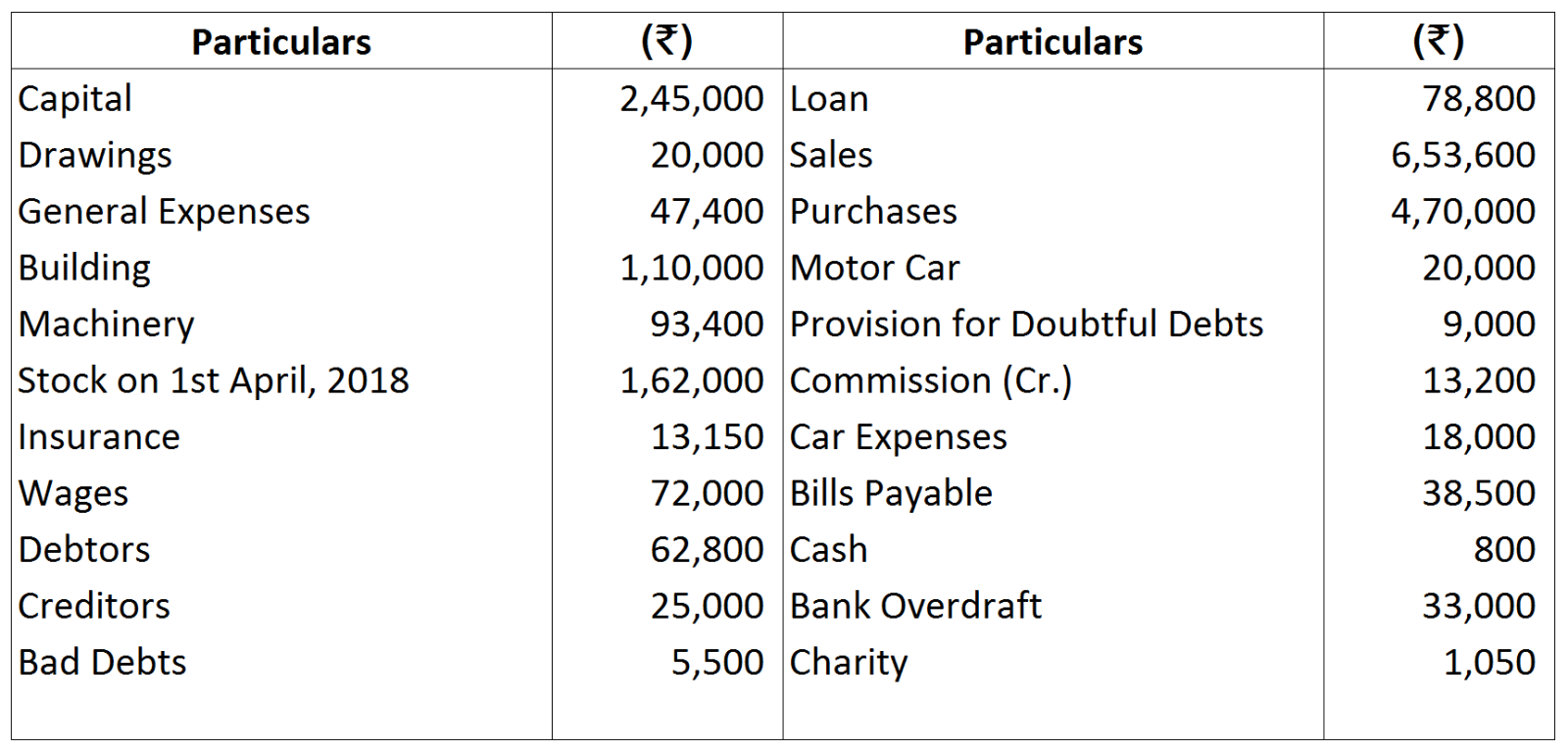
Following balances were extracted from the books of Vijay on 31st March, 2019:
Stock as on 31st March, 2019 was valued at ₹ 2,30,000.Prepare Trading and Profit and Loss Account for the year ended 31st March, 2019 and Balance Sheet as at that date after giving effect to the following adjustments:
  1. Write off further ₹ 1,800 as Bad Debts and maintain the Provision for Doubtful Debts at 5%.
  2. Depreciate Machinery at 10%.
  3. Provide ₹ 7,000 as outstanding interest on loan.