Question
What are the salient features in Tally?

Answer

SALIENT FEATURES OF TALLY:
Tally 9 is very popular Accounting software. A person who just knows basics of Accounts can operate Tally Software easily and can generate instant reports which help the management in taking quick decisions. Its latest version 9 makes it very unique as it has various features as follows:
  1. In Tally, inventory management is possible. Once the available units are entered in it, updated stock summary after each transaction can be obtained.
  2. There is no need of keeping record of salary and wages separately as Payroll feature facilitates the same.
  3. Preparation of Tax reports and tax filing work becomes very easy in Tally as Balance Sheet, P & L statement, TDS returns, Excise forms, VAT forms, Service Tax returns etc. can be generated easily in Tally at any point of time.
  4. To find out the cost of a particular job is very easy as Tally provides cost centre facility in it.
  5. Syncronization of data is another main feature of Tally which facilitates to manage the data over different locations.
  6. Various MIS reports can be generated easily and Budget can be maintained in Tally.
  7. It also calculates interest on outstanding amount.

Need a full question paper?

Generate a complete, print-ready paper with questions like this in minutes — across 16+ boards, with answer keys.

Start Generating Free

Similar questions

Explain the process of Company Creation.
What are objectives or functions of a Trial Balance?
The following balances were extracted from the books of Harish Chandra on $31^{st}$ March, $2019:$

Stock on $31^{st}$ March,$ 2019$ was valued at $₹ 2,35,000.$
Prepare final accounts for the year ended $31^{st}$ March, $2019.$
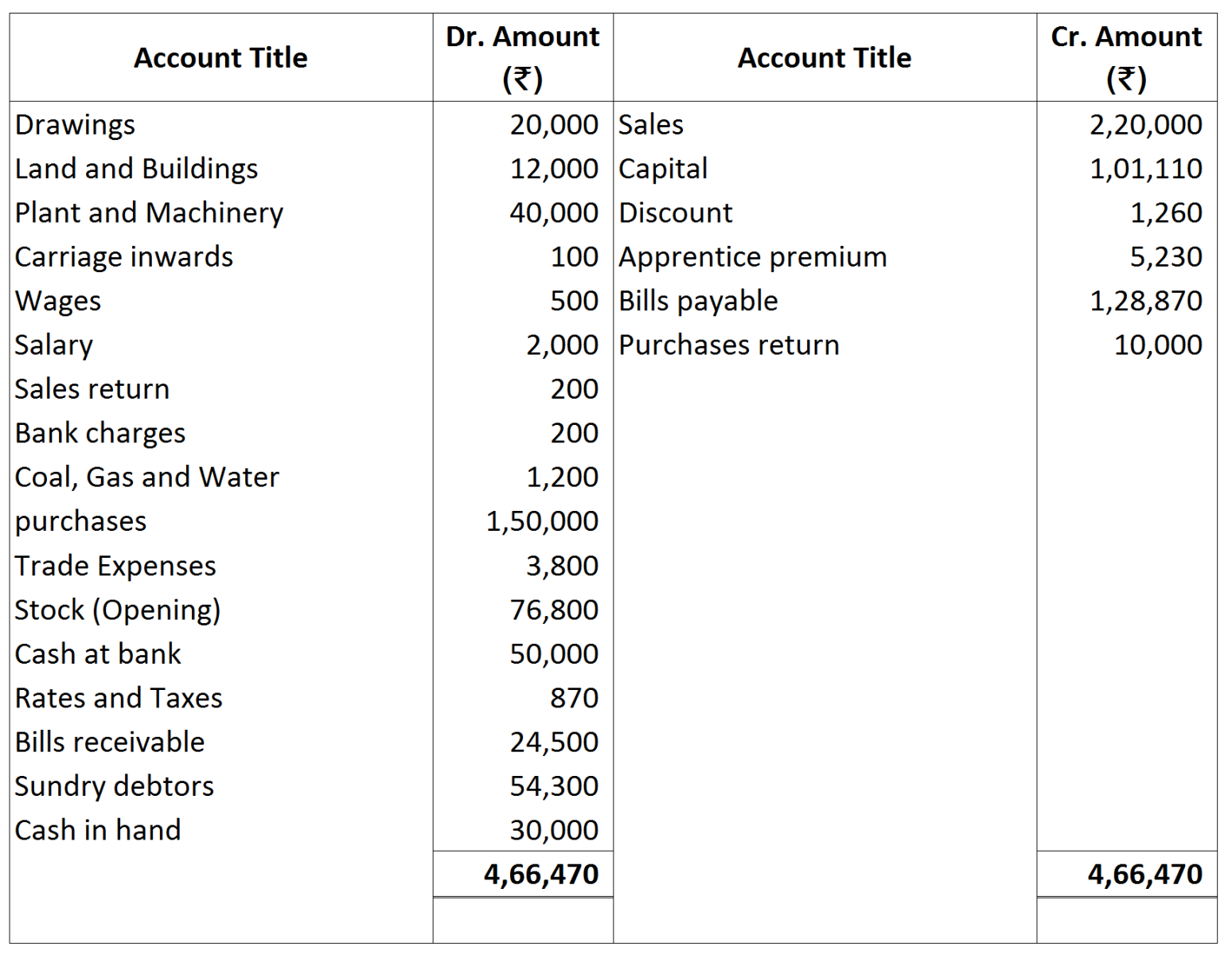
From the following balances extracted from the books of Raga Ltd. prepare a trading and profit and loss account for the year ended March 31, 2017 and a balance sheet as on that date.

​​​​​​The additional information is as under :
  1. Closing stock was valued at the end of the year ₹ 20,000.
  2. Depreciation on plant and machinery charged at 5% and land and building at 10%.
  3. Discount on debtors at 3%.
  4. Make a provision at 5% on debtors for doubtful debts.
  5. Salary outstanding was ₹100 and Wages prepaid was ₹ 40.
  6. The manager is entitled a commission of 5% on net profit after charging such commission
Define a computerised accounting system. Distinguish between a manual and computerised accounting system.
The bookkeeper of a firm found that his Trial Balance was out (excess credit) by ₹ 742. He placed the amount in a Suspense Account and subsequently found the following errors:
  1. A discount of ₹ 178 was allowed to Ramesh but in his account only ₹ 100 is recorded.
  2. The total of the Purchases Book was ₹ 1,000 short.
  3. A sale of ₹ 375 to Kohli was entered in the Sales Book as ₹ 735.
  4. From the Purchases Book, Bose’s Account was debited with ₹ 175.
  5. Cash ₹ 250 received from Maitra against debt previously written off was credited to his account.
  6. Purchase of office furniture worth ₹ 750 on credit from Delhi Furnitures was entered in the Purchases Book.
  7. While carrying forward the total of the Sales Book from one page to another the amount of ₹ 11,358 was written as ₹ 11,538.
  8. The proprietor took goods of the value of ₹ 150 for his domestic consumption. No record of it has been made in the books.
  9. Repairs bill of ₹ 410 for the proprietor’s personal car, has been paid by the firm and debited to the Repairs Account.
  10. A sale to Kassim of ₹ 700 has been entered in the Purchases Book.
  11. Rectify the errors by means of suitable Journal entries and show the Suspense Account.
Give any three limitations of Computer System.
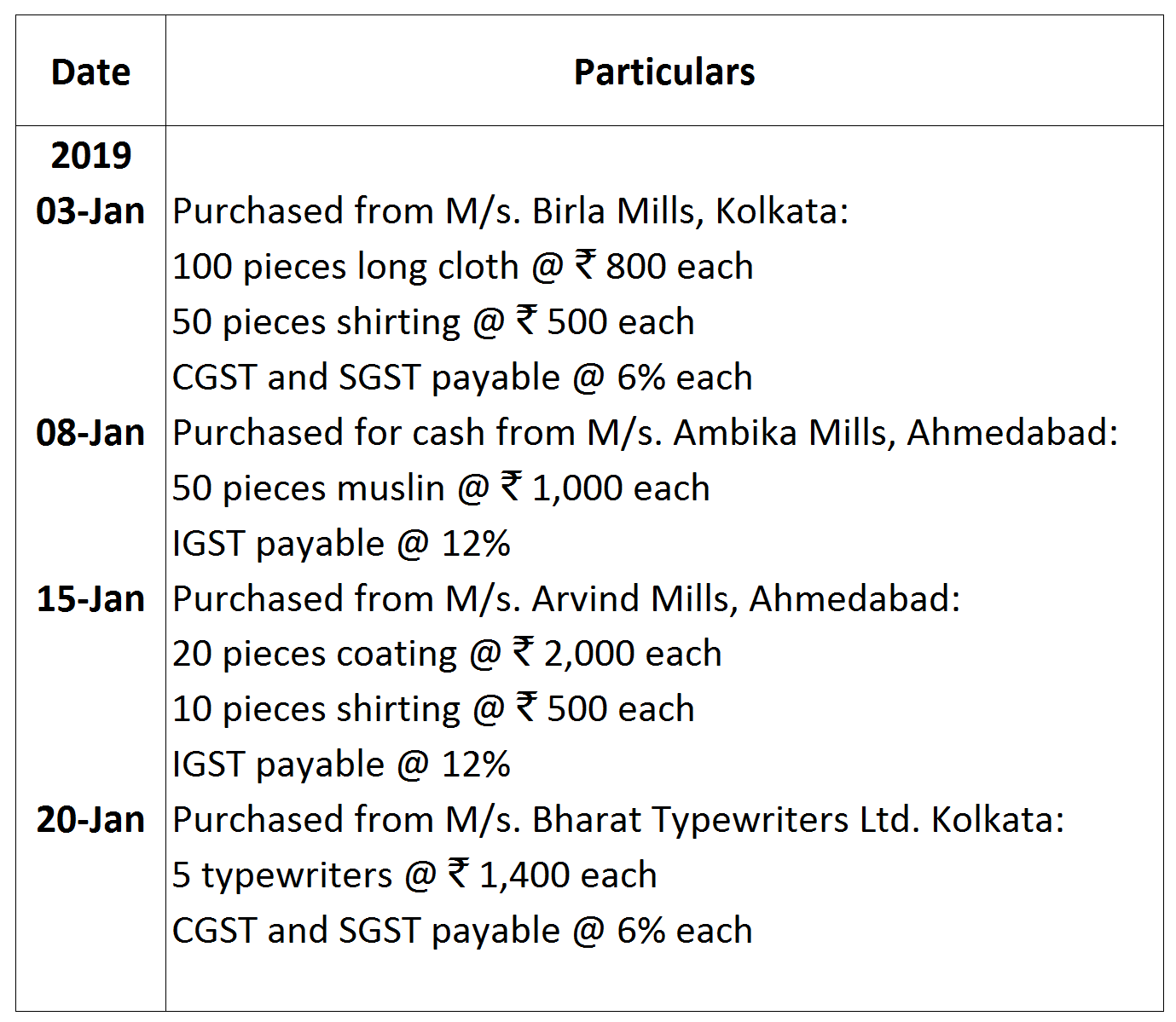
Verma Bros. Kolkata carry on business as wholesale cloth dealer. From the following, write up their Purchases Book for January, 2019:
Show the posting from Purchases Book to Ledger accounts also.
Modern Ltd. purchased a machinery on 1st August, 2016 for ₹ 60,000. On 1st October, 2017, it purchased another machine for ₹ 20,000 plus CGST and SGST @ 6% each. On 30th June, 2018, it sold the first machine purchased in 2016 for ₹ 38,500 charging IGST @ 12%. Depreciation is provided @ 20% p.a. on the original cost each year. Accounts are closed on 31st March every year. Prepare the Machinery Account for three years.
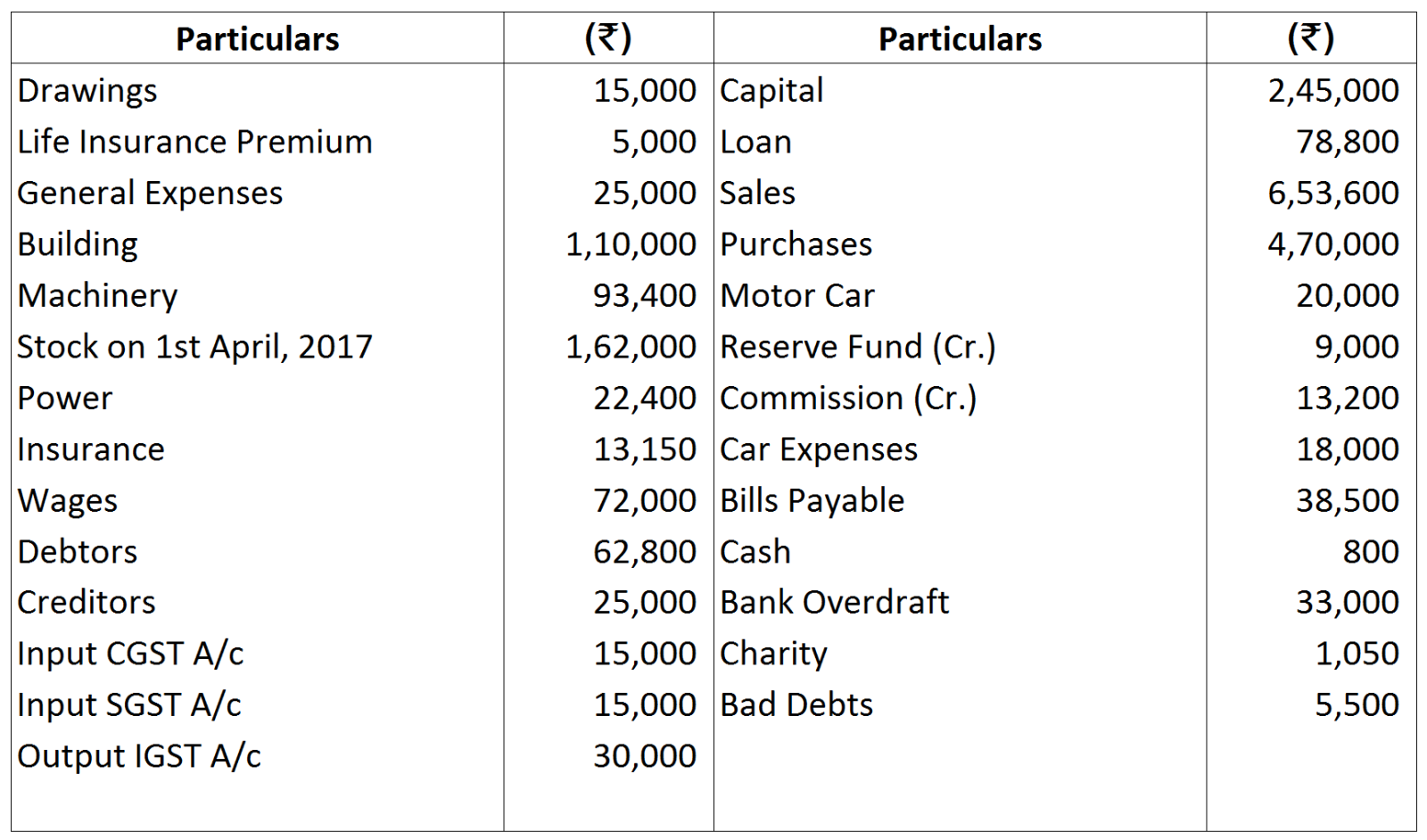
From the following balances, prepare Final Accounts of M/s Mangal & Sons for the year ended $31^{st}$ March, 2019:
Opening Stock ₹ 12,500; Bills Receivable ₹ 2,000; Sales ₹ 70,000; Purchases ₹ 37,500; Creditors ₹ 20,000; Salaries ₹ 3,850; Insurance ₹ 200; Debtors ₹ 32,500; Carriage ₹ 1,450; Commission ₹ 750; Interest ₹ 900; Printing ₹ 250; Bills Payable ₹ 3,150: Returns In ₹ 1,300; Returns Out ₹ 500; Bank ₹ 5,250; Rent and Taxes ₹ 1,300; Furniture ₹ 1,000; Capital ₹ 7,100; Stock on $31^{st}$ March, 2019 ₹ 15,000.