Question
What do you mean by Suspense Account? When is it opened?

Answer

Suspense Account: Suspense Account is the account to which the amount being the difference in trial balance is temporarily placed. If the total of debit side is short, Suspense Account will show debit balance. And if, the total of credit side is short, Suspense Account will show credit balance. The difference is placed in the Suspense Account so that final accounts are prepared without delay. As a result of this, Trial Balance will appear to agree.. However, the errors still remain in the Trial Balance which are identified and rectified.
Suspense Account is used for rectifying all One-Sided Errors: It is opened Due to errors any error in journal entries especially one-sided errors, There may be cases when Trial balance does not match i.e when the total of the debit column does not match that of the credit column, then the difference of the Trial Balance is transferred to a temporary account in order to avoid delay in preparation of the financial statements. This temporary account is termed as Suspense Account and it is prepared only in case of one-sided errors in the books of accounts.

Need a full question paper?

Generate a complete, print-ready paper with questions like this in minutes — across 16+ boards, with answer keys.

Start Generating Free

Similar questions

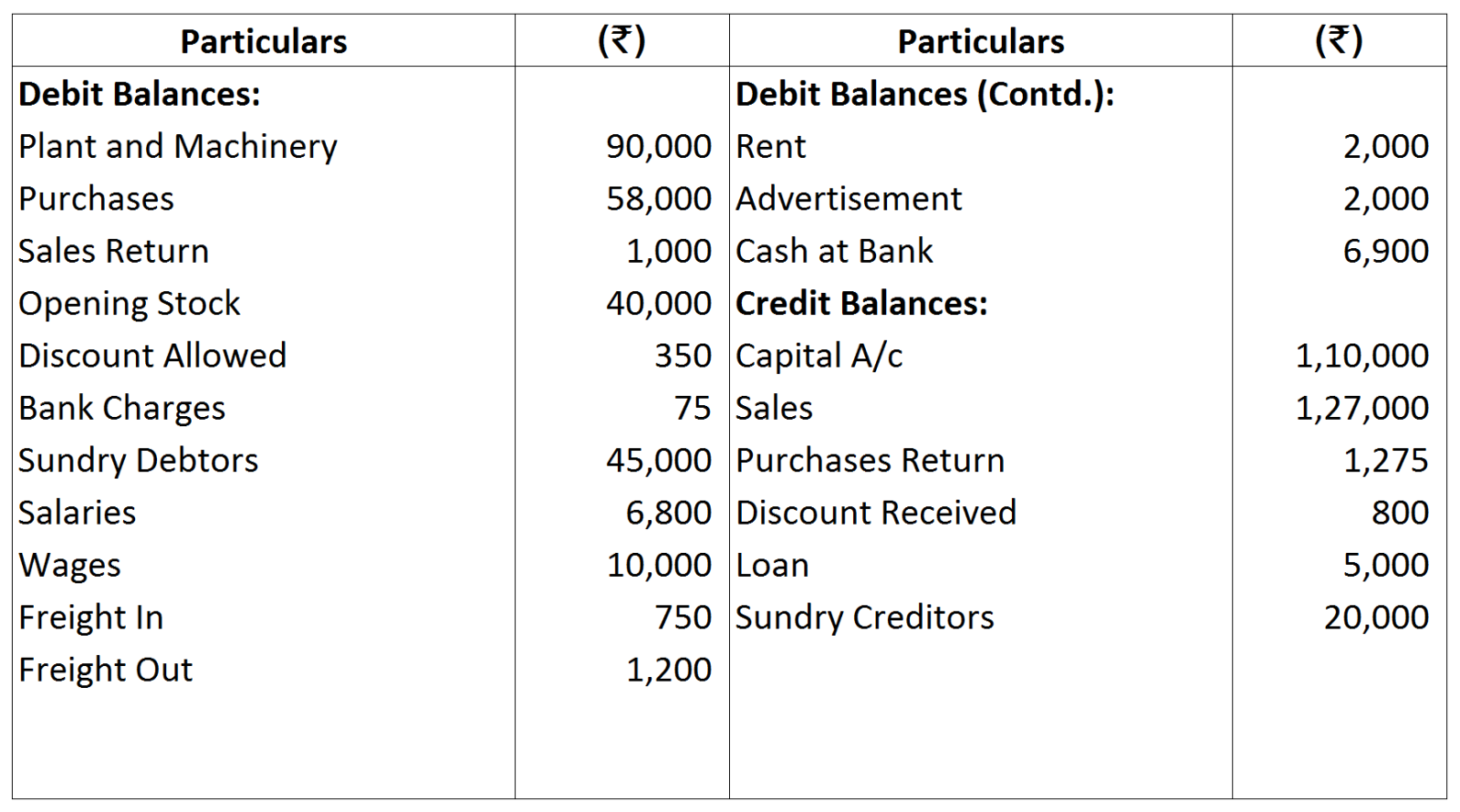
From the following Trial Balance of Mr. Alok, prepare Trading and Profit & Loss Account for the year ending 31st March, 2019, and a Balance Sheet as at that date:

The following adjustments are to be made:
  1. Stock in the shop on 31st March, 2019 was ₹ 64,480.
  2. Half the amount of X's Bill is irrecoverable.
  3. Create a provision of 5% on other debtors.
  4. Wages include ₹ 600 for erection of new Machinery.
  5. Depreciate Machinery by 5% and Furniture by 10%.
  6. Commission includes ₹ 300 being Commission received in advance.
Correct the following errors in Hari’s Books:
  1. Credit sale of ₹ 132 to R. Krishan correctly entered in Sales Journal but posted to his account as ₹ 312.
  2. The total of the credit side of Ramesh’s Account was overcasted by ₹ 2,000.
  3. Total of the Purchases Journal of ₹ 5,250 has been posted to Purchases Account as ₹ 5,205.
  4. Printer purchased from R. Ltd. for ₹ 4,000 on credit was entered in the Purchases Book.
  5. An item of ₹ 2,000 entered in the Sales Return Book was posted to the debit of Pandey who had returned the goods.
A Van was purchased on 1st April, 2016 for ₹ 60,000 and ₹ 5,000 was spent on its repair and registration. On 1st October, 2017 another van was purchased for ₹ 70,000. On 1st April, 2018, the first van purchased on 1st April, 2016 was sold for ₹ 45,000 and a new van costing ₹ 1,70,000 was purchased on the same date. Show the Van Account from 2016-17 to 2018-19 on the basis of Straight Line Method, if the rate of Depreciation charged is 10% p.a. Assume that books are closed on 31st March every year.
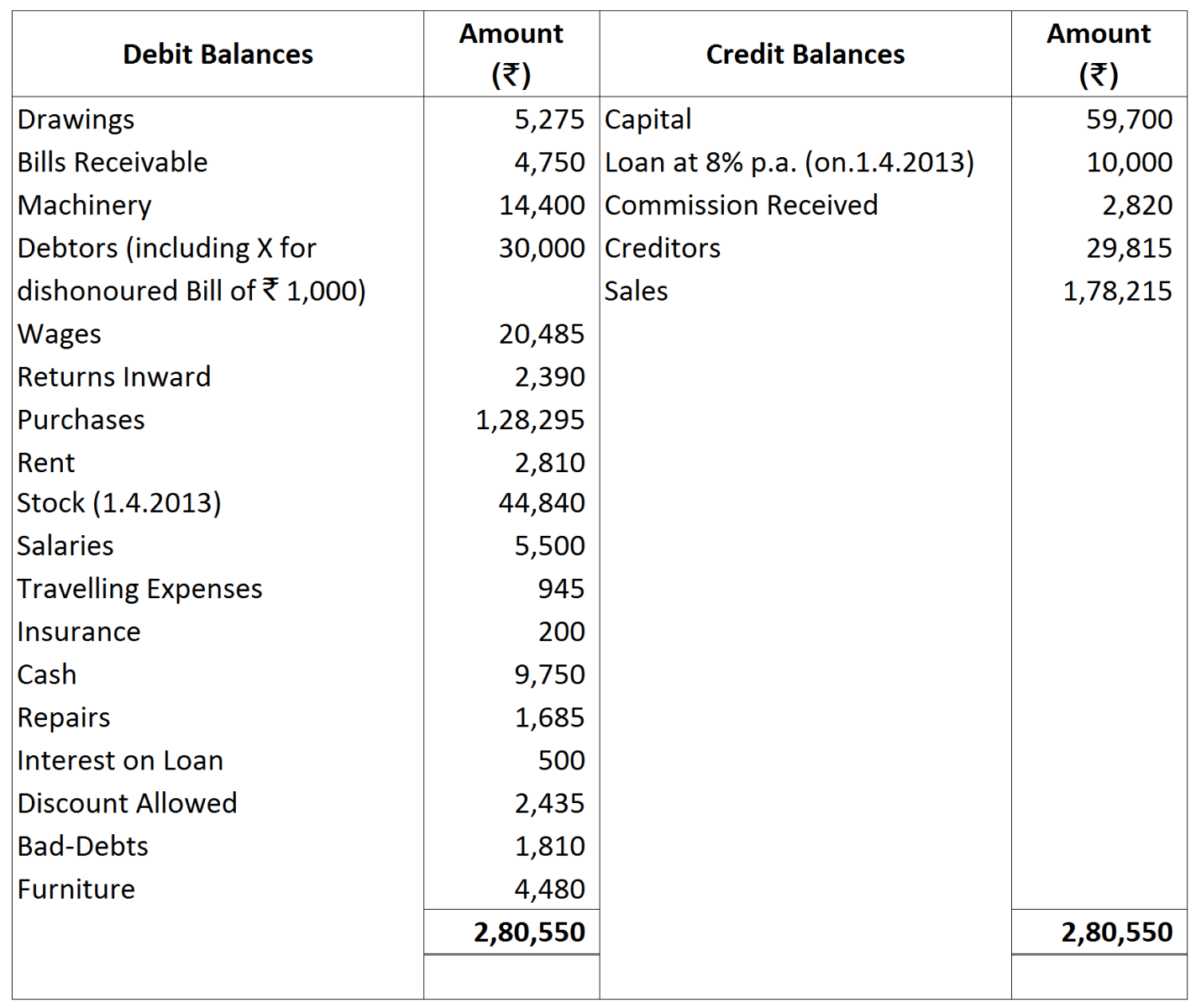
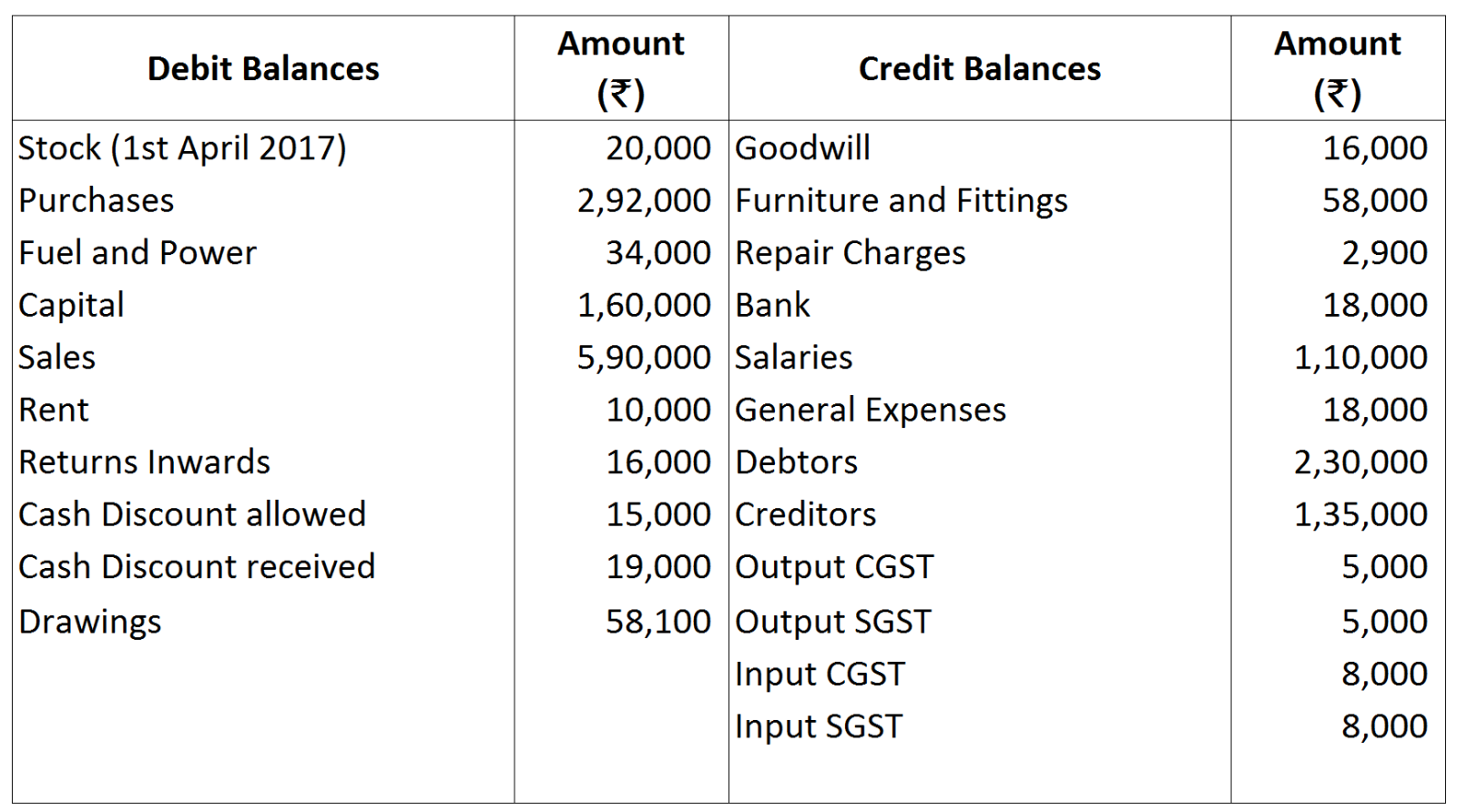
From the following balances, prepare Trading, Profit and Loss A/c and a Balance Sheet as at 31st March 2018:

Take the following adjustments into account:
  1. General expenses include ₹ 5,000 chargeable to Furniture purchased on 1st October 2017.
  2. Create a provision of 5% on debtors for Bad and Doubtful Debts after treating ₹ 30,000 as a Bad-debt.
  3. Depreciation on Furniture and Fittings for the year is to be at the rate of 10% per annum.
  4. Closing Stock was ₹ 40,000, but there was a loss by fire on 20th March to the extent of ₹ 8,000. Insurance Company admitted the claim in full.
  5.  
  1. Goods costing ₹ 2,500 were used by the proprietor.
  2. Goods costing ₹ 1,500 were distributed as free samples.
Goods were purchased paying CGST and SGST @ 6% each.
Give the names of different accounting packages.
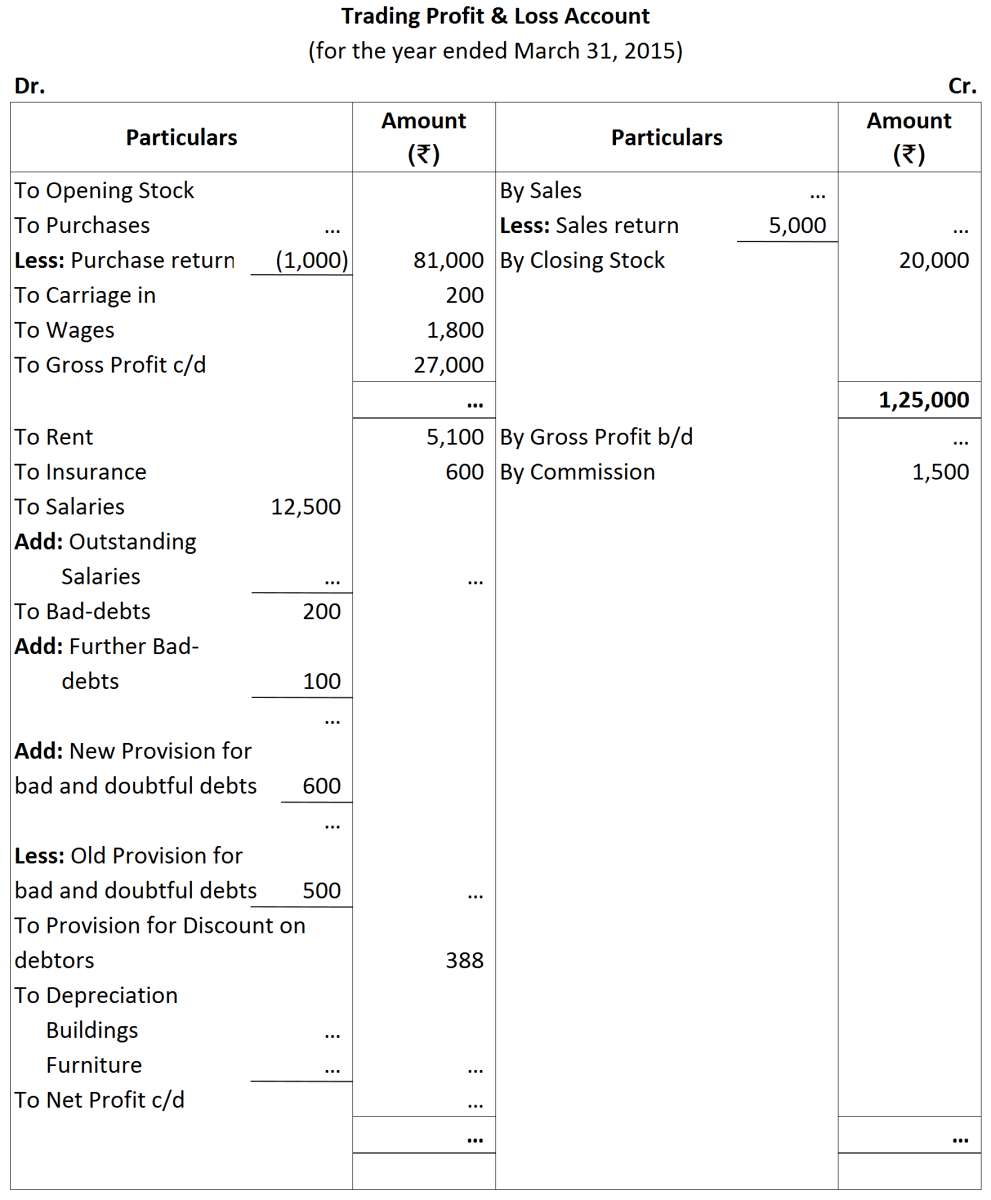
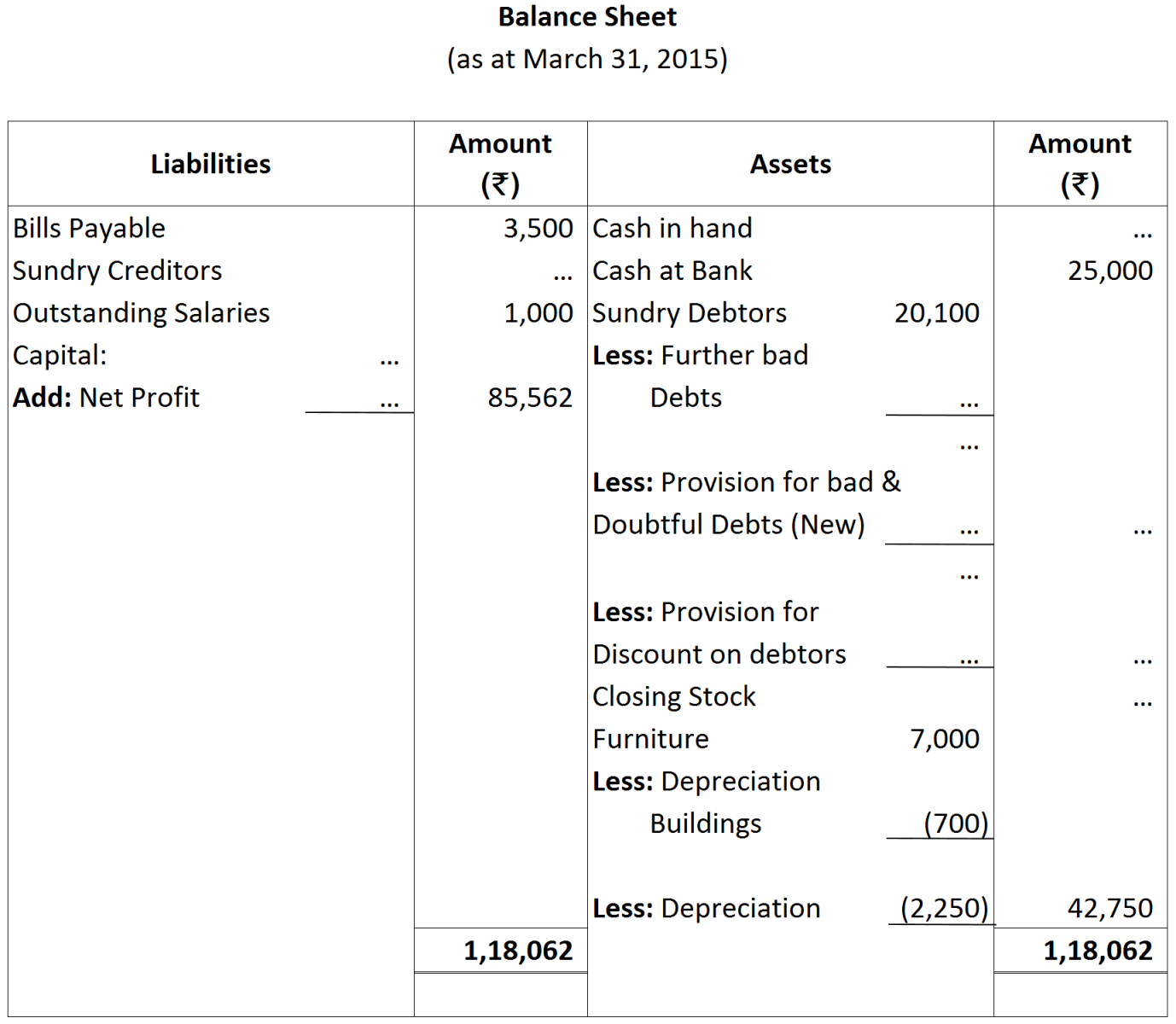
Fill in the missing figures in the following:
Trial Balance of Chatter Sen on $31^{st}$​​​​​​​ March, $2019$ revealed the following balances:

Stock on $31^{st}​​​​​​​$​​​​​​​ March, $2019$ was valued at $₹ 35,000$.
Prepare Trading and Profit and Loss Account for the year ended $31^{st}$ March, $2019$ and Balance Sheet as at the date.
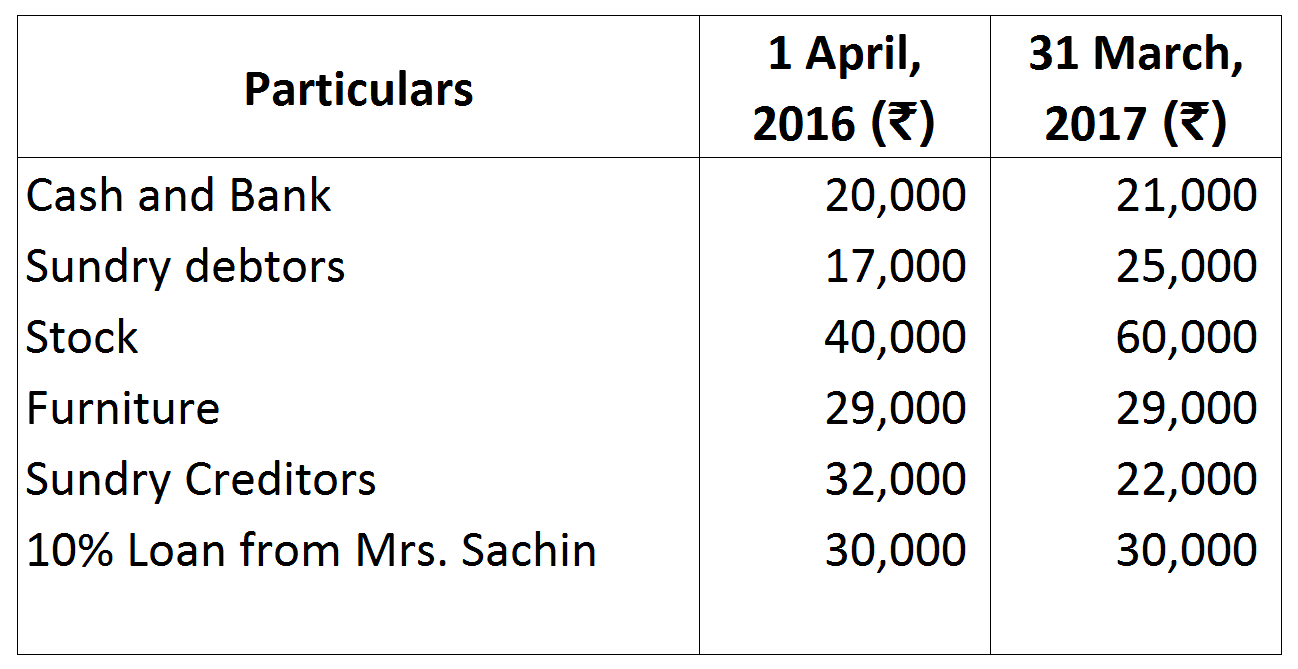
The following information is available from Sachin, who maintains books of accounts on single entry system:
Sachin withdrew $₹\ 5,000$ from the business every month for meeting his household expenses. During the year, he sold investments held by him privately for $₹\ 35,000$ and invested the amount in his business. At the end of the year $2016-17$, it was found that full year's interest on loan from Mrs. Sachin had not been paid. Depreciation $@ 10\%$ per annum was to be provided on furniture for the full year. Shop assistant was to be given a share of $5\%$ on the profits ascertained before charging such share. Calculate profit earned during the year ended $31^{st}$ March, $2017$ by Sachin.
Babu purchased on 1st April, 2017, a machine for ₹ 6,000. On 1st October, 2017, he also purchased another machine for ₹ 5,000. On 1st October, 2018, he sold the machine purchased on 1st April, 2017 for ₹ 4,000.
It was decided that Depreciation @ 10% p.a. was to be written off every year under Diminishing Balance Method.
Assuming the accounts were closed on 31st March every year, show the Machinery Account for the years ended 31st March, 2018 and 2019.
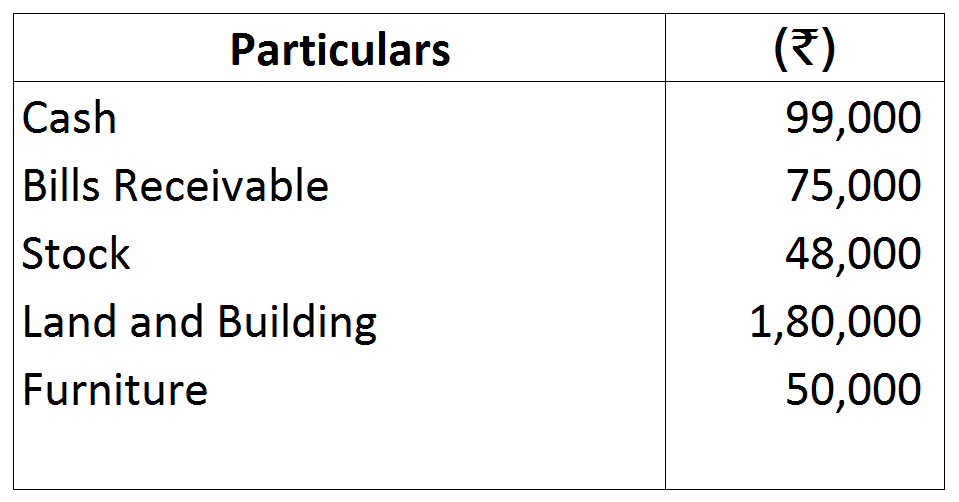
Tulsi started business on $1^{st}$April, $2016$ with a capital of ₹ $4,50,000.$ On $31^{st}$ March, $2017 $her position was as under:

She owed ₹ $45,000$ to her friend Parvati on that date. She withdrew ₹ $8,000$ per month for household purposes. Ascertain her profit or loss for the year ended $31^{st}$​​​​​​​ March,$ 2017:$