Question
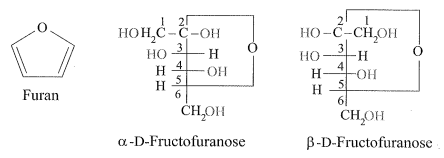
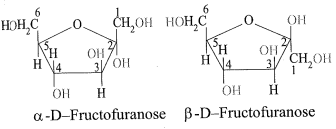
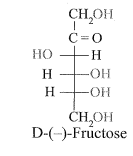
What is fructose? Explain the structure of fructose.

Need a full question paper?

Generate a complete, print-ready paper with questions like this in minutes — across 16+ boards, with answer keys.
Start Generating Free

Similar questions

For a reaction, A + B → Products, the rate law is – Rate = $k[A][B]^{3/2}$ Can the reaction be an elementary reaction? Explain.
A reaction is said to be of the first order if the rate of the reaction depends upon one concentration term only. For a first order reaction of the type $A →$ Products, the rate of the reaction is given as: rate $= k[A]$. The differential rate law is given as: $\frac{\text{dA}}{\text{dt}}=-\text{k}[\text{A}].$ The integrated rate law is: In $\frac{[\text{A}]}{[\text{A}]_0}=-\text{kt},$ [A] is the concentration of reactant left at time t and $[A]_0$ is the initial concentration of the reactant, k is the rate constant.
The following questions are multiple choice questions. Choose the most appropriate answer:
  1. The unit of rate constant for a first order reaction is:
  1. $S^{-1}$
  2. $mol L^{-1} s^{-1}$
  3. $L mol^{-1} s^{-1}$
  4. $L^2 mol^{-2} s^{-1}$
  1. Half-life period of a first order reaction is $10min$. Starting with initial concentration $12M$, the rate after 20min is:
  1. $0.693 \times 3M min^{-1}$
  2. $0.0693 \times 4M min^{-1}$
  3. $0.0693 \times M min^{-1}$
  4. $0.0693 \times 3M min^{-1}$
  1. $50\%$ of a first order reaction is complete in $23$ minutes. Calculate the ti me required to complete $90\%$ of the reaction.
  1. $70.4$ minutes.
  2. $76.4$ minutes.
  3. $38.7$ minutes.
  4. $35.2$ minutes.
  1. For a first order reaction, $(A) → $ products, the concentration of A changes from $0.1M$ to $0.025M$ in $40$ minutes. The rate of reaction when the concentration of A is $0.01M$, is:
  1. $3.47 \times 10^{-4} M/ min$
  2. $3.47 \times 10^{-5} M/ min$
  3. $1.73 \times 10^{-4} M/ min$
  4. $1.73 \times 10^{-5} M/ min$
  1. The half-life period ofa 1st order reaction is $60$ minutes. What percentage will be left over after $240$ minutes?
  1. $6.25\%$
  2. $4.25\%$
  3. $5\%$
  4. $6\%$
All chemical reactions involve interaction of atoms and molecules. A large number of atoms/molecules are present in a few gram of any chemical compound varying with their atomic/ molecular masses. To handle such large number conveniently, the mole concept was introduced. All electrochemical cell reactions are also based on mole concept. For example, a $4.0$ molar aqueous solution of NaCl is prepared and 500mL of this solution is electrolysed. This leads to the evolution of chlorine gas at one of the electrode. The amount of products formed can be calculated by using mole concept.
The following questions are multiple choice questions. Choose the most appropriate answer:
  1. The total number of moles of chlorine gas evolved is:
  1. $0.5$
  2. $1.0$
  3. $1.5$
  4. $1.9$
  1. If cathode is a Hg electrode, then the maximum weight of amalgam formed from this solution is:
  1. $300g$
  2. $446g$
  3. $396g$
  4. $296g$
  1. The total charge (coulomb) required for complete electrolysis is:
  1. $186000$
  2. $24125$
  3. $48296$
  4. $193000$
  1. In the electrolysis, the number of moles of electrons involved are:
  1. $2$
  2. $1$
  3. $3$
  4. $4$
  1. In electrolysis of aqueous $NaCl$ solution when Pt electrode is taken, then which gas is liberated at cathode?
  1. $H_2$gas
  2. $Cl_2$gas
  3. $O_2$gas
  4. None of these.
The electrochemical cell shown below is concentration cell.
$M \mid M ^{2+}$ (saturated solution of a sparingly soluble salt, $\left.MX _2\right)\left|\left| M ^{2+}\left(0.001 mol dm ^{-3}\right)\right| M\right.$ The emfof the cell depends on the difference in concentrations of $M ^{2+}$ ions at the two electrodes. The emf of the cell at 298 K is 0.059 V . The following questions are multiple choice questions. Choose the most appropriate answer:
  1. The solubility product ($K_{sp'} mol^3 dm^{-9})$ of $MX_2$ at 298 K based on the information available for the given concentration cell is $(\text{take }2.303 \times \text{R}\times \frac{298}{\text{F}} = 0.059)$
  1. $2 \times 10^{-15}$
  2. $4 \times 10^{-15}​​​​​​​$
  3. $3 \times 10^{-12}​​​​​​​$
  4. $1 \times 10^{-12}​​​​​​​$
  1. The value of $\triangle\text{G}$ (in kJ $mol^{-1}​​​​​​​$) for the given cell is (take $1 F = 96500 C mol^{-1})$
  1. 3.7
  2. -3.7
  3. 10.5
  4. -11.4
  1. The equilibrium constant for the foUowing reaction is:
$\text{Fe}^{2+}+\text{Ce}^{4+}\rightleftharpoons\text{Ce}^{3+}+\text{Fe}^{3+}$

(Given, $\text{E}^\circ_\frac{\text{Ce}^{4+}}{\text{Ce}^{3+}}=1.44\text{V}$ and $\text{E}^\circ_\frac{\text{Fe}^{3+}}{\text{Fe}^{2+}}=0.68\text{V}$)
  1. $7.6 \times 10^{12}$​​​​​​​
  2. $6.5 \times 10^{10}$
  3. $5.2 \times 10^9$
  4. $3.4 \times 10^{12}​​​​​​​$
  1. The solubility product of a saturated solution of $Ag_2CrO_4 $in water at 298 K if the emf of the cell
$Ag|Ag^+ (satd. Ag_2CrO_4 soln) || Ag^+ (0.1 M) | Ag$

is 0.164V at 298 K, is:
  1. $3.359 \times 10^{-12} mol^3 L^{-3}$​​​​​​​
  2. $2.287 \times 10^{-12} mol^3 L^{-3}$
  3. $1.158 \times 10^{-12} mol^3 L^{-3}$
  4. $4.135 \times 10^{-12} mol^3 L^{-3}$
  1. To calculate the emf of the cell, which of the foUowing options is correct?
  1. emf $= E_{cathode}- E_{anode}$​​​​​​​
  2. emf $= E_{anode}- E_{cathode}$
  3. emf $= E_{anode} + E_{cathode}$
  4. None of these.
Read the passage given below and answer the following questions:
A chlorocompound $(A)$ on reduction with $Zn-Cu$ and ethanol gives the hydrocarbon $(B)$ with five carbon atoms. When $(A)$ is dissolved in dry ether and treated with sodium metal it gave $2, 2, 5, 5 -$ tetramethylhexane. The treatment of $(A)$ with alcoholic $KCN$ gives compound $( C).$
The following questions are multiple choice questions. Choose the most appropriate answer:
  1. The compound $(A)$ is:
  1. $1-$chloro$-2, 2-$dimethylpropane.
  2. $1-$chloro$-2, 2-$dimethyl butane.
  3. $1-$chloro$-2-$methyl butane.
  4. $2-$chloro$-2-$methyl butane.
  1. The reaction of $(C)$ with Na, $C_2H_5OH$ gives:
  1. $(CH_3)_3C CH_2CONH_2$
  2. $(CH_3)_3C NH_2$
  3. $(CH_3)_3C CH_2CH_2NH_2$
  4. $(CH_3)_2CHCH_2NH_2$
  1. The reaction of $(C)$ with Na, $C_2H_5OH$ is called:
  1. Gilman reaction.
  2. Mendius reaction.
  3. Grooves process.
  4. Swart's reaction.
  1. The reaction of $(A)$ with aq. $KOH$ will preferably favour:
  1. $S_N1$ mechanism.
  2. $S_N2$ mechanism.
  3. $E_1$ mechanism.
  4. $E_2$ mechanism.
  1. Compound $(B)$ is:
  1. $N-$pentane.
  2. $2, 2-$dimethylpropane.
  3. $2-$methylbutane.
  4. None of these.
Read the passage given below and answer the following questions:
Ozone is an unstable, dark blue diamagnetic gas. It absorbs the UV radiation strongly, thus protecting the people on earth from the harmful UV-radiation from the sun. The use of chlorofluorocarbon (CFC) in aerosol and refrigerators and their subsequent escape into the atmosphere, is blamed for making holes in the ozone layer over the Antarctica. Ozone acts as a strong oxidising agent in acidic and alkaline medium. for this property, ozone is used as a germicide and disinfectant for sterilizing water. It is also used in laboratory for the ozonolysis of organic compounds and in industry for the manufacture of potassium permanganate, artificial silk, etc.
The following questions are multiple choice questions. Choose the most appropriate answer:
  1. Which of the following statements is not correct for ozone?
  1. lt oxidises lead sulphide.
  2. It oxidises potassium iodide.
  3. It oxidises mercury.
  4. It cannot act as bleaching agent in dry state.
  1. Ozone gives carbonyl compounds with.
  1. Alkyl chloride
  2. Alkanes
  3. Alkenes followed by decomposition with $\frac{\text{Zn}}{\text{H}_2\text{O}}.$
  4. Alcohols followed by decomposition with $\frac{\text{Zn}}{\text{H}_2\text{O}}.$
  1. Ozone reacts with moist iodine gives.
  1. $HI$
  2. $HIO_3$
  3. $I_2O_5$
  4. $I_2O_4$
  1. Ozone acts as an oxidising agent due to.
  1. Iiberation of nascent oxygen.
  2. Iiberation of nascent oxygen.
  3. Both $(a)$ and $(b).$
  4. Both $(a)$ and $(b).$
  1. The colour of ozone molecule is:
  1. White.
  2. Blue.
  3. Pale green.
  4. Pale yellow.
Read the passage given below and answer the following questions: For understanding the structure and bonding in transition metal complexes, the magnetic properties are very helpful. Low spin complexes are generally diamagnetic because of pairing of electrons, whereas high spin complexes are usually paramagnetic because of presence of unpaired electrons. Larger the number of unpaired electrons, stronger will be the paramagnetism. However magnetic behaviour of a complex can be confirmed from magnetic moment measurement. Magnetic moment $\mu=\sqrt{\text{n(n+2)}}\text{B.M.}$ where n = number of unpaired electrons. Greater the number of unpaired electrons, more will be the magnetic moment. In these questions (Q. No. i-iv), a statement of assertion followed by a statement ofreason is given. Choose the correct answer out of the following choices.
  1. Assertion and reason both are correct statements and reason is correct explanation for assertion.
  2. Assertion and reason both are correct statements but reason is not correct explanation for assertion.
  3. Assertion is correct statement but reason is wrong statement.
  4. Assertion is wrong statement but reason is correct statement.
The following questions are multiple choice questions. Choose the most appropriate answer:
  1. Assertion: Both $[Cr(H_2O)_6]^{2+}$ and $[Fe(H_2O)_6]^{2+}$ have same magnetic moment.
Reason: Number of unpaired electrons in $Cr^{2+}$ and $Fe^{2+}$ are same.
  1. Assertion: $[Fe(H_2O)_5NO]SO_4$ is paramagnetic.
Reason: The Fe in $[Fe(H_2O)_5NO]SO_4$ has three unpaired electrons.
  1. Assertion: $[Co(en)_3]^{3+}$ is paramagnetic.
Reason: It is an inner orbital complex.
  1. Assertion: $[Ni(CO)_4]$ is diamagnetic and tetrahedral in shape.
Reason: $[Ni(CO)_4]$ contains no unpaired electrons and involves $dsp^2$ hybridisation.
  1. Assertion: $[Ni(CN)_4]^{2-}$ is diamagnetic complex.
Reason: It involves $dsp^2$ hybridisation and there is no unpaired electron.
Read the passage given below and answer the following questions:
Chlorine is a greenish yellow gas with pungent and suffocating odour. With dry slaked lime, it gives bleaching powder. Bleaching powder is a mixture of calcium hypochlorite and basic calcium chloride:
$[Ca(OCl)_2· CaCl_2· Ca(OH)_2· 2H_2O].$
The amount of chlorine obtained from a sample of bleaching powder by the treatment with excess of dilute acids or $CO_2$ is called available chlorine. Chlorine is a powerful bleaching agent. Bleaching effect of chlorine is permanent.
The following questions are multiple choice questions. Choose the most appropriate answer:
  1. Chlorine gas reacts with _____ to form bleaching powder.
  1. $Ca(OH)_2$
  2. $CaCl_2$
  3. $CaSO_4$
  4. dry $CaO$
  1. Chlorine reacts with cold and dilute alkali to form:
  1. Chloride
  2. Hypochlorite
  3. Chlorate
  4. Both $(a)$ and $(b)$
  1. Which of the following is produced on the reaction of bleaching powder with a few drops of cone. $HCl?$
  1. Hypochlorous acid
  2. Oxygen
  3. Chlorine
  4. Calcium oxide
  1. Chlorine is used as a bleaching agent. The bleaching action is due to.
  1. Oxidation
  2. Chlorination
  3. Hydrogenation
  4. Reduction
  1. Bleaching powder contains a salt of an oxoacid as one of its components. The anhydride of that oxoacid is:
  1. $Cl_2O$
  2. $Cl_2O_7$
  3. $ClO_2$
  4. $Cl_2O_6$
Read the passage given below and answer the following questions:
Transition metal oxides are compounds fanned by the reaction of metals with oxygen at high temperature. The highest oxidation number in the oxides coincides with the group number. In vanadium, there is a gradual change from the basic $V_2O_3$ to less basic $V_2O_4$ and to amphoteric $V_2O_5· V_2O_4$ dissolves in acids to give $VO^{2+}$ salts. Transition metal oxides are commonly utilized for their catalytic activity and semi conductive properties. Transition metal oxides are also frequently used as pigments in paints and plastic. Most notably titatnium dioxide. One of the earliest application of transition metal oxides to chemical industry involved the use of vanadium oxide for catalytic oxidation of sulfur dioxide to sulphuric acid. Since then, many other applications have emerged, which include benzene oxidation to maleic anhydride on vandium oxides; cyclohexane oxidation to adipic acid on cobalt oxides. An important property of the catalyst material used in these processes is the ability of transition metals to change their oxidation state under a given chemical potential of reductants and oxidants.
The following questions are multiple choice questions. Choose the most appropriate answer:
  1. Which oxide of vanadium is most likely to be basic and ionic?
  1. $VO$
  2. $V_2O_3$
  3. $VO_2$
  4. $V_2O_5$
  1. Vanadyl ion is:
  1. $\text{VO}^{2+}$
  2. $\text{VO}^{+}_2$
  3. $\text{V}_{2}\text{O}^+$
  4. $\text{VO}^{3-}_4$
  1. Which of the following statements is false?
  1. With fluorine vanadium can form $VF_5.$
  2. With chlorine vanadium can form $VCl^5.$
  3. Vanadium exhibits highest oxidation state in oxohalides $VOCl_3, VOBr_3$ and fluoride $VF_5.$
  4. With iodine vanadium cannot form $Vl_5$ due to oxidising power of $V^{5+}$ and reducing nature of $I^-.$
  1. The oxidation state of vanadium in $V_2O_5$ is:
  1. $\frac{+5}{2}$
  2. $+7$
  3. $+5$
  4. $+6$
  1. Identify the oxidising agent in the following reaction.
$V_2O_5+ 5Ca \rightarrow 2V + 5CaO$
  1. $V_2O_5$
  2. $Ca $
  3. $V$
  4. None of these.
Read the passage given below and answer the following questions: Boiling point or freezing point of liquid solution would be affected by the dissolved solids in the liquid phase. A soluble solid in solution has the effect of raising its boiling point and depressing its freezing point. The addition of non-volatile substances to a solvent decreases the vapor pressure and the added solute particles affect the formation of pure solvent crystals. According to many researches the decrease in freezing point directly correlated to the concentration of solutes dissolved in the solvent. This phenomenon is expressed as freezing point depression and it is useful for several applications such as freeze concentration of liquid food and to find the molar mass of an unknown solute in the solution. Freeze concentration is a high quality liquid food concentration method where water is removed by forming ice crystals. This is done by cooling the liquid food below the freezing point of the solution. The freezing point depression is referred as a colligative property and it is proportional to the molar concentration of the solution (m), along with vapor pressure lowering, boiling point elevation, and osmotic pressure. These are physical characteristics of solutions that depend only on the identity of the solvent and the concentration of the solute. The characters are not depending on the solute’s identity.
  1. When a non volatile solid is added to pure water it will:
  1. boil above 100°C and freeze above 0°C
  2. boil below 100°C and freeze above 0°C
  3. boil above 100°C and freeze below 0°C
  4. boil below 100°C and freeze below 0°C
  1. Colligative properties are:
  1. dependent only on the concentration of the solute and independent of the solvent’s and solute’s identity.
  2. dependent only on the identity of the solute and the concentration of the solute and independent of the solvent's identity.
  3. dependent on the identity of the solvent and solute and thus on the concentration of the solute.
  4. dependent only on the identity of the solvent and the concentration of the solute and independent of the solute’s identity.
  1. Assume three samples of juices A, B and C have glucose as the only sugar present in them. The concentration of sample A, B and C are 0.1M, 5M and 0.2 M respectively. Freezing point will be highest for the fruit juice:
  1. A
  2. B
  3. C
  4. All have same freezing point
  1. Identify which of the following is a colligative property:
  1. freezing point
  2. boiling point
  3. osmotic pressure
  4. all of the above