Question
What is mycorrhiza? Write its main advantages.

Answer

Mutual symbiosis of fungi and roots of higher plants is called mycorrhiza. Under this process, the fungus completely forms a cover around the outside of the root of the plants with its fibers. Fungal filaments enter the intercellular space between the cortex cells of the plant root and form a net-like structure called hartig net. There are no root hairs on the root of the plant. The main function of the fungal root is to aid in the absorption of mineral salt (phosphorus). The absorption area of the root increases due to the fungus.
Main advantages of Mycorrhiza :
1. Resistance to root-borne pathogens.
2. Fungal roots increase the fertility of the soil.
3. Due to fungal root, the growth of the plants gets faster and production increases.
4. Absorption of mineral salts and other nutrients takes place easily and in large amount. That's why plants does not have to depend on external nutrients.
5. Synthesis of O2 increases.
6. The absorption surface increases due to the fungus in the mycellium.
7. This relationship is necessary for seed germination in some plants.
8. Due to fungal root, the plant’s dependency on fertilizers is reduced and the money can be saved.
9. Tolerence towards salinity and drought increases in the plant.
10. Pine plant sometimes rot away in lacking of fungal relationship, hence this relationship is helpful in forest construction.
11. Due to ectotrophic fungal root, many plants do not get infected by pythium, phytophthora, fusauum etc.
Need a full question paper?

Generate a complete, print-ready paper with questions like this in minutes — across 16+ boards, with answer keys.

Start Generating Free

Similar questions

  1. You are given tall pea plants with yellow seeds, whose genotypes are unknown. How would you find the genotype of these plants? Explain with the help of cross.
  2. Identify A, B and C in the table given below:
Pattern of Inheritance
Monohybrid $F_1$ Phenotypic Expression
Codominance
‘A’
‘B’
Progeny resembled only one of the parents.
Incomplete dominance.
‘C’
  1. Write the scientific names (binomials) of the causative organisms of pneumonia.
  2. How does a healthy person acquire infection of this disease?
  3. Mention the characteristic symptoms of the disease.
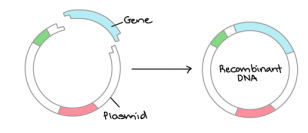
A vector is a way to take a sequence of DNA, usually, and introduce it into another place. So what vectors do is allow you to propagate the DNA you're interested in, in the organism you've chosen to propagate it in. So the simplest one is the origins of recombinant DNA technology: They made copies of RNAs, and they were able to insert these into what is known as plasmids.
Image
Unless the vector and source DNA are cut, fragments separated and joined, the desired recombinant vector molecule cannot be created.
i. How are the desirable DNA sequences cut?
ii. Explain the technique used to separate the cut fragments.
iii. How are the resultant fragments joined to the vector DNA molecule?
Give the term/ reason:
Why does zona pellucida layer block the entry of additional sperms?
Why are sedimentary cycles slower than gaseous cycles? Explain giving resons.
Explain the difference between the following :
(i) Nucleoside and nucleotide
(ii) DNA and RNA
(iii) Codon and anticodon
(iv) Transcription and translation
(v) Inductive regulation and inhibitory regulation
(vi) RNA splicing and RNA editing
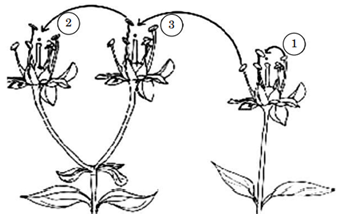
Study the diagram given below showing the modes of pollination. Answer the questions that follow.
Image
i. The given diagram shows three methods of pollen transfer in plants. What are the technical terms used for pollen transfer methods 1, 2 and 3?
ii. How do the following plants achieve pollination successfully?
1. Water lily
2. Vallisneria
iii. Flowering plants have developed many devices to avoid inbreeding depression. Explain one hereditary and one physiological device which helps plants to achieve this target.
Samya visited a zoo with her mother, on watching the cheetah, she wondered how he uses his forelimbs for running. While the same forelimbs in bats are used for flying. She wanted to know more about it and so asked her mother (a biology teacher) about it. Her mother explained her how forelimbs are modified in different animal groups for different functions.
  1. What are such organs called?
  2. Give an example of such organs from the plant world.
  3. What led to the origin of such organs?
  4. What are the values shown by Samya?
  1. Draw a labelled longitudinal view of an albuminous seed.
  2. How are seeds advantageous to flowering plants?
Describe the logistic population growth.