Question
What is quantization of charge?

Answer

  1. Protons (+ve) and electrons (-ve) are the charged particles constituting matter, hence the charge on an object must be an integral multiple of ± e i.e., q = ± ne, where n is an integer.
  2. Charge on an object can be increased or decreased in multiples of e.
  3. It is because, during the charging process an integral number of electrons can be transferred from one body to the other body. This is known as quantization of charge or discrete nature of charge.

Need a full question paper?

Generate a complete, print-ready paper with questions like this in minutes — across 16+ boards, with answer keys.
Start Generating Free

Similar questions

The angular momentum $\vec{L}=\vec{r} \times \vec{p}$, where $\vec{r}$ is a position vector and $\vec{p}$ is linear momentum of a body.
If $\vec{r}=4 \vec{i} \times 6 \vec{j}-3 \hat{k}$ and $\vec{p}=2 \vec{i} \times 4 \vec{j}-5 \hat{k}$, find $\vec{L}$
If the length of a cylinder is l = (4.00 ± 0.001) cm, radius r = (0.0250 ± 0.001) cm and mass m = (6.25 ± 0.01) gm. Calculate the percentage error in the determination of density.
A conical pendulum has length $50 \ cm.$ Its bob of mass $100 g$ performs uniform circular motion in horizontal plane, so as to have radius of path $30 \ cm.$ Find
$i)$ The angle made by the string with vertical
$ii)$ The tension in the supporting thread and
$iii)$ The speed of bob.
State the expression for velocity of the centre of mass of a system of $n$ particles and for continuous mass distribution.
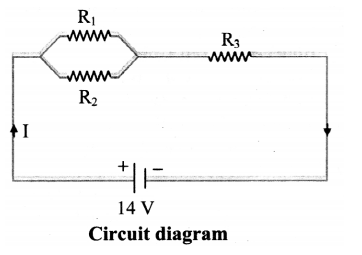
Calculate
$i.$ total resistance and
$ii.$ total current in the following circuit.
$R _1=3 \Omega, R _2=6 \Omega, R _3=5 \Omega, V =14 V$
Image
What is meant by period of revolution of $\text{U.C.M.}$ Obtain an expression for the period of revolution of a particle performing uniform circular motion.
The resistance of a tungsten filament at $150^{\circ} C$ is $133\ ohm.$ What will be its resistance at $500^{\circ} C$ ? The temperature coefficient of resistance of tungsten is $0.0045$ per ${ }^{\circ} C$.
A person walks from point $P$ to point $Q$ along a straight road in $10$ minutes, then turns back and returns to point $R$ which is midway between $P$ and $Q$ after further $4$ minutes. If $PQ$ is $1 \ km,$ find the average speed and velocity of the person in going from $P$ to $R$.
A body of mass $37\ kg$ rests on a rough horizontal surface. The minimum horizontal force required to just start the motion is $68.5\ N$ . In order to keep the body moving with constant velocity, a force of $43\ N$ is needed. What is the value of
a) coefficient of static friction? and
b) coefficient of kinetic friction?
Asw:
a) $\mu_s=0.188$
b) $\left.\mu_{ k }=0.118\right]$
On which factors does the electrical conductivity of a pure semiconductor depend at a given temperature?