Question
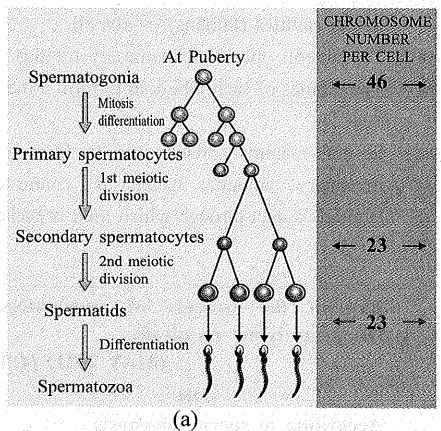
What is spermatogenesis? Briefly describe the process of spermatogenesis.###Explain the process of spermatogenesis. (Diagram is not required)###According to spermatogenesis (i) Development of sperm from primary spermatocytes. Explain it. (ii) Role of hormones which secreting from pituitary gland (iii) Structure of sperm (Diagram is not necessary)

Need a full question paper?

Generate a complete, print-ready paper with questions like this in minutes — across 16+ boards, with answer keys.

Start Generating Free

Similar questions

Read the following and answer any four questions from 7(i) to 7(v) given below:

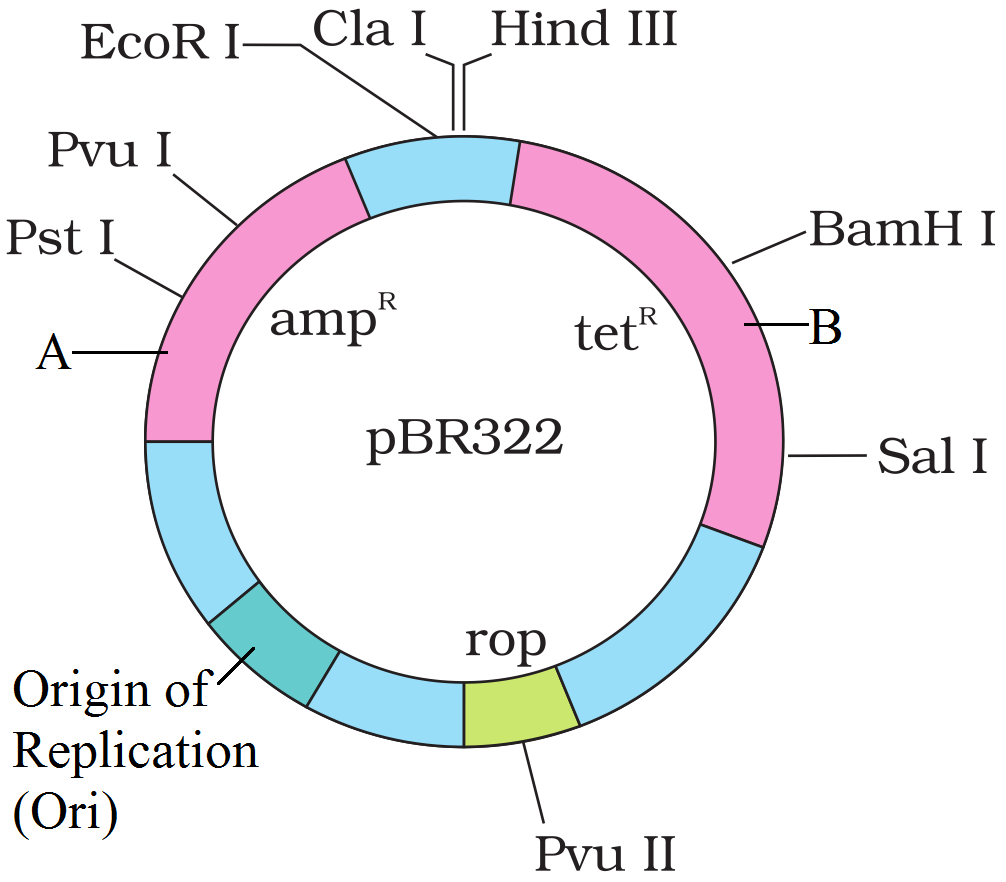
The vectors are DNA molecules that can carry a foreign DNA segment and replicate inside the host cell. Vectors may be plasmids, bacteriophages (viruses that attack bacteria), cosmids, yeast artificial chromosomes (YACs), Bacterial artificial chromosomes (BACs) and viruses. The most widely used, versatile, easily manipulated vector pBR 322 is an ideal plasmid vector. Features that are required to facilitate cloning into a vector includes origin of replication (Ori) which is a specific sequence of DNA bases responsible for initiating replication, selectable marker genes and cloning sites

  1. Pin pBR 322 denotes that it is a:
  1. plasmid
  2. prokaryote
  3. protist
  4. plant cell.
  1. Ori is a specific DNA sequence that help in.
  1. Attachment of primers.
  2. Initiation of replication.
  3. Extension of DNA base.
  4. Initiation of denaturation.
  1. A and B shown in the figure respectively indicates:

  1. Pvu II and Cla I.
  2. ROP and Sal I.
  3. ampR and tetR.
  4. tetR and ampR.
  1. Selectable markers in vector,
  1. Are responsible for replication.
  2. Help in selecting transformants from non-transform ants.
  3. Code for proteins involved in the replicating plasmids.
  4. Contain unique recognition sites.
  1.  Plasmid vectors are:
  1. dsDNA molecule
  2. Extra-chromosomal
  3. Present in bacteria and yeast
  4. All of these.
Explain Competition as a population Interaction with suitable examples.
Give a brief account of evolution of vertebrates.
Explain in situ approach for conservation of biodiversity.
Read the following and answer any four questions from (i) to (v) given below:

Priya was 4 years old when she contracted chicken pox. It took her around 15 days to recover completely. Now Priya is 5 years old, so her mother got her vaccinated few days back for DPT (5th dose) as per immunisation program. Recently she was playing with her friend in the park when her friend accidently fell on iron pipe and badly bruised her knee. She was taken to the hospital where doctor gave her ATS injection and painkillers. Based on the above information, answer the following questions.

  1. Select the correct statement.
  1. Priya has developed natural active immunity against chicken pox.
  2. Priya has developed artificial active immunity against DPT.
  3. Priya's friend has developed artificial passive immunity against tetanus.
  4. All of these
  1. Which of the following do you think is an example of natural passive immunity?
  1. Administration of AGS (anti gas gangrene serum) in a person.
  2. Transfer of IgA antibodies from mother to baby through mother's milk.
  3.  A person recovered from viral infection.
  4. A child vaccinated for polio.
  1. Which of the following is true for active immunity?
  1. It provides immediate relief.
  2. It is temporary, not long lasting
  3. It has no side effects.
  4. None of these
  1. Select the incorrect match.
  1. Passive immunity-IgG antibodies crossing placental barrier to reach fetus.
  2. Active immunity-Vaccination against corona virus.
  3. Active immunity-Administration of antidiphtheria serum in patient.
  4. Passive immunity-Fetus having mother's milk.
  1. Assertion: A person recovered from measles develops an active immunity against this infection.

Reason: In active immunity, person's own cells develop antibodies in response to infection.

  1. Both assertion and reason are true and reason is the correct explanation of assertion.
  2. Both assertion and reason are true, but reason is not the correct explanation of assertion.
  3. Assertion is true, but reason is false.
  4. Both assertion and reason are false.
Define decomposition and describe the processes and products of decomposition.###Describe factor affecting decomposition.
Read the following text carefully and answer the questions that follow:
The following is the illustration of the sequence of ovarian events (a-i) in a human female.
Image
i. Identify the figure that illustrates ovulation and mentions the stage of oogenesis it represents. (1)
ii. Name the ovarian hormone and the pituitary hormone that have caused the above-mentioned event. (1)
iii. Explain changes that occur in the uterus simultaneously in anticipation. (2)
OR
Draw a labelled sketch of the structure of a human ovum prior to fertilization. (2)
Read the following and answer any four questions from (i) to (v) given below:
Green manuring is the fanning practice where a leguminous plant which has derived enough benefits from its association with appropriate species of Rhizobium, is ploughed into the field soil and then a non-legume is sown and allowed to get benefitted from the already present nitrogen fixer. Some legumes, such as, Crotolaria juncea, Sesbania rostrata, Lencaena leucocephala, etc. are used as green manure. Rhizobia, that fix atmospheric nitrogen in the form of nitrate, live in the roots ofleguminous plants. These nutrients are used by non-leguminous plants through the practice of green manuring.
  1. Green manures mainly provide nutrient enriched in:
  1. Magnesium.
  2. Sulphur.
  3. Nitrogen.
  4. Both (a) and (b).
  1. Which of the following plants is used as green manure in crop fields?
  1. Saccharum.
  2. Dichanthium.
  3. Phyllonthus.
  4. Crotolaria.
  1. Green manure plants belong to the Family:
  1. Lamiaceae.
  2. Papilionaceae.
  3. Liliaceae.
  4. Poaceae.
  1. Due to excess use of chemical fertilisers rich in nitrate, ________ disease occurred in children.
  1. Jaundice.
  2. Septicemia.
  3. Methemoglobinemia.
  4. Botulism.
  1.  A green manure is:
  1. Rice.
  2. Maize.
  3. Sorghum.
  4. Sesbania.
Read the following and answer any four questions from (i) to (v) given below:

Deoxyribonucleic acid (DNA) and ribonucleic acid (RNA) are the two types of nucleic acids found in the living systems. DNA acts as the genetic material in most of the organisms. Although, RNA also acts as a genetic material in some organisms.

  1. In which of the following organisms, RNA acts as a genetic material?
  1. Escherichia coli
  2. $\text{Q}\beta$ Bacteriophage
  3. Tobacco Mosaic viruses
  4. Both (b) and (c)
  1. What is the reason for the additional stability of DNA in comparison to RNA?
  1. Presence of thymine
  2. Presence of uracil
  3. Presence of OH group
  4. Presence of deoxyribose sugar
  1. Which of the following criteria a molecule must fulfill to act as a genetic material?
  1. It should be able to generate its replica.
  2. It should be stable chemically and structurally.
  3. It should be able to express itself in the form of Mendelian character.
  4. All of these
  1. Assertion: RNA is liable and easily degradable.

Reason: The 2'- OH group present at every nucleotide in RNA is a reactive group

  1. Both assertion and reason are true, and reason is the correct explanation of assertion.
  2. Both assertion and reason are true, but reason is not the correct explanation of assertion.
  3. Assertion is true, but reason is false.
  4. Both assertion and reason are false.
  1. Read the given statement and select the option that correctly fill in the blanks. Pyrimidines present in DNA are (i) and (ii) while pyrimidines present in RNA are (iii) and (iv).
  1. (i)-Adenine (iii)-Guanine (iii)-Cytosine, (iv)-Thymine
  2. (i)-Cytosine (iii)Thymine (iii)-Cytosine, (iv)-Uracil
  3. (i)-Cytosine (iii)-Uracil (iii)-Adenine, (iv)-Guanine
  4. (i)-Cytosine (iii)-Uracil (iii)-Cytosine, (iv)-Thymine
Read the following and answer any four questions from (i) to (v) given below:

Cleavage is the series of rapid mitotic divisions in zygote and forms blastula. The 2, 4, 8, 16 daughter cells are called blastomeres. Embryo with 64 blastomeres is known as blastocyst and has blastocoel cavity. Blastocyst gets implanted in uterine wall and leads to pregnancy.

  1. Solid mass of cells with 16 blastomeres is called:
  1. Morula.
  2. Blastula.
  3. Gastrula.
  4. Zygote.
  1. At which stage of embryonic development, trophoectoderm develops?
  1. Zygote.
  2. Morula.
  3. Blastula.
  4. Gastrula.
  1. Site of implantation is:
  1. Endometrium of uterus.
  2. Cervix.
  3. Uterine fundus.
  4. Infundibulum of oviduct.
  1. Correct sequence of various structures formed during embryonic development is:
  1. Morula → Embryo → Gastrula → Blastula.
  2. Zygote → Embryo → Morula → Blastula.
  3. Blastula → Morula → Gastrula → Embryo.
  4. Zygote → Morula → Blastula → Gastrula.
  1. Assertion: Side of blastocyst with inner cell mass is called animal pole.

Reason: Inner cell mass gives rise to embryo.

  1. Both assertion and reason are true, and reason is the correct explanation of assertion.
  2. Both assertion and reason are true, but reason is not the correct explanation of assertion.
  3. Assertion is true, but reason is false.
  4. Both assertion and reason are false.