Question
What is the structure of $\mathrm{BeCl}_2$ molecule in gaseous and solid state?

Answer

In solid state, it exits in polymeric chain structure in which each Be atom is surrounded by 4 Cl atoms. 2 Cl atoms through covalent bonds and other 2Cl atoms through coordinate bonds and give bridge structure.

Need a full question paper?

Generate a complete, print-ready paper with questions like this in minutes — across 16+ boards, with answer keys.

Start Generating Free

Similar questions

How will you convert benzene into:
p-nitrobromobenzene.
Explain why $\mathrm{BeH}_2$ molecule has a zero dipole moment although the Be–H bonds are polar.
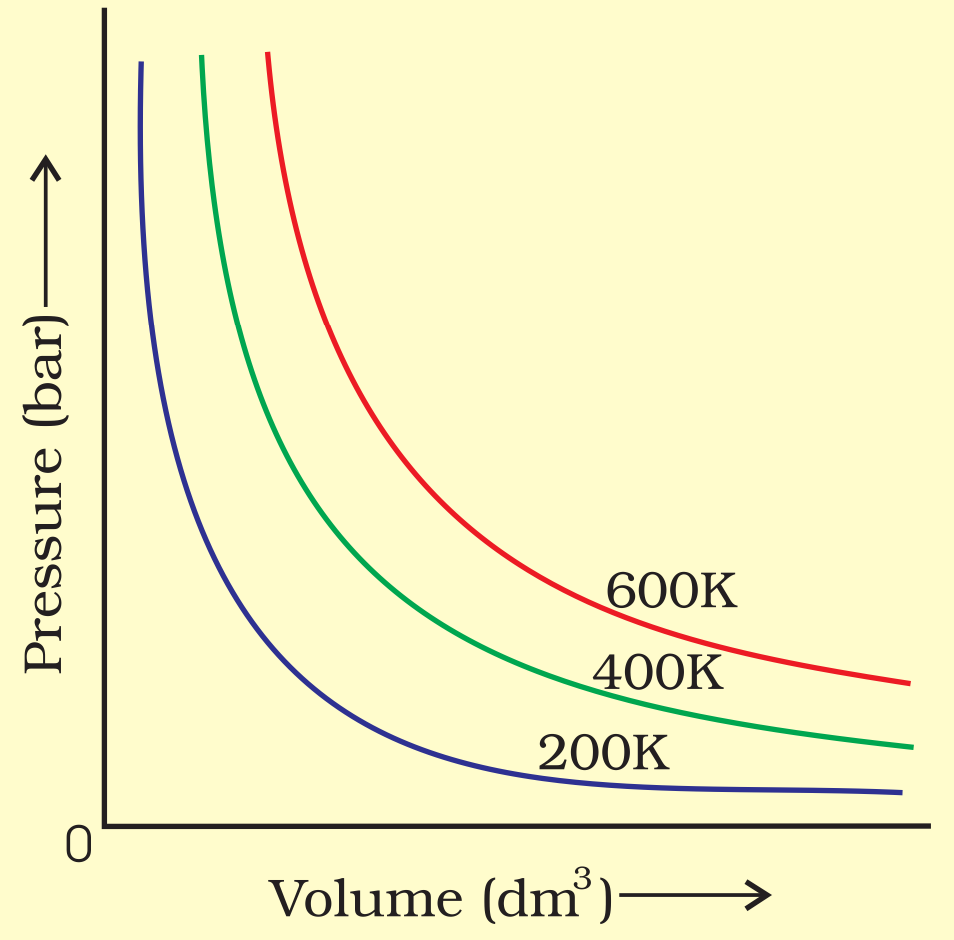
The variation of pressure with volume of the gas at different temperatures can be graphically represented as shown in Fig. On the basis of this graph answer the following questions.
  1. How will the volume of a gas change if its pressure is increased at constant temperature?
  2. At a constant pressure, how will the volume of a gas change if the temperature is increased from 200K to 400K?
What transition in the hydrogen spectrum would have the same wavelength as the Balmer transition $n = 4 to n = 2 of He^+$ spectrum?
Compare the relative stability of the following species on the basis of molecular orbital theory and indicate their magnetic properties:
$\text{O}^+_2,\text{O}^-_2,\text{O}_2^{-2}$
Write equation of following :
(i) Formation of ethyne from iodoform
(ii) Formation of but-2-yne from propyne with help of Grignard reagent
(iii) Addition of HBr with propyne in presence of peroxide
Describe the general trends in the following properties of the elements in Groups $13$ and $14.$
Calculate the pressure exerted by 1.00 mol of $\mathrm{CO}_2(\mathrm{~g})$ at 298 K that occupies 65.4 mL using van der Waals' equation. 'a' for $\mathrm{CO}_2$ is $3.592 \mathrm{~L}^2 \mathrm{bar} / \mathrm{mol}^2$,
$\text { 'b' = 0.0427 } \mathrm{L} \mathrm{~mol}^{-1} .$
Compare it with the pressure predicted by ideal gas equation for the same conditions of T and P ?
Write down the formulae of the first four members of each homologous series beginning with the following compounds.
  1. $\text{CH}_2=\text{CH}_2$
  2. $\text{HCOOH}$
  3. $\text{CH}_3\text{COCH}_3$
  4. $\text{CH}_3\text{OH}$
  5. $\text{HC}\equiv\text{CH}$
The quantum numbers of six electrons are given below. Arrange them in order of increasing energies. If any of these combination(s) has/ have the same energy lists:
  1. $\text{n}=4,\text{l}=2,\text{m}_\text{l}=-2,\text{m}_{\text{s}}=-\frac{1}{2}$
  2. $\text{n}=3,\text{l}=2,\text{m}_\text{l}=1,\text{m}_{\text{s}}=+\frac{1}{2}$
  3. $\text{n}=4,\text{l}=1,\text{m}_\text{l}=0,\text{m}_{\text{s}}=+\frac{1}{2}$
  4. $\text{n}=3,\text{l}=2,\text{m}_\text{l}=-2,\text{m}_{\text{s}}=-\frac{1}{2}$
  5. $\text{n}=3,\text{l}=1,\text{m}_\text{l}=-1,\text{m}_{\text{s}}=+\frac{1}{2}$
  6. $\text{n}=4,\text{l}=1,\text{m}_\text{l}=0,\text{m}_{\text{s}}=+\frac{1}{2}$