Question
What will be the effect on inductive reactance XL and capacitive reactance XC if frequency of ac source is increased?

Answer

The inductive reactance $\text{X}_{\text{L}}=\omega\text{L}=2\pi\text{vL}$ will increase with the increase of frequency v, while capacitive reactance $\text{X}_{\text{C}}=\frac{1}{\omega\text{C}}=\frac{1}{2\pi\text{vC}}$ will decrease with the increase of frequency v.

Need a full question paper?

Generate a complete, print-ready paper with questions like this in minutes — across 16+ boards, with answer keys.
Start Generating Free

Similar questions

The mean speed of the molecules of a hydrogen sample equals the mean speed of the molecules of a helium sample. Calculate the ratio of the temperature of the hydrogen sample to the temperature of the helium sample.
What is the specific heat capacity of:
  1. Melting ice
  2. Boiling water?
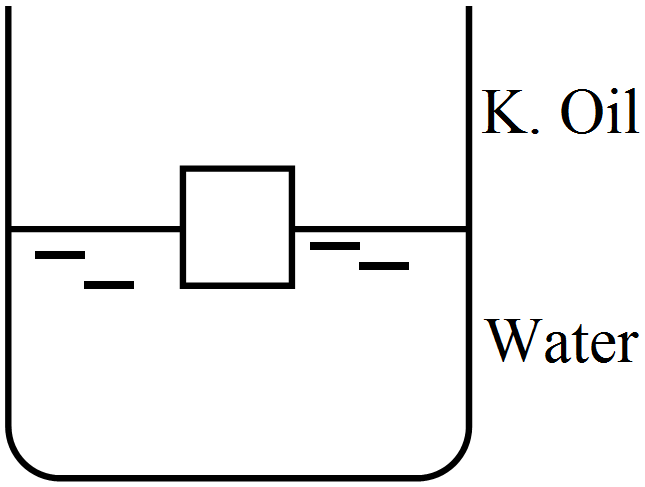
A cube of ice floats partly in water and partly in K. oil  Find the ratio of the volume of ice immersed in water to that in K.oil. Specific gravity of K. oil is 0.8 and that of ice is 0.9.

Give the definition of 1 C from Coulomb's law.
The susceptibility of a magnetic material is –2.6 × 10⁻⁵. Identify the type of magnetic material and state its two properties.
Electric charge is distributed in a small volume. The electric flux passing through a total charge enclosed by a spherical surface of radius 10 cm is 10 Vm . Then what will be the flux associated with a concentric sphere of radius 20 cm ?
Explain how electric conduction becomes possible in metallic conductor and in electrolytic conductors.
  1. Find the first excitation potential of He+ ion.
  2. Find the ionization potential of Li++ ion.
It is proposed to move a particle in simple harmonic motion on a rough horizontal surface by applying an external force along the line of motion. Sketch the graph of the applied force against the position of the particle. Note that the applied force has two values for a given position depending on whether the particle is moving in positive or negative direction.
Consider an amplifier circuit using a transistdf. The output power is several times greater than the input power. Where does the extra power come from?