Question
When a charged body is brought near an electroscope:

Answer

  1. The strips of foils opens up.
Explanation:
When a charged body is brought near the top conducting disc of an electroscope, the disc gets induced with charges. These charges run down to the metal strips hanging from the paper clip. Now as both the strips get similar charge, those repel each other and thus open up.

Need a full question paper?

Generate a complete, print-ready paper with questions like this in minutes — across 16+ boards, with answer keys.
Start Generating Free

Similar questions

Distance between two slits $S_1$ and $S_2$ in Young's double slit experiment is 1 mm . What should be the width of each slit so that the $10^{\text {th }}$ maximum of the double slit is obtained at the central maximum of the slit?
The rays parallel and close to the principal axis are called:
What happens during regulation action of a Zener diode?
Eight small drops, each of radius r and having same charge q are combined to form a big drop. The ratio between the potentials of the bigger drop and the smaller drop is
When light propagates in vacuum there is an electric field and a magnetic field. These fields.
Assertion  : Radioactive nuclei emit $\beta^{-1}$  particles.
Reason      : Electrons exist inside the nucleus.
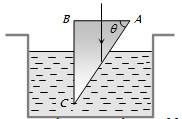
A glass prism $(\mu = 1.5)$ is dipped in water $(\mu = 4/3)$ as shown in figure. A light ray is incident normally on the surface $AB.$ It reaches the surface $BC$ after totally reflected, if
The work function of a metal is $hv_{0.}$ Light of frequency $v$ falls on this metal. The photoelectric effect will take place only if$:$
A piece of wood is floating in water kept in a bottle. The bottle is connected to an air pump. Neglect the compressibility of water. When more air is pushed into the bottle from the pump, the piece of wood will float with.
  1. Larger part in the water.
  2. Lesser part in the water.
  3. Same part in the water.
  4. It will sink.
The frequency of revolution of a charged particle in a cyclotron does not depend on ‘X’. Identify X.