Question

When a potential difference is applied across the ends of a linear metallic conductor

(a) The free electrons are accelerated continuously from the lower potential end to the higher potential end of the conductor

(b) The free electrons are accelerated continuously from the higher potential end to the lower potential end of the conductor

(c) The free electrons acquire a constant drift velocity from the lower potential end to the higher potential end of the conductor

(d) The free electrons are set in motion from their position of rest

Answer

(c) The free electrons acquire a constant drift velocity from the lower potential end to the higher potential end of the conductor

Need a full question paper?

Generate a complete, print-ready paper with questions like this in minutes — across 16+ boards, with answer keys.

Start Generating Free

Similar questions

In the following circuit, 5W resistor develops 45 J/s due to current flowing through it. The power developed per second across 12 W resistor is

(a) 16 W

(b) 192 W

(c) 36 W  

(d) 64 W

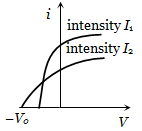
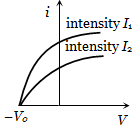
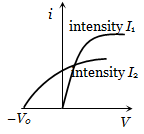
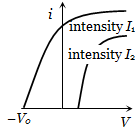
The curves (a), (b) (c) and (d) show the variation between the applied potential difference (V) and the photoelectric current (i), at two different intensities of light (I1 > I2). In which figure is the correct variation shown

 (a)

(b)

(c)

(d)

A rectangular tank of depth 8 meter is full of water (μ = 4/3), the bottom is seen at the depth

(a) 6 m

(b) 8/3 m

(c) 8 cm

(d) 10 cm

Which resistor has color bands on it?

Between the primary and secondary rainbows, there is a dark band known as Alexandar’s dark band. This is because:

Bragg’s law for X-rays is

(a) d sin θ = 2n λ

(b) 2dsin θ = n λ

(c) n sin θ = 2 λ d

(d) None of these

Two small spheres with masses M1​ and M2​ hang on weightless, insulating threads with lengths L1​ and L2​. The two spheres carry a charge of Q1​ and Q2​ respectively. The spheres hang such that they are level with one another and the threads are inclined to the vertical at angles $\theta_1$​ and $\theta_2$. Which of the following conditions is required if$\theta_1​=θ_2​.$

The resistance of a metal wire increases with increasing temperature on account of:

An achromatic combination of lenses produce:

Two different loops are concentric and lie in the same plane. The current in the outer loop is clockwise and increasing with time. The induced current in the inner loop then, is

(a) Clockwise

(b) Zero

(c) Counter clockwise

(d) In a direction that depends on the ratio of the loop radii