Question
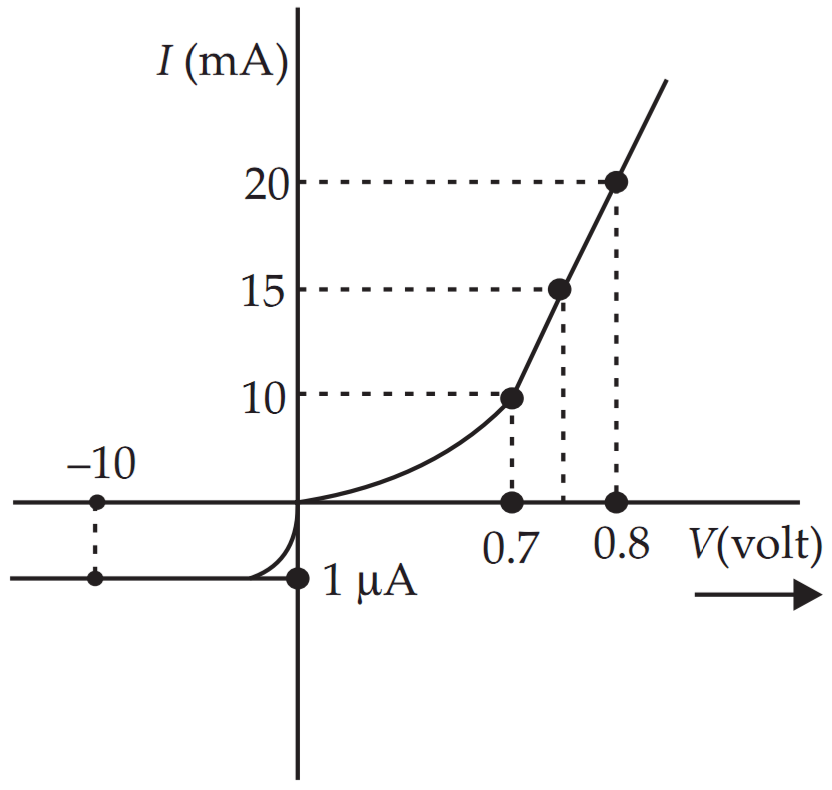
When the diode is forward biased, it is found that beyond forward voltage $V = V_k,$ called knee voltage, the conductivity is very high. At this value of battery biasing for $p-n$ junction, the potential barrier is overcome and the current increases rapidly with increase in forward voltage.
When the diode is reverse biased, the reverse bias voltage produces a very small current about a few microamperes which almost remains constant with bias. This small current is reverse saturation current.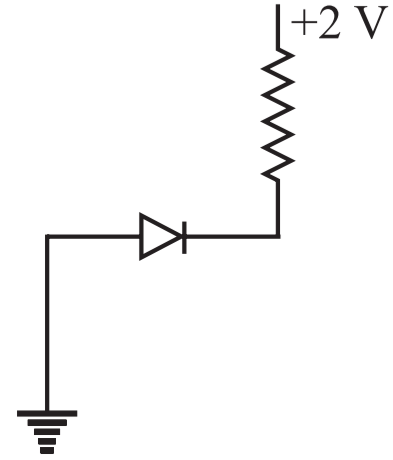
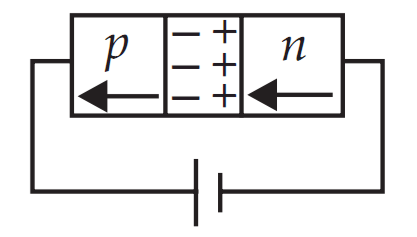
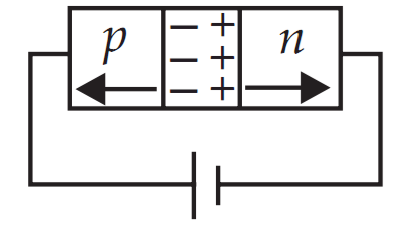
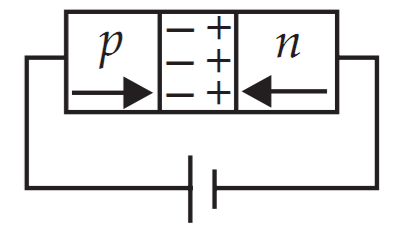
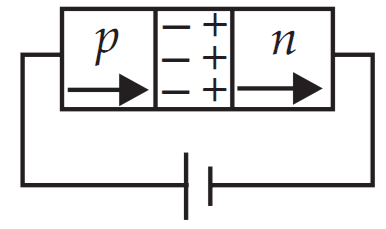

When the diode is reverse biased, the reverse bias voltage produces a very small current about a few microamperes which almost remains constant with bias. This small current is reverse saturation current.
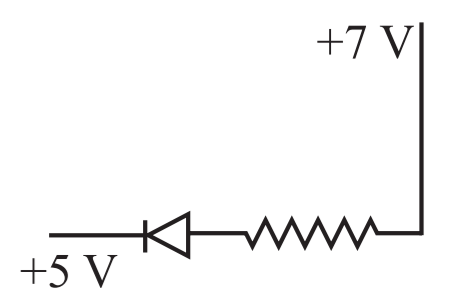
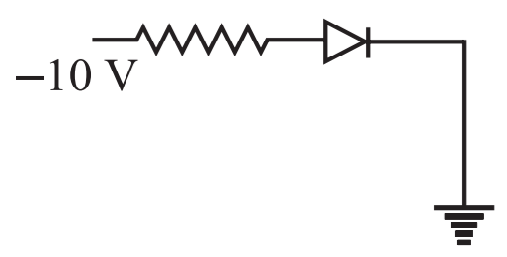
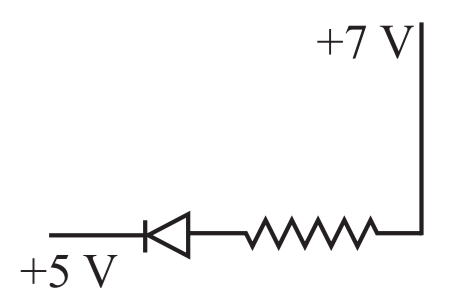
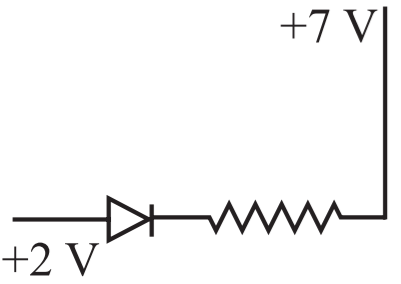
- In which of the following figures, the $p-n$ diode is forward biased.
- Based on the $V-I$ characteristics of the diode, we can classify diode as:
- $Bi-$ directional device.
- Ohmic device.
- Non $-$ ohmic device.
- Passive element.
- The $V-I$ characteristic of a diode is shown in the figure. The ratio of forward to reverse bi as resistance is:
- $100$
- $10^6$
- $10$
- $10^{-6}$
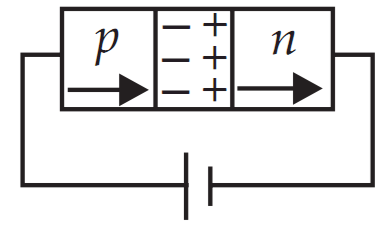
- In the case of forward biasing of a $p-n$ junction diode, which one of the following figures correctly depicts the direction of conventional current $($indicated by an arrow mark$)$?
- If an ideal junction diode is connected as shown, then the value of the current I is:
- $0.013A$
- $0.02A$
- $0.01A$
- $0.1A$