MCQ
When two magnetic moments are compared using equal distance method the deflections produced are $45^{\circ}$ and $30^{\circ}.$ If the length of magnets are in the ratio $1: 2,$ the ratio of their pole strengths is
 
  • A
    $3: 1$
  • B
    $3: 2$
  • C
    $\sqrt{3}: 1$
  • $2 \sqrt{3}: 1$

Answer

Correct option: D.
$2 \sqrt{3}: 1$
$2 \sqrt{3}: 1$

Need a full question paper?

Generate a complete, print-ready paper with questions like this in minutes — across 16+ boards, with answer keys.

Start Generating Free

Similar questions

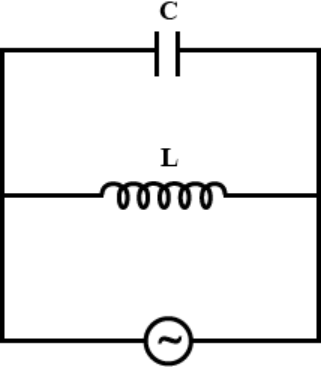
In the $AC$ network shown in figure, the rms current flowing through the inductor and capacitor are $0.6A$ and $0.8A$ respectively. Then the current coming out of the source is
Image
Figure represents two simple harmonic motions. The parameter which has different values in the two motions is:
  1. Amplitude.
  2. Frequency.
  3. Phase.
  4. Maximum velocity.
The internal energy of an ideal gas decreases by the same amount as the work done by the system:
  1. The process must be adiabatic.
  2. The process must be isothermal.
  3. The process must be isobaric.
  4. The temperature must decrease.
Curies law can be written as
Which of the following statement is not the true
In transformer, core is made of soft iron to reduce(a) Hysteresis losses(b) Eddy current losses(c) Force opposing electric current(d) None of the above
   
   
Work done by a sample of an ideal gas in a process $A$ is double the work done in another process $B$. The temperature rises through the same amount in the two processes. If $C_A$ and $C_B$ be the molar heat capacities for the two processes:
To get three images of a single object, one should have two plane mirrors at an angle of(a) 30° (b) 60°(c) 90°(d) 150°
       
 A normal eye is not able to see objects closer than 25cm because:
  1. The focal length of the eye is 25cm.
  2. The distance of the retina from the eye-lens is 25cm.
  3. The eye is not able to decrease the distance between the eye-lens and the retina beyond a limit.
  4. The eye is not able to decrease the focal length beyond a limit.
While doing his experiment, Millikan one day observed the following charges on a single drop
$(i)\  6.563 \times 10^{-19} \mathrm{C}$
$(ii)\ 8.204 \times 10^{-19} \mathrm{C}$
$(iii)\ 11.50 \times 10^{-19} \mathrm{C}$
$(iv)\ 13.13 \times 10^{-19} \mathrm{C}$
$(v)\ 16.48 \times 10^{-19} \mathrm{C}$
$(vi)\ 18.09\times 10^{-19} \mathrm{C}$
From this data the value of the elementary charge $(e)$ was found to be