Which compound in each of the following pairs will react faster in $\ce{S_N2}$ reaction with $–\ce{OH(CH_3)_3CCl}$ or $\ce{CH_3Cl}$.
Download our app for free and get started
In $\ce{S_N2}$ mechanism nucleophile attack occur at the atom bearing the leaving group. In case of $\ce{CH_3Cl}$ there is no bulky substituents on the carbon atom or in case of $\ce{(CH_3)3CCl}$, the attack of the nucleophile at the carbon atom is hindered because of the presence of bulky group on the carbon atom. Hence $\ce{CH_3Cl}$ reacts faster than $\ce{(CH_3)_3CCl}$ in $\ce{S_N2}$ reaction with $\ce{OH_^}-$.

Download our appand get started for free
Experience the future of education. Simply download our apps or reach out to us for more information. Let's shape the future of learning together!No signup needed.*
Similar Questions
- 1View SolutionOut of
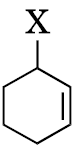 and
and 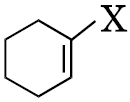 , which is an example of vinylic halide?
 - 2Write the structure of the major organic product in each of the following reaction:View Solution
$\text{CH}_3\text{CH}_2\text{CH}_2\text{OH}+\text{SOCl}_2\xrightarrow{}$ - 3View SolutionHow will you bring about the following conversion?
Toluene to benzyl alcohol. - 4View SolutionWrite the equation of wurtz reaction.
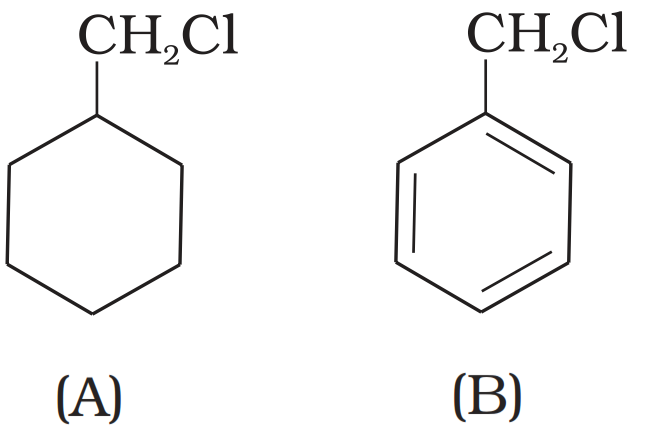
- 5Which of the following compounds would undergo $S_N1$ reaction faster and why?View Solution
- 6Name the following halides according to $\ce{IUPAC}$ system and classify them as alkyl, allyl, benzyl $($primary, secondary, tertiary$),$ vinyl or aryl halides:View Solution
$\ce{CH_3CH_2C(CH_3)_2CH_2I}$ - 7Write the structure of the major organic product in each of the following reaction:View Solution
$\text{CH}_3\text{CH}_2\text{Br}+\text{KCN}\xrightarrow{\text{aq. ethanol}}$ - 8View SolutionWrite down the structure and IUPAC name for neo-pentylbromide.
- 9Write the structures and names of the compounds formed when compound ‘$A’$ with molecular formula, $\ce{C_7H_8}$ is treated with $\ce{Cl_2}$ in the presence of $\ce{FeCl_3}$.View Solution
- 10View SolutionHow will you bring about the following conversion?
Propene to 1-nitropropane.