Question
Which of the following are conservative forces:

Answer

  1. Both a and b.

Need a full question paper?

Generate a complete, print-ready paper with questions like this in minutes — across 16+ boards, with answer keys.
Start Generating Free

Similar questions

Infinite charges of magnitude $q$ each are lying at $x =1, 2, 4, 8...$ meter on $X-$axis. The value of intensity of electric field at point $x = 0$ due to these charges will be
A charged particle is suspended in equilibrium in a uniform vertical electric field of intensity $20000\ V / m$. If mass of the particle is $9.6 \times 10^{-16} kg,$ the charge on it and excess number of electrons on the particle are respectively $(g =10 m / s ^2)$
The truth table given in figure represents:
A B Y
0 0 0
0 1 1
1 0 1
1 1 1
The length of the compound microscope is 14 cm. The magnifying power for relaxed eye is 25. If the focal length of eye lens is 5 cm, then the object distance for objective lens will be(a) 1.8 cm (b)  1.5 cm (c) 2.1 cm (d)  2.4 cm 
       
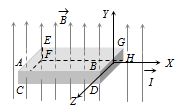
A metallic block carrying current $I$ is subjected to a uniform magnetic induction $\overrightarrow{B}$ as shown in the figure. The moving charges experience a force $\overrightarrow{F}$ given by $.........$ which results in the lowering of the potential of the face $........$ Assume the speed of the carriers to be $v$
A man can see the object between $15 \ cm$ and $30 \ cm$. He uses the lens to see the far objects. Then due to the lens used, the near point will be at
If a full wave rectifier circuit is operating from 50 Hz mains, the fundamental frequency in the ripple will be(a) 50 Hz (b) 70.7 Hz(c) 100 Hz(d) 25 Hz
       
Current in the circuit is wattless, if.
Out of gravitational, electromagnetic, Vander Waals, electrostatic and nuclear forces; which two are able to provide an attractive force between two neutrons (a) Electrostatic and gravitational(b) Electrostatic and nuclear(c) Gravitational and nuclear(d) Some other forces like Vander Waals


Let V and E denote the gravitational potential and gravitational field at a point. It is possible to have:
  1. V = 0 and E = 0
  2. V = 0 and E ≠ 0
  3. V ≠ 0 and E = 0
  4. V ≠ 0 and E ≠ 0