MCQ
Which of the following electronic configuration represent representative elements
  • A
    $ns^{1,2}\,\,np^{1-5}$
  • $ns^{1,2}\,\,np^{0-5}$
  • C
    $ns^{1,2}\,\,np^{0-6}$
  • D
    $ns^{1,2}\,\,np^{1-6}$

Answer

Correct option: B.
$ns^{1,2}\,\,np^{0-5}$
b
Representative elements are $s$ and $p-$ block element.

Need a full question paper?

Generate a complete, print-ready paper with questions like this in minutes — across 16+ boards, with answer keys.
Start Generating Free

Similar questions

The first ionization energy of boron is less than that of beryllium because
The dipole moment is the highest for
The degree of hydrolysis in hydrolytic equilibrum ${A^ - } + {H_2}O$ $\rightleftharpoons$ $HA + O{H^ - }$ at salt concentration of $0.001 \,\,M$ is $\left( {{K_a} = 1 \times {{10}^{ - 5}}} \right)$
Which one of the following mixture does not act as a buffer solution?
When iodine is dissolved in aqueous potassium iodide, the shape of the species formed is
The wave number of last line of Lyman series of atomic spectrum of $H$ atom correspond to :-
The compound $YB{a_2}C{u_3}{O_7}$ which shows superconductivity has copper in oxidation state ........ Assume that the rare earth element Yttrium is in its usual $ + \,3$ oxidation state
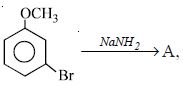
major product $A$ and reaction $R$ are :
Arrange following cation in decreasing order of their stability

$\mathop {\mathop C\limits^ \oplus  {H_3}}\limits_{(a)} $ $\mathop {\begin{array}{*{20}{c}}
  {C{H_2} - \mathop C\limits^ \oplus  {H_2}} \\ 
  {|\,\,\,\,\,\,\,\,\,\,\,\,\,\,\,\,\,\,\,\,\,\,} \\ 
  {\,F\,\,\,\,\,\,\,\,\,\,\,\,\,\,\,\,\,\,\,\,\,\,} 
\end{array}}\limits_{(b)} $ $\mathop {\begin{array}{*{20}{c}}
  {C{H_2} - \mathop C\limits^ \oplus  {H_2}} \\ 
  {|\,\,\,\,\,\,\,\,\,\,\,\,\,\,\,\,\,\,\,\,\,\,} \\ 
  {Br\,\,\,\,\,\,\,\,\,\,\,\,\,\,\,\,\,\,\,} 
\end{array}}\limits_{(c)} $ $\mathop {\begin{array}{*{20}{c}}
  {C{H_2} - \mathop C\limits^ \oplus  {H_2}} \\ 
  {|\,\,\,\,\,\,\,\,\,\,\,\,\,\,\,\,\,\,\,\,\,\,\,} \\ 
  {\,C{H_3}\,\,\,\,\,\,\,\,\,\,\,\,\,\,\,\,} 
\end{array}}\limits_{(d)} $

The $IUPAC$ name of the compound having structure ${C_2}{H_5} - \mathop {\mathop {C - }\limits_{||\,\,\,\,} }\limits_{C{H_2}} \mathop {\mathop {CH - }\limits_{|\,\,\,\,\,\,\,\,\,} }\limits_{C{H_3}\,\,} C{H_3}$ is