MCQ
Which of the following properties show that light is a transverse wave?
- AReflection.
- BInterference.
- CDiffraction.
- DPolarization.
Explanation:
Reflection, interference and diffraction are the phenomena shown by both transverse waves and longitudinal waves. Polarization is the phenomenon shown only by transverse waves.
Generate a complete, print-ready paper with questions like this in minutes — across 16+ boards, with answer keys.
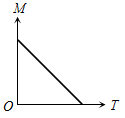
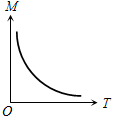
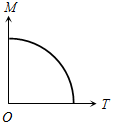
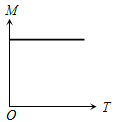
A curve between magnetic moment and temperature of magnet is
|
(a)
|
(b)
|
(c)
|
(d)
|
A nucleus is bombarded with a high speed neutron so that resulting nucleus is a radioactive one. This phenomenon is called
| (a) Artificial radioactivity | (b) Fusion | (c) Fission | (d) Radioactivity |
When light of wavelength 300 nm (nanometer) falls on a photoelectric emitter, photoelectrons are liberated. For another emitter, however light of 600 nm wavelength is sufficient for creating photoemission. What is the ratio of the work functions of the two emitters
|
(a) 1 : 2 |
(b) 2 : 1 |
(c) 4 : 1 |
(d) 1 : 4 |
The reverse biasing in a PN junction diode
| (a) Decreases the potential barrier |
|
(b) Increases the potential barrier |
|
(c) Increases the number of minority charge carriers |
|
(d) Increases the number of majority charge carriers |
When neutrons are bombarded on nucleus of  , the number of emitted neutrons will be
|
(a) 1 |
(b) 2 |
(c) 3 |
(d) 4 |